
It was a new start, and something in his heart and soul knew it, as the wagon train started on its way west. He hadn’t felt so good for a long time, not since he first came to America. There was a new world out there, opportunity wide as the prairie sky.
There was no reason to stay in Marion County. Available land was more difficult to find, and the contrariness between religions seemed madness to someone who’d came home from bullets and blood—the divisions back home drove him crazy. The government made it easier for him to think about life in an open prairie. There were some blessings lent to vets like himself.
Some people made him a hero, but they knew nothing about slogging through reeds in muck that made fighting Rebs worse than what it was.
But this whole trek west was different: 30 families and kids, 80 head of cattle, a caravan going to rich, treeless land full-up with rich promise.
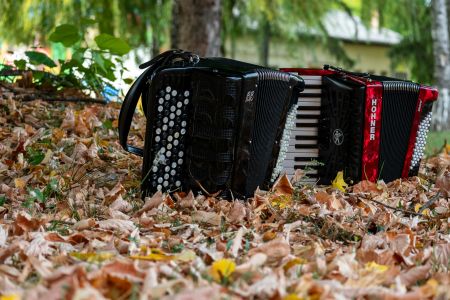
At night, the whole bunch gathered around the fire to pray and then sing like a heavenly choir, that little girl of Ver Huel leading them on the accordion—then scripture, then more prayer. No fighting, no scrapping. Sometimes those swampy days at Little Rock were another world all together.
Sjoerd Ritskes Sipma was born in 1842 in Friesland, the Netherlands. He immigrated to America, then skipped off to the Civil War before moving, like so many others, to a beckoning west, where he lived in a soddie on 80-acres of northwest Iowa land. He lived there until he could buy enough lumber in Le Mars to build a frame house, 12 by 30 with two floors, five doors and five windows.
When Sjoerd Sipma left Vicksburg with the 33rd Iowa Regiment, he had suffered no battle wounds, but was burned when he fell through the floor on a ship they were taking down the Mississippi. He spoke enough English not to get hoodwinked when he bought wood or wheat he’d bring in to grind his own flour.
What he missed in this new land was someone to talk to, someone to share the work with him, a good woman who would know what he knew—that life on the frontier was big with promise. He needed—and he knew it—a wife.
Someone like the girl of Ver Heul, whose father led the whole train. While her father was out looking for the next place to stay, that child handled the team, not like a girl but like a grown woman. She was something, he thought, but too young for him–still, he needed someone like Mary Ver Huel and her accordion.
But she was very young.
So he put in crops and took out bounty. He built a herd of cattle. For three years he built up a fine operation beside that sod house, the frame home, back then, still a dream.
One day Sjoerd Sipma decided he’d try. He’d seen her often enough since her accordion days around the campfire or those long hours driving her father’s team of oxen. To say she blossomed nicely into womanhood was an understatement. Still, when he asked Martin Ver Huel for his daughter’s hand, Ver Huel and wife were reluctant. He clearly was an older man. But he had a start that many others coveted; he was reliable, strong-willed. Everyone trusted him, liked him.
They said yes, and, presumably, so did their Mary. So Mary Ver Heul wed Sjoerd Sipma in 1872. Sjoerd was fourteen years her elder.
By today’s standards, there was good reason to believe it wasn’t starry-eyed love that brought them together or kept them blessedly close. There is no possible way to review the character of their long relationship, although their eight children suggest some warmth and intimacy. Today in a quiet corner of the tiny Nassau Township cemetery, just up the road here, they’re together beneath a pair of stones bearing their names.
Let’s just call it the very first immigrant love story in Sioux County, Iowa.
Think not? Well, it’s September; the beans are mostly in, and the yellowing corn is next. It’s the time when kids return to this college town. When warmth and wind allow it, they walk together or, more likely, jog.
I don’t know them, but I recognize their blessed company. Some hold hands, some just glance at each other.
In spring, a young man lightly turns to fancy. . .well, you know. What’s true then is just as true today, this old man says.
There you have it. First love.
9 Responses
What a delight to read this story about my Great Grandparents!! A story to share with my children and grandchildren!! Thank you!
Lovely story, James. Thank you.
Unless stories are told, and retold, and handed down, those of us who dabble with (A)ncestry and family trees have nothing but the dates on a tombstone or recorded in a family Bible—and the names, like Charles or Kate or Grace, which somehow pleasantly get recycled as first/middle names throughout the generations, including the present.
Jim, your story today, among so many past contributions, is inspiring me a bit to do the same with a few of my own ancestors. I may need to lean on my brother Joel’s memory and writing ability, to get our collective stories straight and true as possible.
Do I start with the French-Canadien.Mormon lumberjack coming to Michigan, or the Anglo-German Yankees emigrating from NY/Ohio?
Great story, Jim – thanks for sharing it so vividly!
Hi, Jim. Thanks for this piece. Your usual gripping style. And a love story with no schmaltz, just vivid honesty.
We tend to joke about getting an “MRS” degree, but God does indeed bless the fellowship and gathering of the covenant youth of the church. My own family history is one of September swooning at the campus from which Jim springs in the middle of corn and bean country. Dad and Mom met and engaged there. So did my older sister and her husband. So did my older brother and his wife. So did my wife and I. So did my younger brother and his wife (a bit more tangentially). So did my second son and his wife. So did my third son and his wife. And my first son’s wife is a grad of there, though he met her on a Serve project instead of the halls of academia. My daughter, well she made it through the bachelors and masters programs there without the same fate – perhaps she was too busy studying.
Your response to Jim’s blog confirms BJ’s conviction that students would experience non-acedemic adventures if they were enrolled in “his” college. The original street that began at the enterance and proceeded to the center of campus was initially owned and maintained by the city. The ulility department having decided it would erect sreet lights along the edge of the street. The light fixture was shaped like a funnel with the narrow end attached to the top of the pole which placed the larger end above every thing. While the workers were in stalling bulbs into the lamps , President Haan strolling by instructed them “to only use bulbs that one can differentiate between sidewalk and street curb, but not so bright that it would discourage romance.”
I enhanced my love while I was a student at said college.
This was so refreshing. Thanks so much for a story that highlights love and hope throughout the generations.
What a good telling of this story! Keep up the good work.