
I’m sure she told this story countless times, but when she talked about sitting next to her dad on the couch while he wrote his statement, her voice caught and she teared up.
Karen Korematsu is the daughter of Fred Toyosaburo Korematsu, who defied Executive Order 9066, which rounded up American citizens of Japanese descent and incarcerated them after the attack on Pearl Harbor in December of 1941. Karen founded the Fred T. Korematsu Institute to promote civic participation and education that advances racial equality, social justice, and human rights for all. I heard her speak at the annual conference of the Iowa Council of Social Studies this fall.
Karen explained that her father grew up as an American citizen and lived a mostly normal life in the San Francisco Bay Area. His ancestors had been recruited for agricultural work with very low pay and poor treatment. Fred’s grandfather worked in the cut flower industry and eventually bought the land to run the business.
Karen told the story of how before the bombing of Pearl Harbor, her father and some high school friends were , walking by recruitment tables for the US military. The Coast Guard officer gave applications to his three White friends, but not to Fred. The same thing happened at the National Guard table. When Fred pressed for answers, the officer remarked that they had orders to not give any applications to Japanese men. Fred responded that he was an American citizen and wanted to serve his country.
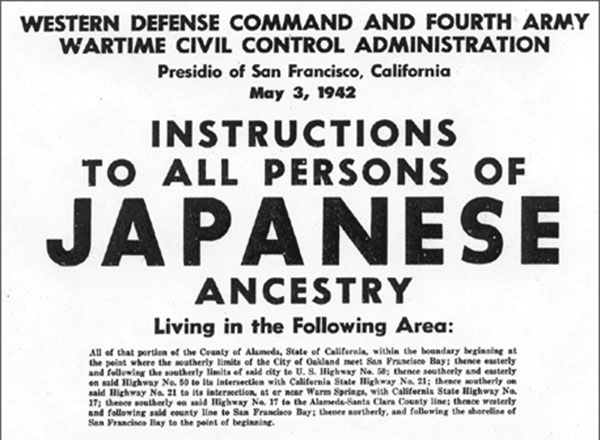
Fred made history when he disobeyed orders to report for detention because he believed his constitutional rights were being violated – in particular, the right of due process. Fred had studied the Constitution and believed he should stand for what was right.
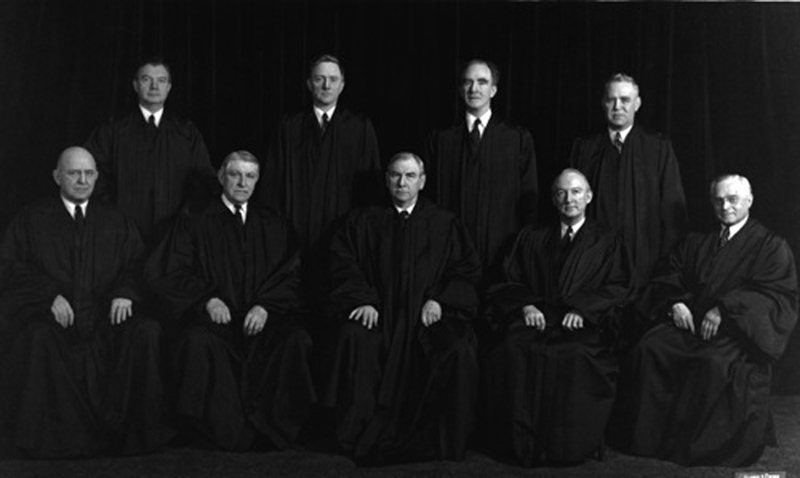
The ACLU picked up his case and it went all the way to the Supreme Court, where he lost, in a 6-3 decision. The majority opinion, delivered by Justice Hugo Black, stated, “We cannot reject as unfounded the judgment of the military authorities.” Justices Frank Murphy, Owen Roberts, and Robert Jackson dissented. Murphy wrote “this is not a case of military necessity but rather of racial discrimination.”
Karen recalled that her father never talked about the case. She had no idea that any of it happened, until one day in high school. Her history teacher assigned a book report to one of Karen’s friends. That book was about concentration camps in the US. The student’s report detailed the Japanese Americans incarceration during World War II and mentioned Fred Korematsu. Karen was shocked!
When she got home, Karen asked her father about it. He responded by saying that it happened a long time ago. He knew what he did was right, and he thought the government was wrong. That was the end of the discussion, according to Karen.
It wasn’t until the 1980s that her father talked about it again. In 1981, Peter Irons, an attorney, contacted Fred after discovering the military and federal government deliberately withheld documents that clearly indicated Japanese Americans were not, in fact, a security risk. On November 10, 1983, Judge Marilyn Hall Patel of the US.District Court of Northern California in San Francisco formally overturned Korematsu’s conviction. Fred Korematsu finally made a statement that he wrote while his daughter, Karen sat next to him:
According to the Supreme Court decision regarding my case, being an American citizen was not enough. They say you have to look like one, otherwise they say you can’t tell a difference between a loyal and a disloyal American. I thought that this decision was wrong and I still feel that way. As long as my record stands in federal court, any American citizen can be held in prison or concentration camps without a trial or a hearing. That is if they look like the enemy of our country. Therefore, I would like to see the government admit that they were wrong and do something about it so this will never happen again to any American citizen of any race, creed or color.
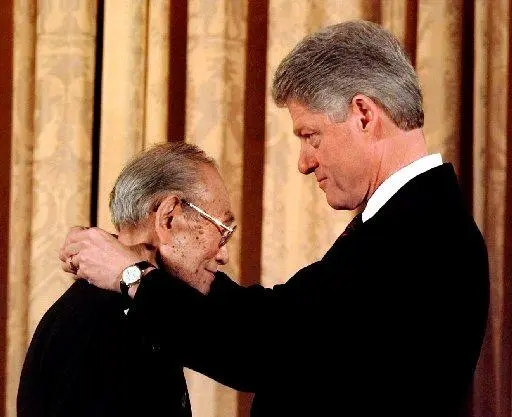
Fred continued to advocate for justice. He did not want any US citizen ever to be treated that way again. He died in 2005.
Thank you, Karen, for sharing your father’s story and for your pursuit of justice.
As the prophet Amos wrote,
Let justice roll down like waters,
and righteousness like an ever-flowing stream.
13 Responses
Thank you for this, Rebecca. May Fred’s story move us to include those who look different than us.
Thank you.
One of many dark times in the history of the United States. Will “liberty and justice for all” ever be a reality?
A moving reminder of a shameful wartime policy, one we need to remember in a time when Americans are once again being uprooted from their communities and placed in detention on the basis of their ethnicity or accent.
Gordon Hirabayashi was another courageous citizen who defied the WW II detention order, lost his appeal at every stage up to the Supreme Court, and was sentenced to 90 days. He hitchchiked to a prison camp near Tucson to serve his time. He too was at last exonerated, four decades later. In 1999 the US Forest Service dedicated the Gordon Hirabayashi Campground in the Coronado National Forest to him, near the site of the former prison camp, and Hirabayashi, recently retired from the University of Alberta, was able to attend. Last week on a hiking trail in the Catalina Mountains we looked down on the remaining foundations of the prison buildings. (For more of his story see en.wikipedia.org/wiki/Gordon_Hirabayashi ; a play recounting his story, “Hold These Truths,” was part of the Hope College Summer Repertory series a few years ago.)
I know a few stories of German families who changed their names during the early 1940’s. It worked for them because they “looked” American. Apparently Native Americans and African Americans somehow snuck under the radar and made great soldiers. Puzzling, but then racism never has been rational or fair.
Just yesterday I finished reading Daughter of Molok’i, by Alan Brennert (2019), a detailed historical fiction account of a Japanese/Hawaiian orphan whose family moved to California during this shameful time of US history. I had not realized the extent of their suffering.
Another excellent book is This Light Between Us by Andrew Fukuda. It is also historical ficiton (which I almost never read) but captures the pain and isolation and betrayal of Japanese Americans in internment. Thank you for this powerful article.
Thank you. A story worth telling and reminding us of our failures, so that we don’t repeat them, though I’m afraid we may be repeating them today, so all the more important to tell our stories. Thank you.
Thank you Rebecca for a story that even though I am not Japanese has been part of my story. There were many posters around the New York area that advertised for jobs but said NO NEGROES and NO IRISH need apply. I am Irish and don’t look different from most other Americans but half of my grandchildren were born Black and of course look different. They only contributed in a large measure to the establishment of the United States. Our country has a big history of racism and it continues on this course. I am not sure about the Irish but I am told it had a lot to do with their Catholicism. So this applies to many groups.
For a firsthand account of life in an internment camp and the effect internment had on a Japanese-American family, I recommend the book “Farewell to Manzanar.” When I taught at San Jose Christian School, I taught the children of George Wakatsuki, who was born in Manzanar.
Thank you, Rebecca. Two excellent novels that deal with the internment of Japanese Canadians and Americans during WW II are Obasan by Canadian novelist Joy Kogawa and Snow Falling on Cedars by American novelist David Guterson. Both are powerful novels. Guterson’s novel was also made into a movie starring Ethan Hawke.
Thank you.
Heart Mountain Relocation Camp (near Cody, WY) shows what life was like for the Japanese who were interned during the war. A few years ago my husband and I visited the camp (brutally moving) and shortly thereafter we met a man whose parents had met there. He was wearing a cap with “Heart Mountain” on it and we asked him if he would share his story. His parents had wanted to get married, but his mother refused to be married while in captivity. It was clear from the way the man told his family story that there were still deep wounds that needed healing, especially between him and his brother.
Another excellent book is the novel “Hotel on the Corner of Bitter and Sweet” by Jamie Ford.