
I spent a surprising amount of time in the principal’s office my senior year of high school.
My friend and I were co-editors of our school paper, The Vantage Point, and we had written an editorial arguing that the Confederate flag had no place on school grounds. This was 1997, and the flag showed up on pick-up trucks in the school parking lot, on T-shirts on students’ backs, and on lockers and backpacks.
The reaction, from students and even some staff, was explosive. We believed we were naming a problem with racism in our community. Instead, we were accused of “stirring the pot” and then stepping back to watch the chaos.
Looking back, I suspect my principal quietly agreed that we were shedding light on a persistent and deep-rooted issue. But he still called us—my brave and supportive teacher, my co-editor and I— into his office for conversations about delving into controversial topics, the intentions behind our writing, and what it meant to uphold journalistic integrity.
I work as a literacy consultant for our county now, and it saddens me how few student newspapers remain in our area high schools.
Part of my sadness is simply a reckoning with the ways media and newspapers have changed in the past few decades. But part of my sadness is personal: I want today’s kids to experience what I did as a student journalist—layout nights that stretched long past curfew, spirited staff meetings, interviews squeezed into lunch periods, conversations that made the school cafeteria feel like a newsroom.
Writing for the paper was one the most “real” things I did in high school. Unlike most of my classes, which were preparing me for someday, the news we covered was happening now. The learning was relevant and immediate. Student journalism pushed me to examine my beliefs, think critically, and talk to people whose perspectives were wildly different from my own.
My own teens would probably shake their heads: who needs a school newspaper when they have Snapchat, Instagram, and whatever other platforms are serving them their (highly curated) news?
But there was something special about those days—the sense of community when the paper came out, the buzz in the hallways as students flipped through the pages, the realization that our voices mattered.
I have many reasons for loving writing for the Reformed Journal, but one of the biggest is that it gives me the same sense of community and purpose I first felt as a 17-year old on the staff of the Vantage Point.
So much of what we read and wrestle with in our newsfeeds happens in isolation. So much of what I write never makes it beyond my journal or computer files.
But here, on this platform, we’re gifted a daily gathering of voices. Each morning, when the day’s blog, feature poem, or review arrives in my inbox, I know I’ll encounter writers who call me back to my core—who remind me who Jesus really is. I’ll find voices that challenge my assumptions and comfort me when I feel alone. Voices steady in conviction, and yet refreshingly varied. Voices that ground me and lift my eyes toward something larger than myself.
The RJ is for many of us, writers and readers alike, a safe pace in the scary sphere of the internet.
I’m grateful, as both reader and writer, to be part of this community. And I’m grateful we’ve been able to keep the publication subscription-free, open to everyone.
But, of course, there are practical costs of keeping up the Reformed Journal. Our editors and writers are not paid. Readers need bring nothing but a desire to read, listen, care, and, hopefully, comment thoughtfully and kindly.
As one of those writers, I’m passionate about this space. And I’m deeply aware and appreciative of the reciprocity with you, dear readers. There is something life-giving about knowing you’re out there, showing up beside us each day. It feels, in the truest sense, like an instrument of the Spirit, calling us back to connection and faith on days when belief feels impossible.
Thank you for being here. Thank you for reading. And thank you for giving what you can to sustain this community.
My old high school newspaper may now be just a glimmer in my memory, but I’m grateful to still be part of a community that understands the impact and power of words to change and challenge us.
Please click on the purple box below to explore all the ways you can contribute financially to the Reformed Journal.
Reformed Journal is funded by our readers; we welcome your support. This holiday season, we call your attention to our “But Wait…There’s More!” deal—three new books sent to you in 2026!
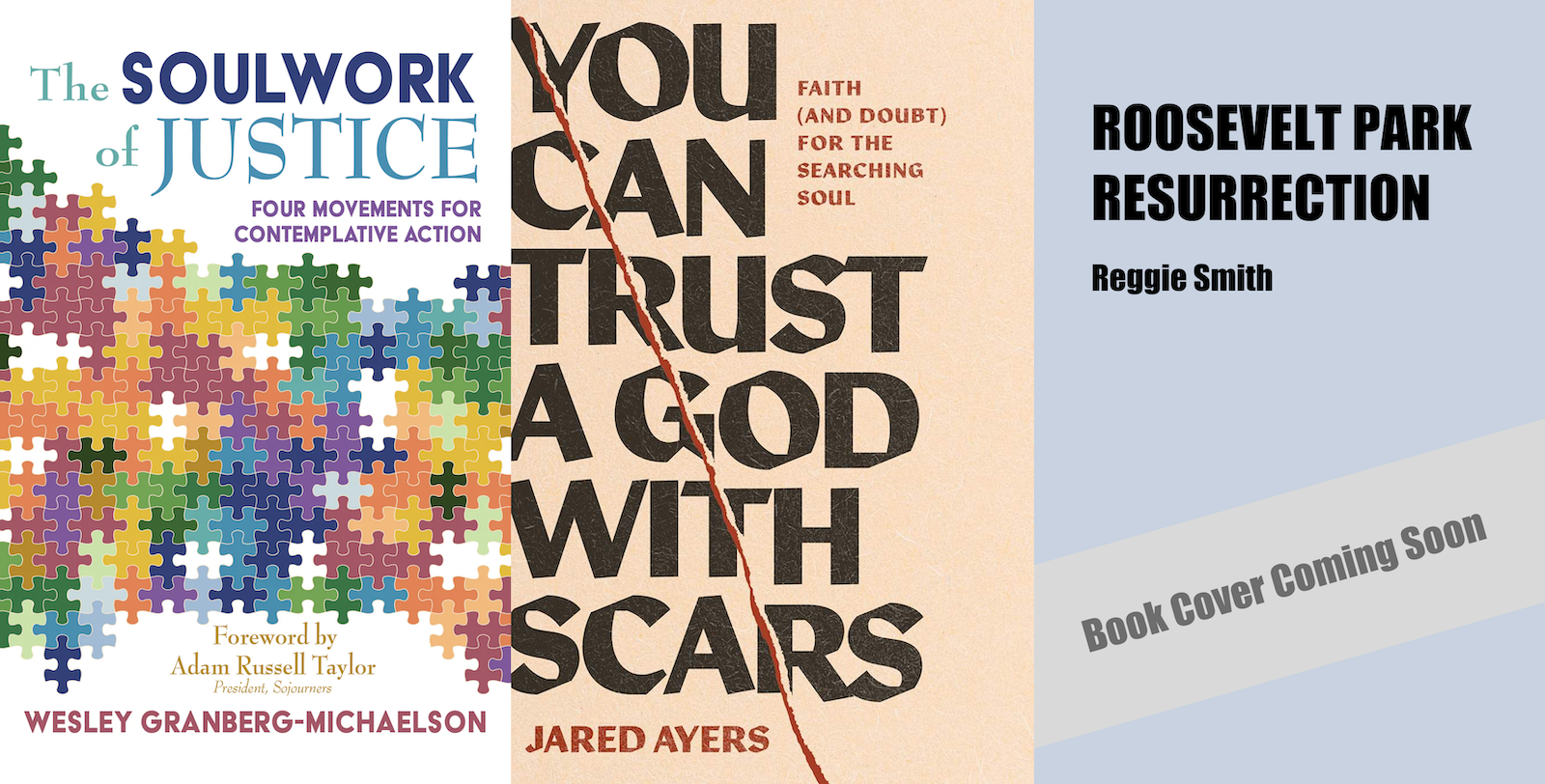
For a gift of $300 or more between now and the end of 2025, or a monthly gift of $25 or more in 2026 and you’ll receive these books. (Canadians: due to shipping costs and exchange rates, we are asking for a gift of $450 (CAD) or $38 monthly.)
Click the purple button above for more details on this year’s special “But Wait, There’s More” offer—three new books by Reformed Journal contributors in 2026! You can use the same page to give an online gift of any amount or to find info on giving by check via mail.
Checks may be mailed to:
PO Box 1282
Holland, MI 49422
6 Responses
I’m with you, Dana – the importance of high school newspapers and the Reformed Journal.
I love the image of a “gathering of voices”—thank you!
The editorial arm of the reporting industry has always been accused of sensationalism and “stirring the pot.” What feels different in the current social media era is how NORMAL and acceptable it is to flat-out lie (while accusing your competitor editorialists of fakery) and claim those lies as first amendment rights. News minus ethics. Thanks for this call to integrity. We need the news industry if democracy is to survive.
Dana,
wow, thanks for some powerful flashbacks to high school journalism! I’m remembering meetings with different teachers about their responses to my so-called “ruffling feathers” and “not seeing some important points of view.”
I even had a run-in with the band director because I wrote a story for the local newspaper (when we had high school students linked to the local paper) about a jazz band. The band director nixed the story because it was too controversial for the general public (jazz at a Christian school! OH, MY!). That was my early experience with censure. I did not like it, and called out the band director for interfering with the freedom of the press.
I need to slow my heart rate here…
Thank you for this piece.
At Hope College I wrote in the School’s paper that as a Christian College, all the students should be Christian rather than the faculty. The faculty should be other than Christian. Then the the students would be well-prepared to be”in but not of the world.” Whew.
Great piece! Student newspapers really teach practical skills, writing, communication, and teamwork, that go beyond the classroom.