
Last month I considered how we often harmonize Matthew and Luke’s infancy narratives. There is no biblical story that includes wisemen and shepherds. And while it is perfectly acceptable at times to combine these accounts, there is also a beauty in pulling them apart to see what each writer was trying to say.
My focus was especially on Luke’s Jesus, who inaugurated a new and alternative empire to Rome’s. In a world in which the powerful built their kingdoms for themselves on the backs of the marginalized, Jesus came with a new kingdom for the marginalized that would be built on the back of the king.
Matthew’s birth narrative does not negate Luke’s vision of Jesus, but it points us to different aspects concerning who this child was and what his coming meant for the world.
First, Matthew portrays Jesus as the long awaited Messiah whose birth had been predicted throughout the Old Testament. The birth of Jesus, his birth in Bethlehem, the flight to Egypt, and Herod’s slaughter of children in Bethlehem all happen to fulfill prophecies from the Old Testament. In each case, Matthew cites the passage that he has in mind to demonstrate that Jesus is the expected Jewish Messiah.
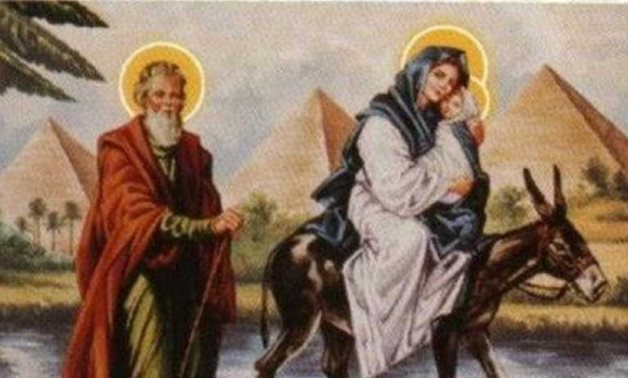
Matthew does this with little regard for the original context of the prophecy. The most blatant example of this involves Jesus’ flight to Egypt. According to Matthew 2:14, Jesus’ round trip to Egypt fulfills the prophecy, “Out of Egypt I have called my son.” On the surface, this prophecy seems natural, but the broader context of this prophecy is surprising. Hosea 11:1-2 reads: “When Israel was a child, I loved him, and out of Egypt I called my son. The more I called them, the more they went from me; they kept sacrificing to the Baals and offering incense to idols.” First, it’s clear that Hosea is referring to Israel as God’s son, not an individual. More problematic is that Hosea portrays a God who called Israel out of their bondage only to have them continue to seek after other gods. These verses reflect God’s lament, not hope.
Matthew doesn’t get this wrong, he simply doesn’t care. The point was never to get historical prophecies correct, it was to make sure Matthew’s Jewish readers understood that Jesus was the long awaited Messiah who had been foretold in their Scriptures.

Second, throughout his entire gospel, Matthew portrays Jesus as the new Moses who has come to set people free from their bondage and give them a new law. This theme is found in the birth narrative, in which Herod takes on the role of Pharaoh who tries to slaughter innocent children in order to keep his power. Like Moses, Jesus in Matthew’s gospel is taken into Egypt and then delivered from it. While it certainly is within Herod’s character to do such a thing (after all, he did murder his own children when he suspected them of trying to overthrow him), Matthew includes the story to portray this child as the new Moses.
Third, Matthew’s gospel introduces King Herod as a foil for Jesus, rather than the emperor. Herod is portrayed as a violent egomaniac who is duped by the wisemen. Imperial terms like “Savior” and “Lord” found in Luke’s gospel are omitted. Instead, Matthew’s Jesus is, as opposed to Herod, the true King of the Jews.
In short, Jesus is the long awaited Messiah, the new and fulfilled Moses, who will lead the nation of Israel back to God and to freedom. But that’s not all he is. For the infant Jesus is not heralded by shepherds, but by wisemen.
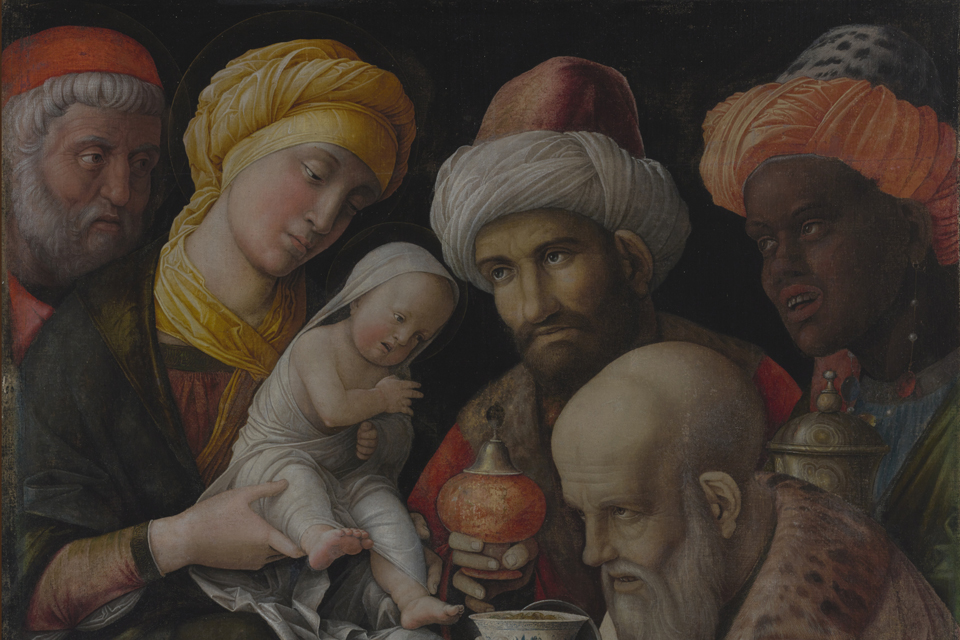
We don’t really know much about the wisemen. It might surprise some of us that the text doesn’t even say there were three of them. What it does say is that they were from the East. In other words, they are gentiles. For all of Matthew’s time spent on making sure the readers understand that Jesus is the fulfillment of Jewish hope, Gentiles are the ones who pay him homage.
Most scholars suggest that Matthew was written to a church made up of Jews and Gentiles. Even in the infancy narrative, Matthew points out that Jesus has come for both of them. He is the long awaited Jewish messiah, but his kingdom will also include the gentiles. In a divided church, this was a message they probably needed to hear.
I wonder if we still need to hear this message? Our church continues to be divided. Sometimes it’s still by race. Other times we are separated by our politics, or ideologies and our theologies. Many of us continue to try and force Jesus into the idealized version of my thoughts and hopes. The divisions of the world and the church seem overwhelming. Yet Matthew’s Jesus is a testimony that those deep divisions can be mended when we submit to Jesus. It may seem cliche or even naive, but there is still truth and hope in Matthew’s message: that the unity of the church can be found in the work of and in dedication to the child king.
That’s a Jesus I could use in this world right now. O Come, O Come, Immanuel.

7 Responses
Thank you, Chad, I appreciate your thought-provoking scholarship.
I was particularly struck with the following in this article:
“Matthew doesn’t get this wrong, he simply doesn’t care. The point was never to get historical prophecies correct, it was to make sure Matthew’s Jewish readers understood that Jesus was the long awaited Messiah who had been foretold in their Scriptures”
It is always enlightening to think of writers’ intentions.
Wondering if we still need this message now? Yes! Thank you Pastor Chad! When I was growing up in CRC, long ago, I thought that CRC people were the only people who would make it to heaven. However, there is one God and His Grace abounds. If we start drawing lines, we divide and we assume that God agrees with us. How arrogant is that assumption? We live by Faith and God’s Grace.
On your explanation of Matthew’s point: that it was just “to make sure Matthew’s Jewish readers understood that Jesus was the long awaited Messiah who had been foretold in their Scriptures.”
I feel like there must be some missing explanatory piece(s) here: unstated facts either about Matthew’s particular Jewish readers, or (more likely) about Jewish modes of reading Scripture. The missing piece(s) would make clear how the Jewish readers could be helped (to “understand” Jesus as the long awaited one) by an out-of-Egypt appeal that, to our ways of thinking, come across as a cavalier even silly appeal to one verse taken out of context.
Apart from the missing pieces, we’d expect that the Jewish readers, if they cared about their Scriptures would find Matthew’s “out of Egypt” as cavalier and silly as we may tend to. And Matthew’s appeal would for that reasoning just be deepening the rift between the Synagogue and any Jewish Jesus-followers. Perhaps you could do a follow up on the missing pieces?
What a birth announcement! Portrayed by different correspondents as a good spell that is being cast upon a broad range of recipients: the baby’s hometown religious community, the locals who live as the lowest wage-earners, and visiting scholar-astrologers from a land and belief system that hometown religious babies are taught to shun as a foreign and ungodly influence.
Writers then and now, putting their experiences and thoughts into words, and generating creative labor toward a future that everyone could live with! Thank you for this essay.
Thanks Chad, From first audience to today, followers of Jesus are always tempted to put God in a box. These thoughts free up the revelation once again. It restored me today.
Thanks for your wisdom and reflection, as always, Chad.
Thank you so much, first time reading your blog, God bless, continue to share such wonderful news! Jesus loves you. Allowing the Holy Spirit to guide you is the best thing you can do!!! In Jesus’s Name, amen! Never forget this!