
We found the church without much trouble, arriving not long after the morning service. Thanks to my research, I knew that this little church in Strijen, South Holland, the Netherlands, was the one where my grandmother grew up before emigrating to Michigan in 1897. Ron and I had dragged our whole family—adult kids and all—to the Netherlands for our first and probably only ancestry tour. I wondered if we would feel any sense of connection to the “old country.”
Fortunately, an older gentleman was still at the church, tidying up, and he welcomed us with curiosity and hospitality—and excellent English. Turned out our new friend Bas was a retired fellow with no official staff position who just made himself useful at church. As my son Jacob remarked later, “You’ve met this guy.” Every church has one.
At one point, Bas explained rather apologetically, “We only have one service on Sunday now.” I laughed and told him I understood his apology, because I grew up going to church twice on Sunday, too, but today, CRC (and other Reformed) churches in the US rarely hold evening services either. I told him about Christian day schools and catechism class, and he understood it all. What a strange and amusing moment of cross-cultural connection.
Like Jim Schaap and Tami Zietse, I remember Sunday evening services with fondness, but I wouldn’t want to go back. Similar to the way Tami and Jim described their memories from California and Wisconsin, I recall services at Alpine Avenue Christian Reformed in Grand Rapids, Michigan, as slightly more relaxed, slightly cozier than morning services. In the warm summers, we turned up for evening services in sundresses (we young girls) or short-sleeve dress shirts (for the fellas), and golden light slanted through the stained-glass windows. Fans, mounted on the walls and tilted downward toward the sweating worshipers, whirred through the service. On cold winter evenings, the windows were black in the darkness, but we faithful were warm and safe, singing and praying together at worship. This benediction instantly brings me back to those dark winter nights:
Savior, again to Thy dear Name we raise
With one accord our parting hymn of praise;
We stand to bless Thee ere our worship cease,
And now, departing, wait Thy word of peace.
Having been married to a seminary professor and worship pastor for almost 40 years now, I marvel at the effort that must have gone into pulling off two services every Sunday. On the other hand, planning worship in those days was a much simpler affair. The pastor chose the sermon texts and the hymns from the Psalter Hymnal. The organist played them. We knew the hymn numbers for the day because the janitor had dutifully rearranged the numbers on the wooden boards mounted in two places in the sanctuary.
Both mornings and evenings, we followed a simple order of service. Sunday evenings, the pastor preached from the Heidelberg Catechism. On those rare Sundays (once a quarter—which strikes me now as hopelessly stingy) when we celebrated the Lord’s Supper, we followed the liturgy straight from the back of the Psalter Hymnal. To prepare for this solemn moment, we had spent part of the evening service the week before examining our consciences with the official liturgy for that. We didn’t even need worship pastors in those days. All you needed was the denominational hymnal, a pastor given time enough to prepare two sermons, a rotating cast of organists, and an underpaid or volunteer choir director. Simpler days.
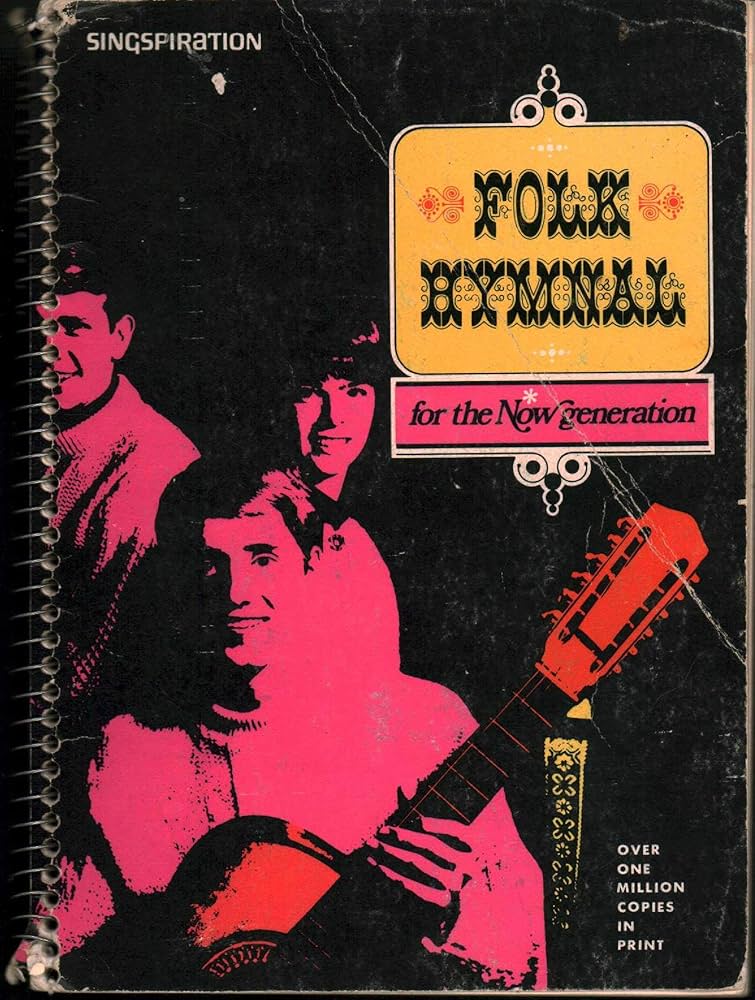
When I was a young teenager in the later seventies, a gentle whiff of the Jesus movement came floating into the CRC. At school, we sang from the Folk Hymnal, a spiral-bound gem that contained classics like “Do, Lord” and “Joy is Like the Rain.” At church around that time, someone got the notion that we needed to sing a few songs before evening worship. We purchased an auxiliary hymnal (imagine the committee tussling over that!), which suddenly appeared in the pew racks. Before the service then, we sang a few American revival classics like “Nothing but the Blood” and “There is a Fountain Filled with Blood”—accompanied by the piano. As a teen, I rolled my eyes at this development and referred to these songs as “the blood hymns.” I more or less gritted my teeth through the “song service.”
As Tami wrote, evening services were the occasion for a less buttoned-up approach to worship, even something slightly experimental. Visiting missionaries might preach, or maybe a Calvin seminary intern if you had one. Maybe the pastor would let the Heidelberg rest for a time and do a sermon series (so modern!). When Ken Medema came to town (his mother was a member of our congregation), the whole evening service might be given over to him. If you were a teenager, and you played your cards right, you might be able to attend evening service elsewhere with a friend. If you were dating someone, you might bring the person to evening worship with your family. This was a signal, of course, that things were getting serious.
For apprentice musicians like me, the evening service served as the minor leagues. You could secure your debut slot for “special music” at the evening service and play Malotte’s arrangement of the Lord’s Prayer with your friend. Your middle school choir might sing a few times a year at someone else’s church—at the evening service. This was a great way to spy on the church life of your schoolmates. In high school choir, we got to visit churches all over the city, only to find out that all the CRCs were pretty much the same.
The way my parents explained it, we worshiped twice on Sunday in order to shape the Lord’s Day, to make sure we preserved the whole day for God. Evening service did succeed in shaping the day. You could hardly plan anything interesting to do after morning church, because by 5:15, you had to be getting ready for church again. The day consisted of morning worship, maybe Sunday School or catechism after church. Then home for a big Sunday lunch—thanks to the moms who did not get to rest much on Sunday—and then naps or reading or some other quiet endeavor. Then it was back to church.
After evening service, you might relax a bit, or maybe not. For my parents, once a month they had adult Bible study and they took turns hosting in their homes. So once in a while, the whole Bible study group came over, in which case Mom and Dad stayed dressed up. The grownups gathered in the formal living room and Mom (like all the other wives) served on china plates the pie she had baked the day before. On most Sundays, though, after evenings service, we could “stand down” from Sunday activities. Supper at my house on those nights was an utterly simple affair—often frozen pizza of the worst quality. Mom was not about to make another full meal!
Honestly, shaping the day for the Lord could result in a fairly unrestful day, what with all these services and churchy activities. Often enough, it was all too much for my dad, and he would come down with a “sinus headache” in the afternoon and refuse to go to evening worship. We called it “Sunday sickness.” In retrospect, I’m sure this was a symptom of anxiety, which he suffered all his life, undiagnosed and unmedicated. These days, we have a name for Sunday evening anxiety before the workweek begins on Monday: the “Sunday Scaries.” I didn’t understand my dad’s problem back then, but I do now.
In those days, I don’t remember resisting going to church, morning or evening. We just did. Everyone did, all my schoolmates at the Christian school, everyone I knew. I have a vague sense that our elders regarded evening worship as a kind of bastion against worldliness. Allow holes in that dike to open up, and the waters of secularism would rush in to drown us. Even if you were out camping or something, you were expected to find an evening worship service. Places like the Christian Reformed Conference Grounds, of course, readily obliged by providing one. But this practice seemed more and more difficult to pull off as people gained affluence, traveled more, accommodated more to American life. I watched my own parents get loosey-goosier about evening worship as the years went on, especially during their winter sojourns in Florida.
“If you’re a once-er, your children will be none-cers!” people used to warn, with a tense smile. Well, there’s some truth in that. Looking back, I marvel that the CRC community across the US and Canada managed to create this consistent culture of communal piety for so many years. In my experience, our shared Sabbath practices didn’t feel especially oppressive. The “rules” seemed “enforced” more by willing communal agreement than by shame or punishment. Violations were met with tsk-tsks around the Sunday table, perhaps. How does a dispersed community create that kind of communal agreement? I wonder if the sociologists among us might explain by pointing to an immigrant community’s anxiety, in those first couple generations, about maintaining distinct identity. We do this to be who we are. And we teach our children!
But of course, as generations go by, this kind of identity-preservation gets increasingly difficult. I’m grateful for the identity-forming practices of those days, including evening worship. Ron and I joke that we’re still living off all the “points” we earned by going to church so much as kids. These days, I’m still a dedicated and usually enthusiastic once-er. But as an introverted person, I also relish relief from a packed Sunday, full of group activities.
I wonder, though, how we can keep receiving the gift of the Sabbath, not out of anxiety about a slide into “worldliness,” but out of engagement with the deepest purposes of that day. Biblically speaking, the Sabbath is indeed about resistance: resistance to slavery, empire, commodification of our lives and selves. But there is also a positive, celebrative aspect to it. In keeping with theology of the Eighth Day, I wonder what practices today can help us experience Sunday as a door to a new, redeemed reality, setting aside the fuss and anguish of our ordinary days and living into the deepest purpose of being human: being, wondering, rejoicing. As Rabbi Nina Cardin describes it, Sabbath is day to stop being a consumer and producer and become a “celebrant”—a celebrant of God, of the creation, of being itself. How can we best do that now?
(Nina Cardin, To Forever Inhabit the Earth: An Ethic of Enoughness (Behrman House, 2025), p. 105.)
(Image credit: Shiffler Equipment Sales. You can still buy a hymn board from plenty of suppliers, in case you’re in the market.)

23 Responses
You mentioned those fans in the summer – oh yes, the hot summer evenings without air conditioning! On the hottest days, our janitor would open the large windows (that didn’t have screens), and occasionally a bird would fly in. You can imagine the chaos of a scared, trapped bird flying around the sanctuary! Things got a lot more interesting quickly. The occasional bee would also cause a bit of panic. Memories.
“ Looking back, I marvel that the CRC community across the US and Canada managed to create this consistent culture of communal piety for so many years.” So true, Deb – for better and for worse! Thanks for this trip down memory lane – you’ve captured it beautifully.
This is such a grand piece of remembering which I’m sure will ignite the memories of many of us: taking a ‘nap’ while listening to Aunt Bertha, church clothes that, as I became a teen, included gloves and nylons, Sunday dinner, sometimes with the exotic visiting missionary, Sunday evening hymn-sings in the auditorium at GHHS where I, too, learned the blood songs. The singing with that Hammond organ and piano onstage somehow felt so free and a bit risque, especially with all the flirting going on. Some of my favorite memories exist around going to grandma’s house in GR for Sunday dinner, followed by an afternoon of sitting around, and attending Mayfair CRC with her for evening worship. We felt like royalty and she beamed as this was her tribe. The best was at least several people telling her that I was the spitting image of my Aunt June, which pleased us both. Thank for for this kick-start of memories.
Thank you!
If you don’t already have it, I recommend Walter Brueggemann’s “Sabbath as Resistance.”
Not quite the same subject but related.
Oh! YES!!! I just read this book, and it’s fantastic! Highly recommend to all.
In addition to welcome memories, a challenge to live toward the future in purposeful Sabbath. I’ve just finished reading another excellent book, “The Ruthless Elimination of Hurry” by John Mark Comer. The idea of sabbath as eighth day celebration comes up there too. This is not merely a need of past generations, but for our generation to discover as well—the gift of God for his free people.
Completely agree! Thanks!
I grew up in an RCA congregation of German Pietist extraction. Services every Sunday morning and night, and, as Dad was pastor, we were obliged to go. We lived on the churchyard so we stayed at home watching our Sylvania console TV (Ed Sullivan, as I recall, and Disney, if channel 10 was coming in that night) until 7:28 or so, and rushed over to sit with mom. Most of the time it was second sermons (poor dad). But sometimes they turned into Bible Studies, so a bit more of a classroom than a sanctuary. And every so often a men’s gospel quartet; mostly really poor knockoffs of the Oak Ridge Boys, but a significant intersection of repertoire. And every service lasted an hour, except for one: July 20, 1969. We were out by 8:05, Now that I look at the historical record, it seems we had plenty of time before Neil Armstrong uttered his famous words, but I guess we didn’t know exactly when that would happen. So we gathered around the black and white TV, listening to the scratchy transmissions, for several hours. No church on a Sunday night was one of the (many) reasons we looked down our noses a bit at those Eastern churches that must not be taking God quite as seriously as we did.
And…..forgot to mention. We sang that same “parting song” every Sunday night.
What a wonderful trip down memory lane! Our pastor, Dr. Frank Steen in First CRC of Detroit, would pronounce the benediction (with hands lifted into the air, of course) after the first verse, and we would follow the benediction with another verse of the song. Some of the best liturgy of those days. I miss the evening service, but things have changed. We’ve gone from one income to two income households– Sunday is often one of the few times families can be together. In those days our faith meant we spent time in church. Today it means we are out in the world, volunteering, serving our communities, and evangelism. People only have so much discretionary time; to take them out of church and use the time in the community might just be an improvement.
A walk down memory lane, indeed! I hope we don’t return to it, but I find solace in, “with thee began, with thee shall end the day.” And I remember my dad, an RCA pastor beginning the evening service with the words, “From the rising of the sun, until it’s setting, the Lord’s name is to be praised. “
Oh, my:
Frozen pizzas (I can tell you we tried the absolute worst and protested),
The wild Kingdom on TV afterward…
And my attempts to get the pastor to understand that we didn’t need to say, “for us MEN and our salvation.”
That gained zero traction…
In the days of Heaven having an all-male cast. Another thing we should be proud of being past.
Thank you all for your appreciative, amusing, thoughtful comments. It has been fun to reminisce!
In the part of Iowa in which I grew up, the post Sunday night service time was an opportunity for a “date”. The teenage girls of the congregation stood outside the church door by the alley and local boys would drive by slowly in their cars to check out the females on display. And we were on display – wearing our Sunday night finest – and tryng to not cast glances when a car drove by. When a boy got enough courage he would stop and ask his chosen to see if she would like to go riding with him. Then the couple would basically cruse the rural highways, showing up to drive around and around the local square of the neighboring towns. The talk of the school the next day was who was seen with whom. I’m afraid not many of us paid much attention to the service or the sermon those Sunday evenings.
Great Iowa story. I think it happened in many locations.
These articles are good for nostalgia but I want to see the church develop a strategy that holds to the intent of the past (based on the word of God) and holds onto its children and young adults. Allowing the second service to fall by the wayside, and disregarding the incursion of sport, shopping, etc. into our Sabbath, has not been followed by a serious discussion of ‘what do we do now?’
Back in the day, my church–South Bend Christian Reformed Church it was then (not now)–had a delightful practice of opening up the service to questions and discussions involving all and sundry at the evening service. The questions were supposed to focus (at least initially) on the sermon (usually itself based in the Heidelberg Catechism) but could involve us in a discussion of all the pressing topics of the day.
Several things were accomplished by this.
One, it offered a rare and crucial opportunity to consider everyday contemporary-life questions of all kinds in light of not only Scripture but also the Reformed tradition. It was done weekly, in a low-stress environment, and it was democratic. Rather than a top-down dynamic, it wasn’t always the pastor who had the best answer to a given question. We all learned from each other.
Two, it let if not the entire church, then at least those who came–which was a cross-section of the usual clumpings of age and profession and outlook that occur in any church–an opportunity to hear and talk to and get to know one another over a long period.
There was, in other words, nothing quite like it, and it was immensely valuable in quiet ways that were mostly invisible or taken-for-granted by us then, but which I deeply miss now. I doubt we will, or even could, see its like again.
Sunday evening services meant so many things at different times of my life. As a kid in the late ‘60s in southern Iowa, we felt incredibly cheated by having to miss the last half of Disney. By the late ‘70s, the balcony at the evening service was the domain of high school kids, and worship took a backseat to scoping out who was there with whom. And in our area, this was about the time that IF it was really cold, and IF it was the evening service, women could wear pants to church. Hard to believe today.
Lovely memories. Thanks for this beautiful piece!
Deb, I think you stimulated all of us readers to turn our memories back to the Sundays of our younger years when morning and evening – or afternoon in dairy farm areas – found us in church following the familiar worship service rituals. More than reviving memories, pleasant or not, your piece was also a means of asking ourselves the question of how those services helped – or not – to shape our faith and faith practice. Thank you, Deb!
As I read I couldn’t help reminiscing myself. The Wonderful World of Disney cut short to pack up for the 7 pm service. The evening service as a testing ground for the “new” Psaltar Hymnal (The Gray) where song requests were gathered from the floor and played by what I now know had to have been a very talented pianist! I may be on the “young” end of those who could look at the oaken heralds and sigh to see the number “250”, and smile at the sight of “404”. I still experience nostalgia thinking of a childhood spent singing, “Abide with Me, Fast Falls the Eventide” or “The Day You Gave Us, Lord, is Ended…” bathed in the warm light of an Ontario sundown.
So glad the post sparked these memories and prompted some thinking about what churches might do now to help people practice Sabbath well.