In a garden overlooking the Avon River in Stratford, Ontario, is a war memorial depicting the triumph of justice over tyranny. The upright figure representing Spiritual Humanity lifts his face to heaven, turning his back on the stooped figure symbolizing Brute Force, who departs in defeat. Spiritual Humanity clutches a laurel branch of peace. Brute Force drags a broken sword.
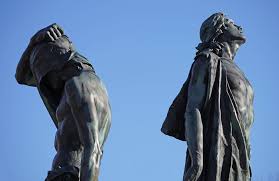
I ambled one morning around Memorial Gardens, savoring Balzac coffee and reflecting on the sculpture’s meaning. The figures invite contemplation. Of good and evil, right and wrong. Of enlightenment and barbarity, peace and violence, kindness and cruelty, justice and oppression. Contemplation, in theological terms, of creation and fall, original blessing and original sin.
We live between these two realities. My thoughts wandered. Questions flooded in. Does the sculpture’s optimism announce a deep truth about the world? Or does it express an illusory wish? Too often Brute Force rules the day while Spiritual Humanity withers and fades.
Augustine of Hippo faced this question in the fifth century. He tried to make sense of the social and political crisis of his time, the fall of Rome, by contrasting Christianity and paganism. The city of God and the city of man. Spiritual Humanity and Brute Force.
And I’m facing the question now. I’m struggling not to lose heart during the sickening Trump maelstrom. I’ve suffered moral injury. I feel betrayed by systems and values I thought were unshakable. I’ve been wounded as longstanding institutions falter. I counted on comforting truths that now seem false. Which, I wonder, will win: Spiritual Humanity or Brute Force?

Sadly, we’ve been here before. Martin Luther King, Jr. knew the savagery of Brute Force personally, firsthand.
You take a cross-country drive and find it necessary to sleep night after night in the uncomfortable corners of your automobile because no motel will accept you. You are humiliated day in and day out by nagging signs reading ‘white’ men and ‘colored’ [and] your first name becomes “n—–” and your middle name becomes “boy.” (Letter From Birmingham Jail).
King also knew Brute Force in ugly and broad social conditions. Such as
bombings of Negro homes and churches. Vicious mobs lynch your mothers and fathers at will; hate-filled policemen curse, kick, brutalize and even kill your black brothers and sisters with impunity; the vast majority of your Negro brothers smother in an airtight cage of poverty in the midst of an affluent society (Letter From Birmingham Jail).
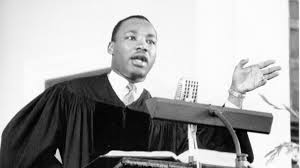
King knew Brute Force well. Far too well. Yet, despite staring Brute Force full in the face, King also believed in Spiritual Humanity. Over and over he called both Blacks and Whites to their better selves.
Nonviolent resistance does not seek to defeat or humiliate the opponent, but to win his friendship and understanding. The nonviolent resister must often express his protest through noncooperation or boycotts, but he realizes that they are merely means to awaken a sense of moral shame in the opponent. The end is redemption and reconciliation.
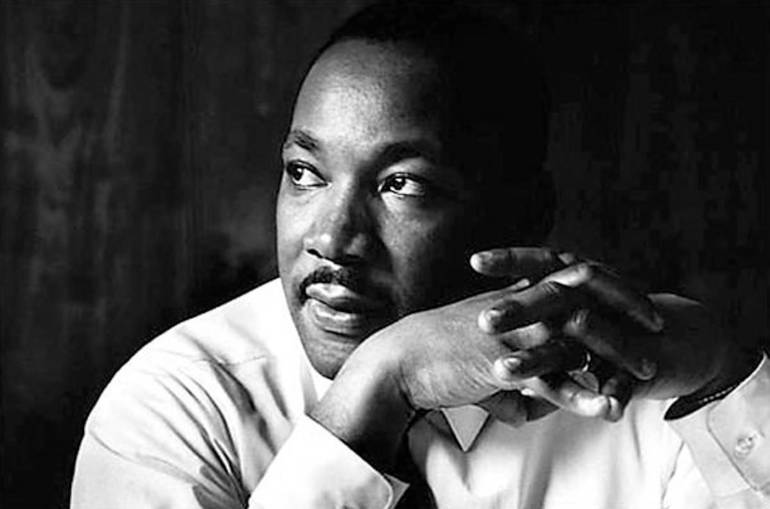
Evil itself, not the people doing evil, are what must be opposed. Nonviolent resistance
avoids not only external physical violence but also internal violence of spirit. In struggling for human dignity oppressed people must not allow themselves to become bitter or indulge in hate. We love men not because we like them, not because their attitudes and ways appeal to us, but because God loves them (Nonviolence and Racial Justice).
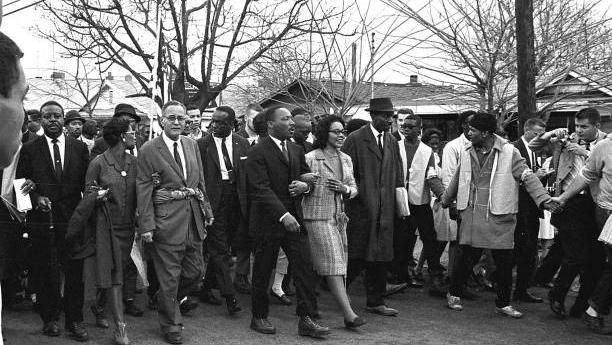
King believed in individual Spiritual Humanity—respectful personal interactions. But he also believed in social Spiritual Humanity—just public structures.
I have a dream that one day the sons of former slaves and the sons of former slave owners will be able to sit down together at the table of brotherhood. I have a dream that my four little children will one day live in a nation where they will not be judged by the color of their skin but by the content of their character. I have a dream that one day little black boys and black girls will be able to join hands with little white boys and white girls as sisters and brothers (I Have a Dream).
King’s conviction that Spiritual Humanity will prevail over Brute Force wasn’t naïve faith in progressive humanism, but sober trust in God’s Kingdom.
The universe is on the side of justice. We know that in the struggle for justice we have cosmic companionship. This belief that God is on the side of truth and justice comes down to us from the long tradition of our Christian faith. There is something at the very center of our faith which reminds us that Good Friday may reign for a day, but ultimately it must give way to the triumphant beat of the Easter drums (Nonviolence and Racial Justice).
The arc of the moral universe is long but it bends toward justice.
I still believe that one day mankind will bow before the altars of God and be crowned triumphant over war and bloodshed, and nonviolent redemptive good will proclaim the rule of the land. “And the lion and the lamb shall lie down together and every man shall sit under his own vine and fig tree and none shall be afraid” (Nobel Prize Acceptance Speech).
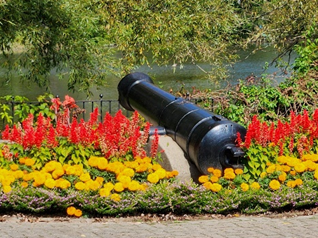
Adjacent to Stratford’s war monument sit two cannons, each circled by vibrant flowers. They convey the same tension as the sculpture—the ugly tamed by the beautiful. Brute Force stands inert and silent amid Spiritual Humanity’s abundant life. That’s the biblical image of God’s good future, when kindness and peace will wipe out cruelty and violence. Swords beat into plowshares. Blooming flowers overspread weapons of war.
I looked a final time at Spiritual Humanity facing heaven with joy as Brute Force stoops in defeat. I whispered a prayer. Maranatha, Lord Jesus. Come quickly! And help us—help me—live into your future today. Amen.