
A couple weeks ago, on January 30, Nathan Groenwold took this space to recommend that, amid all our rage at the current American scene, we consider cultivating a spirit of compassion.
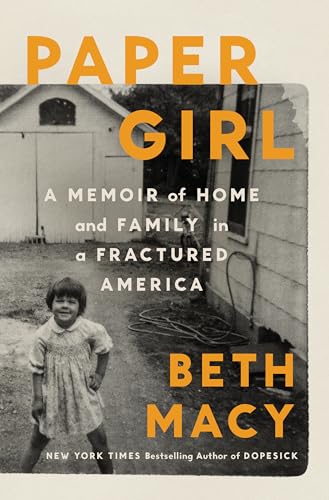
That same night I read David Brooks’s farewell as a columnist in the New York Times. In between I finished Beth Macy’s new and acclaimed Paper Girl: A Memoir of Home and Family in a Fractured America (2025), a lament over the deterioration of her hometown of Urbana, Ohio. Macy offers more a diagnosis than a remedy for Urbana’s demise, but her book left me more impressed with what Nathan had to say than with Brooks.
Social Devastation
Macy, an author and veteran journalist, left her hometown upon graduation from high school in the 1980s but kept in sufficient touch via family contacts to witness the slow-rolling catastrophe that has devastated its social landscape over the subsequent 40 years.
- Factory jobs gone, replaced by heroin, fentanyl, and meth.
- Stable families down; divorce—even more, fitful serial monogamy with children strewn around in temporary arrangements—way up.
- Public school personnel providing the only safety net in town, but contempt for education all around.
- Local sources of information in eclipse; right-wing propaganda outlets in their place, leaving people knowing little about their neighbors but much about mythic enemies on the national front.
- The middle class in town gone aglimmering, leaving a binary of country club and trailer park. Both sides are resolute Trumpites, the one from rage, the other from contempt.
Macy’s picture is much the same as the one drawn by sociologist Robert Putnam in the opening chapter of Our Kids: The American Dream in Crisis (2015), which profiles the demise of his hometown of Port Clinton, Ohio. Putnam emphasizes the loss of the social capital of networks and mentors that were pivotal to upward mobility in his generation. Macy agrees but hones in on the destruction of the two ladders critical to her escape from poverty and abuse: first, well-supported education and, second, the local newspaper which gave her her first job (hence the book’s title), launched her life-long career, and helped knit local inhabitants into a genuine community. Not everyone agreed in the old days, to be sure, but they personally knew whom they disagreed with and shared with them a modicum of mutual respect.
It’s the Economy, Stupid!
Compared with David Brooks’s “both-sides” handwringing over the loss of American civility, Macy names specific culprits with data to back up her charges. Brooks’s column goes back and forth between “politics” and “culture” as the crucial factor in American life but hardly mentions economics. Macy points right there. It was—to return to the litany in the second paragraph above—the demise of factory jobs, the ruthless pursuit of the bottom line by international corporations that cared not a whit for the faithful employees they left behind that constituted the first breach of trust and the font of all that followed.

Brooks fantasizes about the confidence and comity supposedly in place across the nation in the year he started at the Times, 2003, but this is to ignore the lethal lies, apocalyptic fears, and grandiose vanity surrounding George W. Bush’s opening salvo in the Global War on Terror that he launched that year in Iraq. This was Urbana and Port Clinton’s second great betrayal, the price being the demise of genuine patriotism.
Then too, Brooks cites the “idealism” suffusing Barack Obama’s presidential campaign in 2008 without noting the absolute recalcitrance that the Republican Party threw in his way and the white racism that surged in its wake, now spewed forth in daily ugliness from the White House. Macy laments that Urbana, once a stop on the Underground Railroad, today has its full share of Confederate flags.
Bipartisan Betrayal
Not that Macy spares Democrats. They have ignored the drug epidemic and deaths of despair that traditionally would have attracted their concern and initiatives. Likewise, experts might argue that NAFTA and the opening of China to world trade did not cost that many jobs, but for certain regions—especially rural and small-town Rust Belt places like Urbana and Port Clinton—the effects were devastating: five million jobs lost with another two million to follow in the 2008 Great Recession.
The latter is on Bush’s tab; the former on Bill Clinton’s, made worse by his false promise of providing funds to retrain the factory workers left behind. Then there’s the bipartisan shifting of the cost of college education from public to private sources. The Pell Grants that fueled Macy’s rise have been savaged; student debt today amounts to $1.75 trillion, more than American credit card debt.
Salvation by Humanistic Conversation?
Perhaps I’ve been too hard on David Brooks so far. As a humanities major and longtime professor at once was a Christian liberal arts college, I share his sorrow at the demise of that model of education before the juggernaut of pre-professional training for utilitarian purposes. I would love to return with him to New Haven and join seminars discussing Thucydides, Tolstoy, and Tocqueville in the swank leather chairs of Yale’s residential colleges. That just might improve the rising American ruling class.
But would it help Urbana? Its country-club set might indeed profit from discussions of Brooks’s “fundamental questions: How do you become a better person? How do you find meaning in retirement? Does America still have a unifying national narrative?” But would these lead them to undertake the structural changes needed to empower and inspire the dwellers of the trailer park? As for the latter, the relentless pressures that shrink life to a two-week horizon, and that within a dysfunctional family circle that spells at once their deepest loyalty and surest doom, make the questions laughable.
To look at these fatalities and point the finger, as Brooks does, at “hyper-individualism” and moral relativism without examining the two big betrayals that set our national spiral in motion is to perpetuate the cycle. How about some genuine repentance and remediation from the political and corporate classes?
And Religion?
Repentance being the first word of the Christian gospel, it’s natural to look for the church in Macy’s narrative. The results are sobering. The hopeful case is that of Grace, a neurodivergent girl rescued from neglect by a woman who takes Luke 12:48 seriously: “From everyone who has been given much, much will be demanded.” That’s one Christian.
The case of the corporate church is sadly, and predictably, the opposite. One of Macy’s aunts belongs to a Fundamentalist church whose pastor gives cover to her third husband’s sexual abuse of her daughter. The pastor and his whole flock are, however, resolute in their conviction that anyone of same-sex orientation is going to hell. Good to know that, whatever else is wrong, family values are alive and well in Urbana.
As David Brooks argues, Trumpism has entered this religious vacuum with its own cult, creed, and ethic. It’s in fact the neoliberal mantra regnant in America since the rise of Reagan with all the pretty frosting washed away: wealth and power set the pace; those without lose the race; all kneel before the market’s face.

How Far Compassion?
Here we can return to Nathan Groenwold’s call for compassion. I admit I have very limited range on this score for the powers, local and national, who have sold the Urbanas of America down the river, and even less for the Trumpian circle that so dexterously exploits their rage. But for the truly left behind—not the sinners of the LaHaye-Jenkins fantasy but the white middle Americans stranded on the beach of history—I do. Also, and especially, for their Black counterparts who have been for so long the first casualties in the process.
We await a leader and a movement that can unite these people, set against each other by the myth of race, against the powers that deserve their wrath and God’s judgment. Would I then broaden my compassion?

6 Responses
Thanks for calling it. Rightly dividing it. Balls and strikes. For example, Brooks’ both-sides handwringing. Always frustrating.
Thank you prof. Bratt, you always give us something to chew on, something to call us to get off the couch and make a difference. You are a welcome and needed voice in these turbulent times of religion and politics. I needed to read this several times, I assume I caught it, “…longtime professor at once was a Christian liberal arts college,” I too have a difficult time having any compassion for those who are bent on tearing it down.
I was challenged recently by another professor, another prophetic voice from that institution, he wondered aloud why it is ok for voices on the far right (what I call the far wrong) to speak boldly and loudly while what I would call voices of reason think they are not to stir the pot. I’ve learned that most pots worth eating from need some stirring to produce something that taste right. Please keep writing, we need your wise and insightful voice.
AMEN!
Thank you, Jim (James … Prof. Bratt … I’m never sure how formal to be),
I appreciate your good, powerful words. I would add a few to the mix.
“Where your treasure is there will your heart be also.”
Simply quoting Scripture doesn’t finish the job, but I think if we start here and then move to put the remedies of the gospel into action (not as a simplistic Christian Nationalism), we’ll come to a much brighter (albeit much more difficult path) end.
There’s a lot of interpretation, careful discernment, and wisdom required in that last sentence, but I have to believe it’s possible, and if a leader (group of leaders) can begin to build relationships and shape programs/policies around that basic idea, well, maybe, things will get a little better.
Nailed it. This is why making a contribution to RJ was an easy choice during the last campaign. Thank you.
” … since … Reagan ….: wealth and power set the pace; those without lose the race; all kneel before the market’s face.” I like your blend of politics and poetry here, Jim!
And thanks for the astute analysis!