
Marcion of Sinope (ca. 85-160 CE) must have been a wild and crazy guy. He was also a heretic.
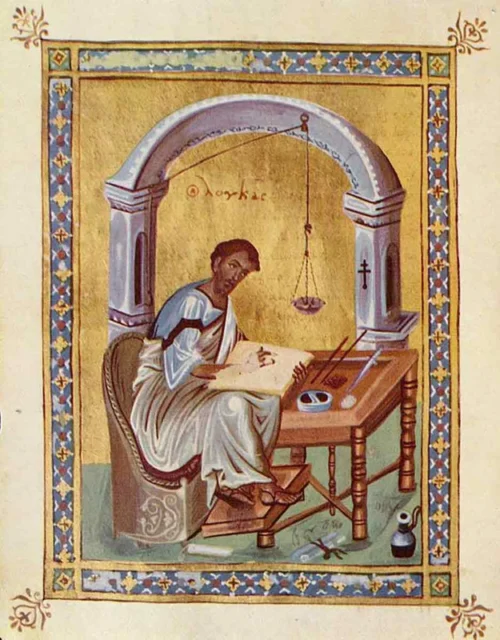
Marcion held many outside the box ideas about the nascent Christian faith. For example, he asserted that Jesus was distinct from the vengeful, tyrannical “demiurge” (creator god) who fashioned the universe. But probably his most well-known claim was that the Hebrew Bible, the Old Testament, should be excluded from the Christian Bible. It’s a bit more complicated than that, but that’s close enough for our purposes. Do away with the Old Testament!
Long term readers of this blog may recall a short-lived series I once began — Heresies I Have Loved. I reflected on a couple Christian heresies (antinomianism and Jesus only) for which I have some sympathies. They make some sense — to me at least. I don’t subscribe to them, but they tug at something.
Similarly (and here I brace for impact) I have some secret sympathies for Marcion’s claim that we should do away with the Old Testament.
In my imagination I already hear the howls, the shrieks, the moaning, the sighs of disappointment in me, the distancing and dismissals, the gnashing of teeth from many of my closest friends, most respected colleagues, revered professors, and faithful readers of the Reformed Journal.
How can I say this? The Old Testament is so rich and varied, deep and wide. It spans so many centuries. It’s composed of so many types of literature. It brims with unforgettable stories, luminous poetry, and astonishing metaphors, as well as delightful, exotic, and provocative characters. It’s earthy. It’s real. It has probably kept Christian antisemitism from being any worse than it has been. Without it, so much of the New Testament doesn’t make sense. It’s our heritage. It was Jesus’s Bible. And a lot more good stuff.
I agree with all that.
I also contend that about 90 percent of Christians, let alone the general public, don’t understand this.
For example:
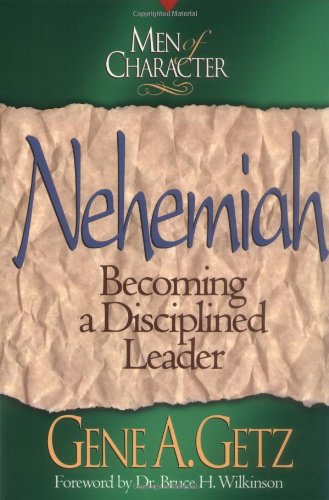
1. Why is it that whenever I talk to conservative Christian men, their church Men’s Group is inevitably doing a “character study” of Nehemiah, or some other strong, decisive, and usually violent man? What is with this preoccupation with “leadership” in Men’s Groups?
2. Haven’t we all experienced an Old Testament reading in worship that contains something deeply troubling or very odd? We all sit there uncomfortably, wondering, “Did everyone else just hear that? Maybe the preacher will explain it.” But then the sermon goes in a different direction. And that one alarming Old Testament phrase hangs in the air, unaddressed, like an ugly stench. We all leave feeling disappointed and a bit disturbed.
3. I’ve come to divide the Psalms into three broad categories. 1.) Beautiful, honest, meaningful — fortunately, there are many. 2.) the whines of a self-righteous, arrogant, and vindictive prig — there are too many. 3.) Davidic dynasty propaganda — not that many, but still too many.
4. The obsession with the first three chapters of the Bible. It has become the Swiss Army knife of the culture wars. The trustworthiness of science. Gender roles. The climate crisis. It is all in there? Did you happen to see the recent review in RJ of a book by a retired Wheaton/Moody Bible Institute professor who dares to declare that many longstanding conclusions drawn from Genesis 1-3 are simply not in the text? Here, we Reformed folk need to own up to our role in strip mining Genesis 1-3. I’m looking especially at you, Kuyperians.
5. Then there is the sermon series through Ezekiel or Daniel. I feel I hear about them all too often. I’ll tell you that I hope to live a good, long life and I plan to read and engage with Ezekiel as little as possible. I’m positive you can lead a very happy and productive life reading Luke-Acts, Galatians, Philippians, and a few others.
6. How about the people who insist on trying to read the Bible cover-to-cover (despite being counseled against it), or those “Read the Bible in One Year” plans? Most stall out in Leviticus, wearied and worried by the blood and killing and seemingly capricious god. Should we be relieved they never make it to the books of KIngs and Samuel? I must, however, share a counter-example, a friend who read through the entire Bible, year after year. It moved him away from fundamentalism. His conclusion about the main thrust of the Old Testament? “The Lord is merciful and gracious, patient and overflowing with steadfast love.” Sadly, he might be the exception that proves the rule.
7. Honestly, so often when I read or hear from the Old Testament, I say to myself, “I know where Christian Nationalists get it.” Yes, of course, I’d contend they are misreading. Still, it is easy to understand why they espouse treachery and violence for the cause of God; why they hate and want to separate from those who are other; or why they feel justified in monopolizing political power. It’s right there in the Bible, especially the Old Testament. A shallow and mistaken reading of the passages? Yes. But still there in plain terms.
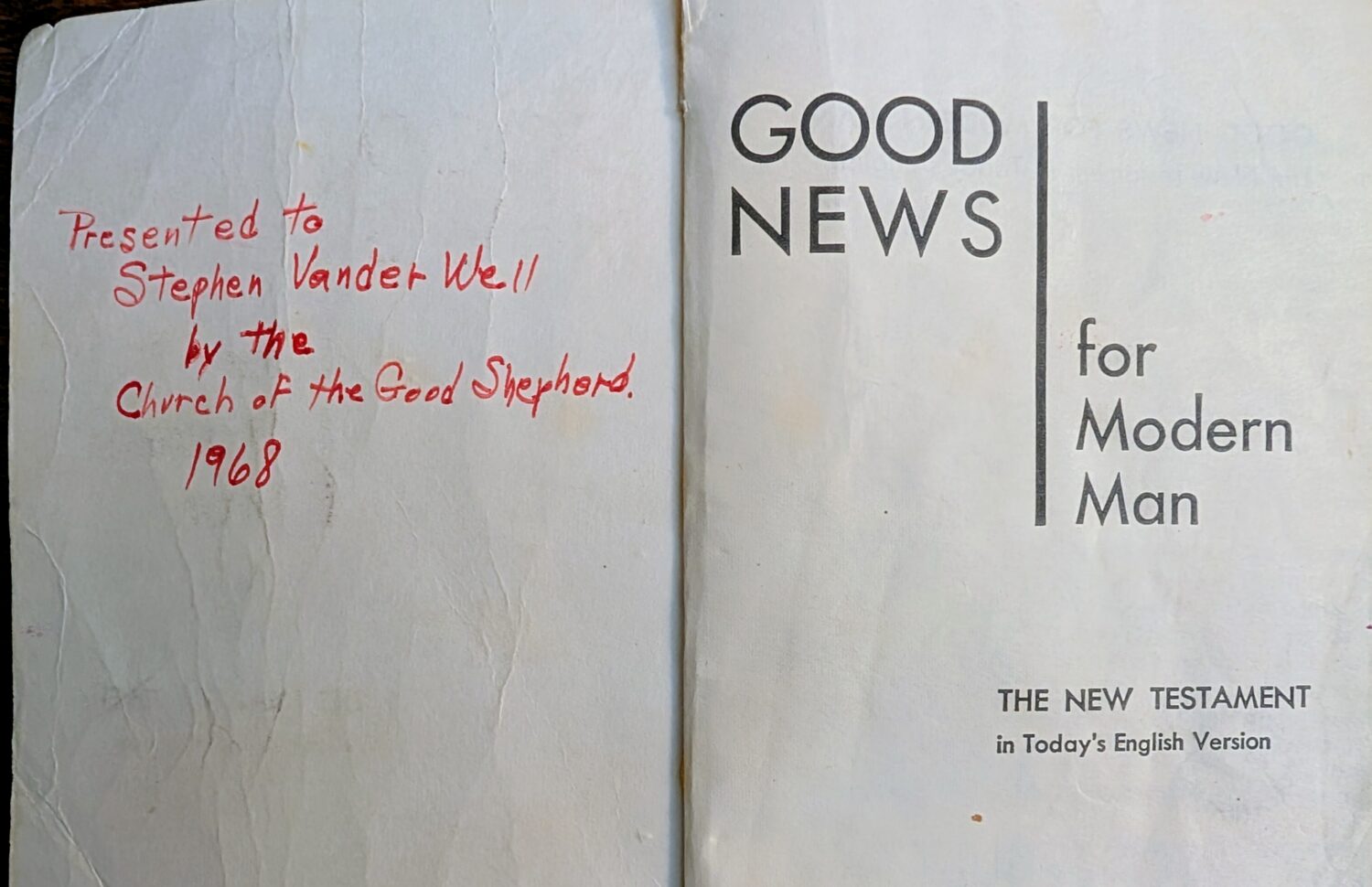
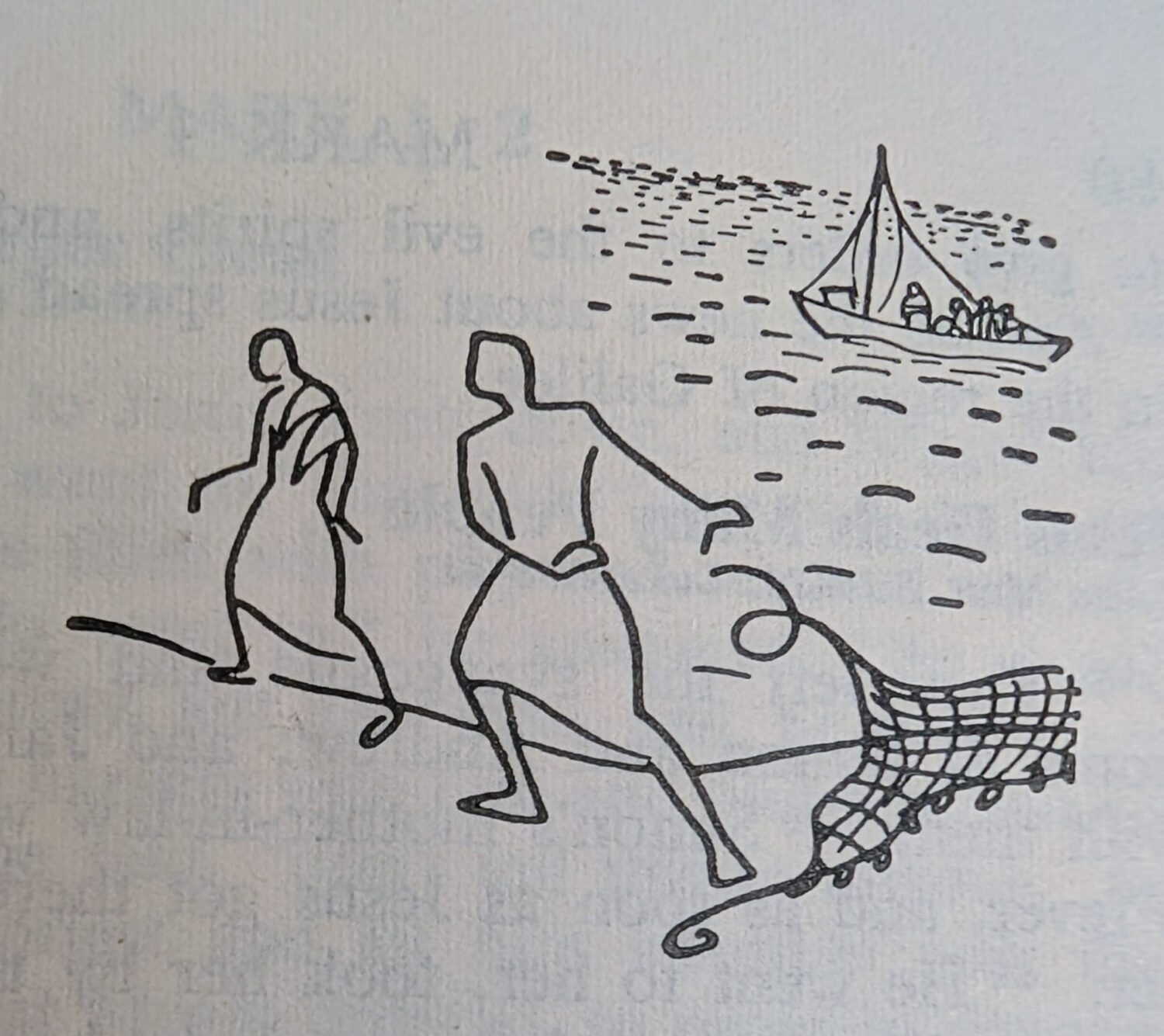
Perhaps it is not incidental that my first two Bibles contained only the New Testament. First, was a pocket New Testament with a green faux leather cover, distributed by the Gideons at my public school. Can that memory be true? It included the Pledge of Allegiance on one of the opening pages, just like a certain “God Bless the USA” Bible currently on the market. Mine, however, was free. The other was a Good News for Modern Man presented to me by my church. Who recalls the spare and fluid drawings in the Good News Bible?
This has been fun. But we are not going to discard the Old Testament, and we should not. So then what?
Our almost instinctive reaction is to say “We must teach it better! Preach it better! More clearly! More faithfully! More often!
Possibly. But time is limited. Listeners are few. There are many other urgent things to teach and preach.
I wonder if we need to engage more publicly and more directly the misinterpretations and twisted readings. Rebut them head-on, at a popular level, not only in academic journals. I realize some of this is already happening.
I wonder also about how we talk to children and youth about the Old Testament, or really the entire Bible. Sugarcoating. Evading. Simplifying. Over-promising. Many adults are stuck with a third-grade understanding of the Bible — what it is, and how to read it.
Okay, Marcion remains a heretic. The Church was right to reject his conclusions. But I’m not entirely surprised that he reached them.

25 Responses
Growing up in church really locked me in to a certain view and understanding of the Bible. It was Rob Bell’s books ‘What is the Bible?’ and ‘What We Talk About When We Talk About God’ that broke my mind out of those molds. Extremely accessible and highly recommend.
Thanks, Nina. While I have lost track of Rob Bell in the last few years, he is the sort of internet/media savvy and winsome person who can take on these issues, and gain access to a wide, popular, and even secular audience. Here’s an old blog that ties into Love Wins.
https://reformedjournal.com/2012/04/10/love-wins-redux/
The Hebrew scriptures are strange, for sure. My son, when he was about ten, told me he did not understand Jews who didn’t covert to Christianity, since the stories in the Old Testament were a lot harder to swallow than those in the New Testament. But my husband and his friend have just finished studying Ezekiel together at his friend’s request. This friend we’ve know five decades is dying, perhaps within months, and had never studied to book and wanted to do so before he died. My husband, in Christian ministry for over five decades, had never preached a sermon on Ezekiel, but want to come along side his friend in this way. When I’d ask how it was going, my husband would say. “It’s a very odd book, but surprising relevant. International politics is a mess. There’s corruption everywhere. God is displeased, but somehow there’s hope.”
Thanks for the courage to name these uncomfortable questions. Thanks for the encouragement to ponder beyond “a third grade level.” Can we continue the discussion?
I join you in hoping we can, Dan!
I listen to a Bible study on the whole Bible. If anything, it makes me more aware of the significance of Jesus. I am discerning enough that I can put things in perspective. It takes 6 months to get through and I have been doing it for at least 10 years. I always think at the end that I am just getting started.
In the Philippines there was a New Testament Only Church and recently in Kenya I saw a sign for A New Testament Church of God. I also appreciated the Good News for Modern Man Bible with the line drawings I got from my Grandparents when I was confirmed in 1971 (which I highlighted with different colours for each gospel). My African students from African Instituted Churches also copy & paste too way many OT commands and laws into their own Christianity for my taste in order to justify more than one wife or other OT rules they want to keep that I don’t. Still, as you conclude, we can’t just throw it out but must deal with it in a better, more consistent way. Challenging ideas.
Perhaps echoing our current era , a redacted OT is in order? Jefferson did so to the NT to make it more “rational”; but whose redactions would we trust and accept would be the issue.
I am more persuaded than ever that the church needs to take another look at “cherry-picking” the Bible. It is more common and does more justice to the ‘sacred text” than what we have traditionally understood.
A wonderfully thoughtful article. Thanks.
“I wonder if we need to engage more publicly and more directly the misinterpretations and twisted readings. Rebut them head-on, at a popular level, not only in academic journals. I realize some of this is already happening.” Yes! Seems like a great idea for your next series.
Thank you, Eunice. Sadly, I’m not the person to do this work. Of course, I’m very fond of the Reformed Journal but I’m not sure most of us here are spiffy and shiny enough to be that sort of person. And I don’t mean that to sound dismissive of either RJ or the media savvy people who could do this. Up above, Rob Bell is mentioned. I watch videos from Dan McClellan, who calls himself a “scholar of the Bible and religion” (and is Mormon!). I don’t agree with all that he asserts but he is strong and honest. The late John Hwang, who was part of the impetus behind the revival of RJ, as well as Kristin DuMez’s work, talked about the great need for “public scholarship” — scholars who reach the popular level.
Thanks for your wisdom and insight, Steve. If it is a possibility for you, I encourage you to take a look at my book “Covenant Documents: Reading the Bible Again for the First Time” for a possible way through all of this without giving up either the Old Testament or Jesus.
Thank you, Wayne. I look forward to reading it. As you know, however, it isn’t so much that I need new information, but rather that I want to see the Church and the public reading the OT better and less dangerously.
Hi Steve. I understand what you’re saying on an emotional level. About 20 years ago, l lead a 90-Days-Through-The Bible class. After reading large chunks of the prophets for weeks on end, with some words of hope, but lots of words of condemnation, it was a great relief to get to the NT. A breath of Fresh Air. Yet, without the OT, knowing the Lord would be so truncated. It would be like me writing an autobiography, and beginning with my ordination service, without ever talking about what happened earlier in my life. Most people have only known me after I became a pastor, but their knowledge of me is so limited by that. The problem with an OT-less Christianity is not that I wouldn’t know certain doctrines or key events about God — it’s that I wouldn’t know God as well. Maybe I don’t want to know those things about God, like a spouse who doesn’t want to know about their partner’s messy past, but then I’m missing out on more fully knowing the Lord.
But what if your entire village has misheard or twisted what you told your spouse about your past? Now it is common knowledge in town that you were a murderer, an abuser, an addict, and a Nazi — even though you aren’t, of course?
“Truncated” seems relative. I think of Bible translators who may only do a Gospel, and possibly a few epistles in a new language. Those people are glad and grateful for what they receive. And it is enough. As I point out, we print lots of New Testaments. The early church had no canon (perhaps Marcion’s wild ideas caused them to make that a higher priority) and did okay.
Yes and amen. I have winced at some wonderful and uplifting sermons from Joshua (and elsewhere) that have ignored the deep ugliness at its core. We need to deal with the God-ordained genocide. I have some inklings on how to do it, but not confidently.
And the Binding of Isaac. I have preached on that one, not quite confidently. It’s scary. And a lot of the typical analogies and applications are simply blasphemous.
On the other hand, I am on my fifty-third trip through the entire Bible. I know where the ugly, messy, awful parts are. One of the reasons I am still a Christian is that life is full of ugly, messy, awful parts. The Bible fits, and proclaims hope in the midst of all that dung.
The thought of trying to read the Bible straight through, cover to cover, terrifies me. Leviticus all in one gulp? Gack! I highly recommend the Discipleship Journal Bible Reading Plan, or whatever the Navigators currently call it. I have used it every year since it was published in 1983. It works with a twenty-five-day month (a stroke of brilliance) and reads four selections in parallel: OT wisdom literature, the gospels, the rest of the OT, the rest of the NT. It works pretty well.
https://www.navigators.org/resource/discipleship-journal-bible-reading-plan/
My two (deprecated) pennies’ worth.
Blessings, y’all,
Steve
Ja, maybe.
And maybe wrestling with all that stuff is a necessary exercise of the Christian moral imagination, the requisite forty days of temptation in the wilderness.
Thanks, Steve. Marilynne Robinson’s grand, literary “Reading Genesis” might be for some RJ readers a helpful and inspiring approach to the Penteteuch—and beyond. I believe that she is now at work on Exodus.
My main memories of the Old Testament come from my earliest Sunday School classes (my first day, at age 3, I told my mom they cut off the head of John the Bathtub…okay, I had some theological issues there, but who teaches that to 3-year-olds? I didn’t seem to be fazed; maybe we were tougher in southern Iowa).
But perhaps more vivid are the large illustrated pictures that came on an easel at our Christian School. Only certain stories had pictures, so we could wait weeks to see a new one. I can still see Queen Esther with flowing red hair, reaching out her hand to the king’s scepter.
It wasn’t until I was older and looked at some of those “weird, I-can’t-find-them-at-the-end-of-the-Old-Testament” books, specifically the minor prophets. Their cries for justice and peace and condemnation of the rich and complacent shook me. Then we morph into the Sermon on the Mount in the New Testament. Yes, I see the tie-in.
Thanks for offering another honest, playful, and intriguing post, Steve, as a belated contribution to your series: “Heresies I have Loved.” If I was among those friends and colleagues you’d imagined disappointing, groaning, etc. upon reading your offering, perhaps you’ll be reassured and/or amused to learn that as I read aloud the entire Torah this past week I was overcome by an admixture of awe and antipathy, delight and dis-ease, being reduced to tears by the compassion of some and alternately revulsed by the traumatization of so many.
I’ve never engaged the Scriptures (OT or NT) at this pace or in this way. I wouldn’t advise others to do so – certainly not without trusted friends in faith with whom to process the experience – but I’m grateful for having done so because of comprehensive view it provided into the Torah scroll/Pentateuch, which is of course foundational both for our older Jewish siblings, and in a different way, for those of us who confess Jesus to be the Messiah of Israel, the fulfillment of the law and prophets.
I’ll also note that I was sufficiently overwhelmed upon finishing this immersion that I’ve paused my intention this Lent to continue with the Nevi’im (former and latter prophets). Like the overabundance of offerings brought to Moses by the Israelites in the wilderness to build the tabernacle, there’s already “much more than enough” to metabolize.
I concur with you, Steve, the ancient church leaders were right to reject Marcion’s teaching. However, I find myself grappling anew with the affirmation that the books of the Old Testament (and for that matter, those of the New Testament) are the Word of God and the perfect doctrine of salvation. And in response to Dan Breens’ request that we continue the conversation, I’ll share what I can currently in good conscience affirm as regards the Old and New Testaments: I believe the Scriptures to be fallible human witnesses to the Word of God and through the illumination of the Holy Spirit their varied testimonies become authoritative for us.
Heretical? Perhaps so. I hope the conversation continues!
This is an excellent presentation of a topic usually ignored. My wife Jan and I decided to read through the Bible together, out loud. We started at Genesis 1:1 and just recently turned the page to Matthew 1:1. We have both been immersed in Whole Bible teaching for the past 70+ years, so we were not so troubled by those nasty parts of the OT. But we have to admit, that reading Matthew is a lot more fun.
“I wonder also about how we talk to children and youth about the Old Testament, or really the entire Bible.“
Nobody has addressed this question of yours yet, so I’ll give it a try.
We should clearly tell children the whole story of sin and our redemption through Christ, from a young age and continue to do so throughout their adolescence. If they understand that overarching story of God’s plan of Salvation then the Old Testament will make sense for them. Of course each part will need to be explained with sensitivity and great care. Churches, please assist your parents and educators in this task.
What has helped me as I get older is learning to read Scripture as the story of God and not the verbatim word(s) of God. Early Genesis, for example, might better be read as though CS Lewis had written it. One cannot (and should not try to) always demand a specific lesson from an isolated passage. We all have passages that better serve us when we humbly shrug at them. I find it fascinating that God entrusted dozens of (unedited) authors to write God’s story. Similarly, Jesus handed off his entire legacy to a dozen marginally equipped disciples. Our omnipotent God is so helplessly relational. (That statement must be another heresy.)
I confess to wondering what Al might have said. Probably something erudite and lengthy, but it would boil down to “maybe too much Barth and not enough Van Ruler, eh?”
It seems like that was always what Al would say to me!