
I once knew a woman who disagreed with her pastor about almost everything. When it came time for said pastor to lead the congregational prayer, the woman would send up a “minority report,” urging God to disregard—or at least edit—the prayers of her pastor.
I think of that woman every time I pray Psalm 72. It’s a prayer for the “king,” so that’s the first and most obvious edit. I don’t live in a place with a king (or at least, not yet), so I insert the name of whatever political leader seems to need praying for the most.
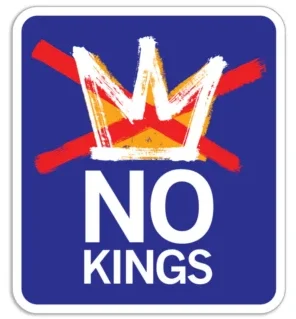
This psalm seems to come up in the daily lectionary close to national presidential elections, and it’s often posed a bit of a problem for me when the candidate of my choice has gone down to defeat. Praying that the winner “live while the sun endures and as long as the moon, throughout all generations” is not my desired outcome. So, I send up an editorial suggestion—namely, that the new president live through the next four years, and that the country survives the same.
The values of the psalm often create a certain cognitive dissonance as well. I’m all for praying that a new president be just and “defend the cause of the poor.” And having a president who “delivers the needy when they call, the poor and those who have no helper,” would be great. But how does one pray when those are not the priorities of the newly elected president? Again, I send up my editorial suggestions, asking that God would change the new president’s values so that they would better align with the psalm’s.
It’s worth noting that the Bible itself has trouble producing leaders of this caliber. Maybe that’s why generations of interpreters have read this as a messianic psalm—a description of the “One who is to come” and not of any earthly monarch.
Still, I’m wondering if there might be other interpretive options. Is there a way to read this psalm about the leaders we already have? Is there a way to pray this psalm that doesn’t require us to edit as we pray?
I’d like to suggest that we try reading Psalm 72 as a kind of rubric against which to evaluate our leaders.
In 31 years of teaching, I came to appreciate rubrics. If you’ve been away from the classroom for a while, here is a boiler plate definition: “Rubrics offer a set of criteria used to evaluate performance, typically detailing quality levels for each criterion.” In other words, they are a kind of covenant between student and teacher. The student knows what the teacher’s expectations are, and the teacher knows the basis on which to evaluate the student.
Here is what it might look like if we used Psalm 72 to create such a rubric:
| Proficient | Promising | Problematic | Pernicious | ||
| SCORE | 10 9 8 | 7 6 5 | 4 3 2 | 1 0 | |
| Judges with righteousness | |||||
| Delivers the needy from violence and oppression | |||||
| Promotes policies that allow people to flourish physically and spiritually | |||||
| Promotes peace and security in international relations | |||||
| Values the life and well-being of citizens |
I’ve had to paraphrase the criteria in the left-hand column, of course, but perhaps you can come up with words you like better. And to be honest, there were some verses I simply didn’t know what to do with. For instance, I’m not sure what to do with verse nine’s prayer that the king’s enemies “lick the dust.” That one may still require us to edit on the fly.
The quality descriptors across the top attempt to cover the whole range of possibilities. I briefly considered using “incompetent” instead of “pernicious,” but 1) it doesn’t start with “P”, and 2) I think we need to go there. “Incompetent” could be covered under “Problematic,” after all. And some political decisions are not simply incompetent; they are pernicious. Perhaps you can think of examples from recent events.
Well, take Psalm 72’s rubric with you to the polls and to your prayers. I hope it helps—and I hope it works.
*All biblical quotes are from the NRSVUE

4 Responses
Lovely piece, Carol. My eyes tend to glaze over at the sight of grading rubrics, but you’re showing how they can be a prompt for more careful and precise thinking. In our age of noise and bluster, that’s a gift!
And maybe a national report card is in order, from us citizens up to our leaders.
Thank you. I will also try to use those criteria when choosing which persons for elders, deacons, and and pastors. Using them to select Sunday School teachers et al. for church work wouldn’t be a bad idea either. Not sure how I would have fared on those rankings in my own pastoral life… Time to pray, I guess.
In both leadership and personal relationship roles, Micah 6:8 is a wonderful guide. “He has showed you, O man, what is good. And what does the Lord require of you? To act justly and to love mercy and to walk humbly with your God.”
Creative and relevant. It provided me with a whole new way of looking at and using this Psalm. I appreciate the rubrics you created.