
Earlier this month, my family rented a cabin in Michigan’s Upper Peninsula on the shore of Au Train Lake, near the mouth of the river of the same name. We kayaked into this river that twists and turns for miles before cutting a path through a sand beach into Lake Superior. The warm, golden river pushes out into the lake while its clear, cold waves lap in.
Seventeen years had passed since our last vacation to Au Train, a small town just 20 minutes from the Pictured Rocks National Lakeshore. Each time I visited the freshwater estuary of Lake Superior during our week, I did a double-take. The river had shifted and adapted since my previous visit. While the beach remained, the path it forged was entirely new.
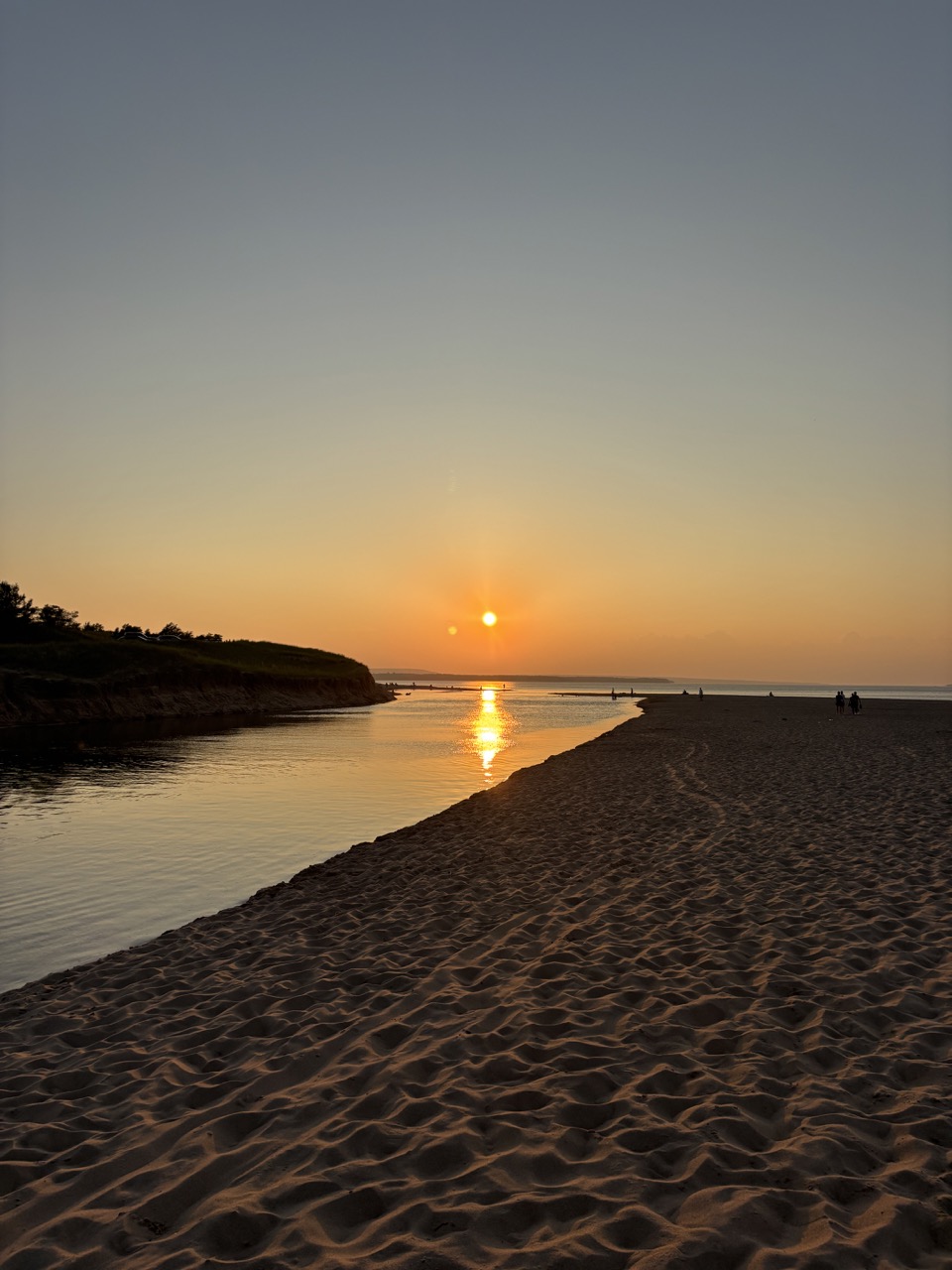
What I remembered as the river’s straight and narrow path through the beach to Superior, under a bridge over the increasingly busy M-28, now widened and cut diagonally, creating a dune along the parking lot. Squealing children ran down the cliff’s sandy edge, splashing and tumbling into the river’s warm water. Signs in the parking lot urged visitors to stick to the paved paths, to avoid erosion, the wear and tear of their footsteps.
And yet, I found myself doubting my memory. Had the river altered its course, or had my recollection warped over time? I pulled up old photographs in my mind and on my phone. I recalled sitting on the edge of the quiet river as my toddler, my first son, played in the water.
It had been more than six thousand days and nights since I’d last walked here. Millions of moments: loss, grief, and growth. Shifts in relationships, the forming of new friendships. Hundreds of encounters and turning points that created new understanding, an erosion of what I once knew to be true, and changes in identity.
My baby, who once splashed in the river, is now a college student. I have two more sons, all of them taller than me, all of them quick to roll their eyes at their mother’s nostalgia.
And yet, after a decade and a half, would I have expected things to stay the same? Water had flowed down this river for thousands of days since I’d last walked this shore, enduring busy seasons of summer tourists paddling its waters, carrying autumn’s discarded leaves in its current, weathering the cold winds and blowing snow of northern winters, the cracking of ice and the slow awakening of spring.
The river’s current, so assured and resolved in its new path, silently confirmed this passage of time. It was the visible embodiment of my reality—stinging and soothing in equal measure.
The river’s power, flexibility, and lack of certainty prodded me to consider my powerlessness. Its altered course stood as a visible reminder that life keeps moving — that though I hold tight, try to steer by my own directions and will, ultimately, I cannot.
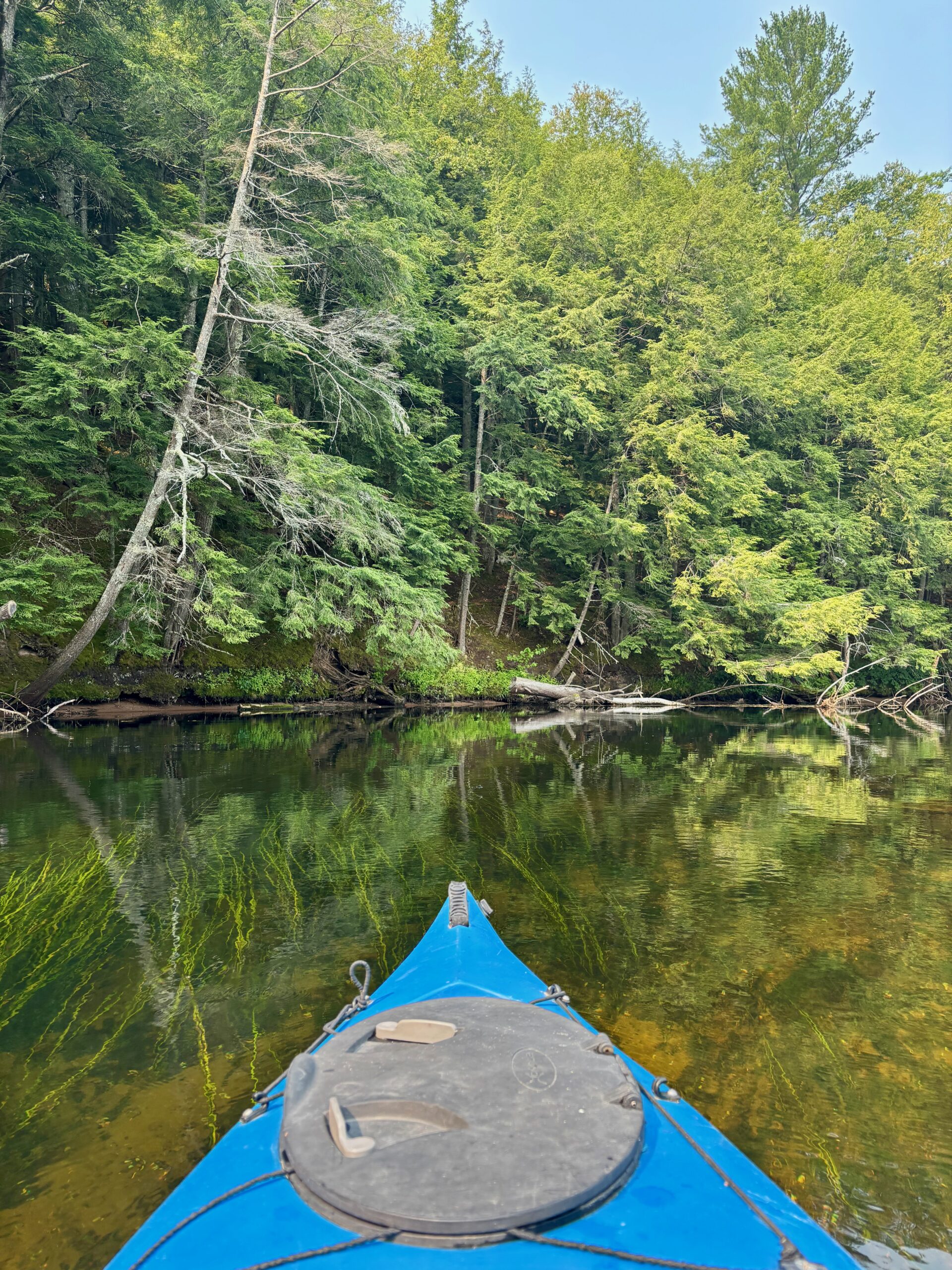
As I kayaked down its waters with my youngest son, I could almost hear its voice in the current: See how this works? It’s a constant surrender. The river speaks from long practice, from the humility of letting go.
My natural inclination is to grip life tightly — to cling to each season with a fierceness that flirts too close to fear.
The thing about faith, about believing in the divine and wonder, is that we do not know what’s around the next bend, we do not know where the waters will take us. To say we are people of faith is easy; to live a life of constantly releasing our will, our plans, our control, is painful and hard and revealing.
Like seasons repeating each year, it’s a lesson I keep relearning. Each August, my stomach ties in knots as I let go of summer—and my expectations of it. I clumsily step into the next season, into the cool of fall, needing reminders not to cling to certainty, even as I know the risks of vulnerability.
In returning to the river, seventeen years from who I once was, what I found was not exactly peace, but presence. The current urges me forward, promising not predictability, but something greater: surrender.
14 Responses
Delicious read this morning, Dana! Love that part of the UP.
I thought of you as I wrote it, Tim! You might have a more scientific explanation for some of the changes than I managed. 🙂
This essay reminds me of one of my favorite quotes by John O’Donahue:
“Oh to live like a river flows, carried by the surprise of its own unfolding.”
Thanks, Lloyd. I’m jotting down that quote.
Your writing is profound! Thank you for sharing your insightful thoughts.❤️
Thanks for sharing this experience with us and challenging us toward faith and surrender. I needed this reminder today.
Thank you for this beautiful post and these pictures. Underneath the tranquility of those waters, much is happening. We want to freeze these moments of beauty and hang on to them forever – but that denies the reality of constant motion, growth, and change. My grandpa (who passed away many years ago) had a favorite saying, “Time marches on.” Almost as if to say, don’t stop growing, don’t stop learning, keep moving.
I really appreciate these words of yours that I echo and will reflect on today: “Millions of moments: loss, grief, and growth. Shifts in relationships, the forming of new friendships. Hundreds of encounters and turning points that created new understanding, an erosion of what I once knew to be true, and changes in identity.”
You’re reading my mind. Thanks for the good counsel.
Seems strange to say, but your writing about this feels kind of “peaceful-riverish.” Thank you.
Thanks for this beautiful memoir and wise counsel.
Thank you for this gift, Dana. Much appreciated this morning.
Thank you from a fellow paddler. I got my canoe back on Irondequoit Creek for the first time in nearly a decade. I followed the creek as it wound through the wetlands, largely the same but always different.
My thirty pound canoe weighs considerably more than it did a decade ago. The creek isn’t the only thing that has changed between my ages of 65 and 75. As you say…
Peaceful and a rich reflection.
Thank you for this beautiful analogy Dana. The serene photo of your kayak on that peaceful river reminded me of a similar experience in my kayak on Torch River when we first moved up north in the mid 90s. It felt like being at one with nature in its simple beauty. Unfortunately as time moved on and more people in loud, noisy, gas guzzling boats discovered the river, navigating it obecame like rush hour in a big city. My first memory remains. You remind me to let each moment be enough and find new ways to savor the next moment. The abundance is promised. Thank you.