
I didn’t want to write about lament.
The truth is I’m tired of lamenting. Or at least, tired of holding in my mind and heart all the reasons we have for lamenting these days. I’m tired of being troubled, dismayed, baffled, shocked, worried, and sad every time I read the newspaper headlines or scroll through my Facebook feed.
I suspect I’m not alone in this. According to a survey conducted last year by the American Psychological Association (APA), over 60% of adults expressed being highly stressed and emotionally fatigued by the political, economic, and religious realities unfolding in our country and communities. Dare I say that number is probably higher now.
So reading a(nother) blog post on lament may not rise to the top of the list of things you want to do today. I get it.

But I committed to exploring biblical scholar Walter Brueggemann’s contributions to the church over these five Sundays in August and it is impossible to do justice to Brueggemann’s work without talking about his insights into the biblical practice of lament. More importantly, however, for those of us who may be feeling a bit jaded about lament, spending some time considering Brueggemann’s robust vision for lament in the Christian life may be just what the doctor ordered.
The rationale for the practice of lament in the Christian life is pretty straight forward. A genuine covenantal relationship like the one God establishes with us requires honesty and vulnerability. We come before God as we truly are, as people who experience in our lives and in this world both goodness, love, and joy, but also suffering, injustice, and evil. Which is to say that we offer up to God not only our praise and thanksgiving but also our grief, pain, and disillusionment. For many Christians, when they talk about lament, this is what they mean.
But Brueggemann goes on to note that, because God is God, our lament is never just the cathartic voicing of our grief as if we were sharing our frustrations with a friend or a spouse. It is the voicing of our pain, anger, and disillusionment to God because God has not behaved in ways that we had hoped or anticipated, leaving us puzzled, confused, and troubled. Lament arises from the disorientation we experience in the face of suffering and grief, wondering why God has not acted on our behalf. It is naming for God the disconnect between what we believe should be true and our lived reality.
In other words, lament is theodicy in action — the gut-wrenching cries of God’s people in trying to process the coexistence of a good and powerful God who is active in the world and the presence of unbearable pain and injustice. In full-bodied sobs or hushed tones, it is the unfettered articulation of “My God, my god, why have you forsaken us?” (Psalm 22.1). While some might consider this kind of speech to God impious, Brueggemann contends that lament is an essential and even necessary practice of Christian discipleship and that the loss of lament leads to a disembodied faith untethered from the realities of our lives and this world.
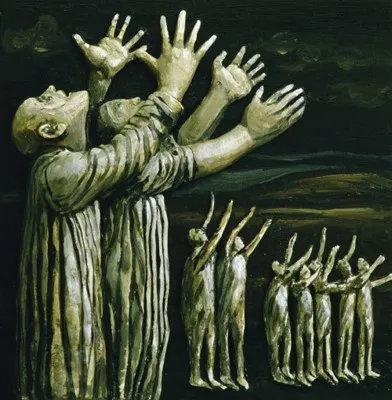
Not only an important spiritual practice for personal faith, Brueggemann notes that lament also has a public dimension. It is a way of naming and protesting injustice in the world. Through lament, we acknowledge that there are things that are happening in our world and in our communities that are not the way they are supposed to be. Lament is the means by which we give voice to the way oppressive systems and abuses of power break shalom and bring harm. In our lamenting, we contend that things need not be this way and that we will not settle for such a world. And so we cry out to God. We protest the world that is and we plead with God with insistence and expectation for God to do what he has said he would do — which is to bring about a world of justice and shalom and make good on the work that was completed by Christ in his suffering and death.
The importance of lamenting suffering and injustice cannot be overstated for Brueggemann. When lament is stifled or abandoned, questions about injustice are also stifled and deemed inappropriate or disrespectful. In such a situation, it is assumed that whatever injustice or suffering exists is either God’s will or beyond God’s control and so we simply accept the world as it is. We make peace with the presence of evil, adjusting to the injustice and evil in our midst as an acceptable, even normal aspect of our lived reality.
For this reason, lament is not optional but imperative for Brueggemann. Naming and calling out injustice and evil is one of the ways we as Christians participate in God’s redemptive work. It is not simply an expression of grief but also an act of resistance and hope. In lament, we refuse to accept that this is how things must be and look to God to bring about a different future.
Lament moves us from a position of victimhood, powerlessness, and despair to renewed action, empowerment, and hope. Lament not only unites us in solidarity with all who are grieving the present state of things but joins our hearts with God’s weeping over evil and God’s commitment to redeem and restore his fallen world. Lament reignites in us a sense of possibility of what God can do and how we can participate. Lament is an act of hope.
Brueggemann’s work on lament is not just theory. There are many in our communities right now who need the Christian community to practice lament, to name and call out the injustices and suffering that is being brought about or exacerbated by the decisions of our current political administration. To identify the systemic injustices that have given rise to grave inequities between people groups in this country. To give voice to the voiceless. To amplify the concerns of the vulnerable. To cry out to God before a watching world that all is not well with the world and that we refuse to accept this state of things.
This may seem like a small thing but as people of faith, it is ours to do. And so we join with the psalmists, trusting that God accepts, invites, and even responds to the laments of his people and we cry, “Our souls are in deep anguish. How long, Lord, how long?” (Psalm 6:3)

6 Responses
Lament is not optional but imperative. Excellent.
I grew up with the mindset that you describe here: “When lament is stifled or abandoned, questions about injustice are also stifled and deemed inappropriate or disrespectful. In such a situation, it is assumed that whatever injustice or suffering exists is either God’s will or beyond God’s control and so we simply accept the world as it is.”
As I grow older, I continue to learn the importance of lament in the church, in my own life, and in the world. Thank you for these wise words today.
Thank you, Amanda. This is so fitting for these days. Earlier this month the informal “Ontario Collective” held a day of lament, discernment and hope in St, Catharines. This gathering of reps from 22 congregations kept plodding into an unknown but hopeful future as most are leaving the CRC. As part of our time of lament our worship leader led us in that stirring version of Psalm 6, “How Long?” For those interested, here is the link to Latifah Alattas leading a Porter’s Gate ensemble: https://www.google.com/search?gs_ssp=eJzj4tVP1zc0zDbMsCzJSSo3YPQSy8gvV8jJz0tXKMgvKkktUi9WSE8sSQUA9T8M-w&q=how+long+porter%27s+gate&rlz=1C1CHBF_enCA1097CA1097&oq=how+long&gs_lcrp=EgZjaHJvbWUqDAgCEC4YJxiABBiKBTIGCAAQRRg5MgYIARBFGEAyDAgCEC4YJxiABBiKBTIHCAMQABiABDIGCAQQABgDMgcIBRAAGIAEMgcIBhAAGIAEMgcIBxAAGIAE0gEJMTA1NjBqMGo3qAIAsAIA&sourceid=chrome&ie=UTF-8#fpstate=ive&vld=cid:ba766f26,vid:Ac5eK-ih9Dg,st:0
An excellent summary of the importance of lament and its link to protest. An intriguing question for me has always been how the coming of Jesus might have transformed what it means to lament. Lament can be found in the New Testament—even after the cross—but in terms of its presence and character, it seems smaller and different than in the Old Testament. The suffering is still there, but the lament seems transformed to me.
That’s a really interesting insight, David. I wonder if one of the ways lament is different post-resurrection is that we have a guarantee of God’s intentions to redeem his fallen world that was not available to God’s people prior to Christ. Because Christ has died and Christ is risen, we can also say with confidence, Christ will come again. I’m not sure it makes our lament smaller . . . but maybe more earnest and more hopeful. Just thinking out loud here.
A simple “thank you” for your insights and a reminder of the value of lament in these times.