
Editor’s Note: this is the second of three responses to Roger Nelson’s post Monday on adult children and faith.
Our kids were raised in the church, worshipped weekly, went to Sunday school, youth group, Power Connection, Rocky Mountain High, and attended a Christian college. We talked about faith and church at home over dinner, when life got hard, and when life was good. We did not sugar-coat life, faith, or the church. Our conversations were rarely black and white. We wanted our children to grow up seeing and appreciating complexity and nuance. We never painted the church as a perfect institution, but our words and actions affirmed how much we valued church.
Our three children are now adults, and they don’t attend church.
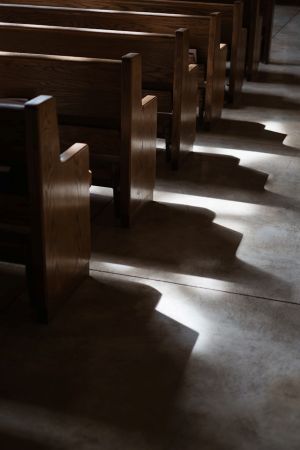
I was part of the discussion that generated Roger Nelson’s Reformed Journal piece on Monday and I’m grateful to Roger for writing his article and the chance to respond because it motivated me to talk with our kids about church. The conversations were fruitful and interesting.
All of them shared warm memories of church. They remembered time with friends and feeling loved by adults in the church. Without prompting, they described a sense of community (community they still feel when they come back home and attend church with us) and they appreciated that the church contributed to building a moral foundation that they still value.
Entering these conversations, I worried that I was going to hear them say that they rejected the gospel. But as we talked, it quickly became clear that they did not reject the gospel, they rejected the church—especially American evangelicalism which has come to stand for the church in their eyes.
They visibly bristled when they described how repugnant it is to them that the evangelical church has aligned itself so closely with a political movement (MAGA) they see as immoral, unethical, and untruthful.
They lamented a church they described as preaching love but acting hatefully. I asked them for examples. They said they cannot be a part of a church that aligns itself with Israel, a country openly committing genocide in Gaza. They don’t want to be a part of an institution that actively excludes people based on their sexuality. They named the hypocrisy of a church that claims to care for the things God cares about but turns its back on an impending climate disaster. A church that rejects science generally—climate, evolution, vaccines—is not attractive or welcoming for them.
I asked them if they could see a future in which they attended church once again. They all said they could. I asked them to describe a church they might attend. They described services that were discussion-based, welcoming to all, making a positive difference in their neighborhoods and cities—working on housing, hunger, and other social justice causes.
I challenged them about this. How was the church supposed to change and become what they were describing if they weren’t a part of it, helping to drive that change? Two of the three had no good answer for this. One suggested the church as an institution was too broken for change from within. He thought it needed to be rebuilt from scratch.
They did concede that part of the reason they don’t attend church was that they were busy, tired, and didn’t want to get up early on Sunday mornings. I asked them why the community they experienced in church as kids didn’t draw them in. They said they found community that was more in alignment with their values of inclusion and social justice in secular neighborhood outreach groups and clubs.

One of our kids is expecting our first grandchild (yes, I’m going to be Oma!!) and told me they are looking for a church. She expressed a renewed desire for a church community and for their son to grow up with the moral foundation church provided for her. They have found two churches she thinks might align with their theological values. She worries, though, that when friends and coworkers find out she attends church they will make inaccurate assumptions about her (she’s a Christian but not that kind of Christian.)
I’ve been sitting with these conversations for a few weeks now. Honestly, I resonated with much of what they said. But I’m not willing to give up on the church. Imperfect as it is, I find the church irresistible.
I’m disappointed in the laziness I see in our kids in not seeking out churches that align with their values. They exist and our kids know it.
I’m also sad. I don’t think what I heard from our kids is unusual. I hear it from former students as well. I’m sad that more churches have failed to see and respond to the needs of many young Christians—young Christians who feel like there are few, if any, church homes for them. And I’m left with lots of questions. How have we become so stuck? How have I become so stuck? How can churches, who are already what our kids described as attractive, let people know they exist?
I also feel hope. At our children’s baptism, they were adopted into the Body of Christ and claimed as God’s own. When they made public confession of faith, they affirmed this covenant and God is faithfully fulfilling that covenantal promise daily.
God is also faithful to his covenant with the church. And the God I encounter in scripture continually pursues us as part of that covenantal promise. He pursues you, me, our kids, and God pursues the church. Therefore, I’m hopeful that God will bring about change—change in our kids and change in the church. I pray that I will be open and flexible enough to be part of that change.
“Where can I go from your spirit? Or where can I flee from your presence? If I ascend to heaven, you are there; if I make my bed in Sheol, you are there. If I take the wings of the morning and settle at the farthest limits of the sea, even there your hand shall lead me, and your right hand shall hold me fast.” Ps. 139: 7-10.

10 Responses
Thanks for your article, you raise some good questions and remind us that God loves us so much that God’s pursuit of us is relentless!
Then I read this line: I’m disappointed in the laziness I see in our kids in not seeking out churches that align with their values. They exist and our kids know it.
And my bones said “Ouch” – did you really intend to judge your kids as lazy because they make different choices than you?
I wrestle with this too, so I feel free to raise the question.
Perhaps that was stated too harshly. My kids are not lazy but I do see saying you want something but not making an effort to find it a lazy choice. Thanks for helping me clarify that!
Thanks for the clarification. I is helpful context to reconsider my initial reaction.
Thanks for sharing this, Sara!
Thanks Sara,
This said it all and made me feel safer and grace filled despite having so many questions.
Thank you, Sara, and RW for addressing this topic – one that many of us as parents and grandparents face. I don’t do the hand wringing that some do over this because I try to lean heavily on this “pursuing”, covenantal God. Two of my five children regularly attend church as adults, but I am not worried about the salvation of the other 3. I believe they express their faith differently, and that’s okay. Can I even dare say that maybe that is good? My son taught me a lesson years ago that I will never forget. He lived out of state, and one stormy Sunday morning he was on his way to a commitment a few cities away from where he lived. He came upon someone in distress. He pulled over in his truck, jumped into the muddy median and pulled them out. That meant he had to stop at the nearest Walmart to get new clothes to wear and he was very late for his engagement. I remember thinking, I would have never done that! For one thing, I don’t drive a pick up truck. But my Sundays (especially when I was on church staff) were totally booked and regulated. I would have driven right by and prayed a little prayer that God sent someone to help. And guess what, God did! So I ask myself, who was the good Samaritan that day?
Thank you, Sara, for this candid narrative that should be really helpful for parents and children who find themselves occupying an “uncomfortable pew” and begin to examine the reasons for their discomfort.
What really hits me from this article is that even the thoughtful, well-read folks writing for Reformed Journal—people who clearly care deeply about their faith—sometimes see their own kids leave the church. If they can’t pass it on, what chance do everyday churchgoers have?
I have to imagine this is what drives so many people to cling on to a conservative faith, even when it seems like there’s a mountain of evidence against reading the Bible literally. I personally cannot understand how anyone can believe the story of Noah’s Ark is the literal retelling of an actual event—anyone who’s walked through a zoo has to wonder how two of every animal could possibly fit on a boat that’s only 500 feet long and 85 feet wide. But I can understand a parent thinking if they allow any doubt about the bible to sneak in it will result in their Children being sent to Hell for eternity. As the last few years have shown, fear is a much stronger motivation then Love.
(caveat and yes the em-dash mean I used AI to help reword this comment slightly. I am not anywhere erudite as our gracious authors of this blog and used it to help me improve my comment)
We should all pray for C Kirk’s family and peace in our country.
Yes – prayers for peace to rule. And this is a good reminder to pray for all families of those taken down by gun violence – so, so many.