
There is a particular kind of hunger that money cannot feed. It grows not in the stomach, but in the hollow chambers of a person who has mistaken accumulation for nourishment. We live in a country that worships this hunger, crowns it as ambition, dresses it in designer suits and calls it “success.” Yet as I look at the landscape of American wealth all vast, fortified and gleaming, I see something closer to famine than feast.
There is a story we’re told from childhood in America. That wealth brings freedom, happiness, and security. Work hard, rise high enough, and you will taste a life free of worry. Luxury is depicted as a cure for the human condition.
As the gap between the ultra-rich and everyone else yawns wider and wider, a different truth emerges. It seems the people perched atop the highest piles of wealth are not living in a paradise of fulfillment, but inside a prison built of appetite. And this is an appetite that can never be satisfied.
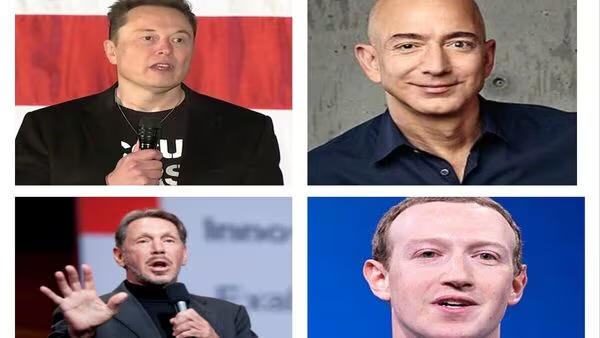
We often imagine billionaires as winners in the grand game of life. But what if they are the most starved among us? What if accumulating unimaginable wealth is not a sign of success at all, but a symptom of profound inner emptiness? An addiction that has no endpoint?
To call it “greed” almost feels too small for what we are witnessing in the United States. Greed is wanting more than you need. This is something different. This is an all consuming force that devours communities, ecosystems, and the future. It is an extractive hunger that transforms every river, neighborhood, and human body into a ledger entry. It is the kind of appetite that burns down the village to own the ashes.

The paradox is deeply tragic. The more they have, the more they appear to fear losing it. Many of the wealthiest Americans live behind gates, guarded compounds, private islands, fleets of lawyers, PR teams, and security forces. For all their abundance, they seem to trust no one.
When your world is built on accumulation and exploitation, every other human becomes either a threat or a tool. That is not freedom. That is captivity.
And in their pursuit of this illusion of safety, the consequences spill onto everyone else. The same handful of individuals who could, with a fraction of their wealth, ensure universal healthcare or end homelessness several times over instead lobby against the very policies that would allow ordinary people to live with dignity. They oppose fair taxation, undermine public infrastructure, hoard housing, patent life-saving medicine, and treat the climate crisis as a short-term business opportunity rather than the existential threat that it is.
Imagine looking at the planet your children will inherit and choosing profit over breathable air. Imagine watching people in your own country ration insulin, live under bridges, or drown in medical debt and then responding with crony capitalistic strategies to “maximize shareholder value.”
It’s easy to paint these individuals as villains. Many certainly behave in ways that harm millions. But it is also worth considering another angle: what if extreme wealth deforms the soul? What if the relentless drive to accumulate at the expense of others is not merely compassionlessly cruel, but deeply miserable?
Join me in the garden. I find it a helpful place to understand the absurdity of this kind of wealth inequality we’re seeing today.
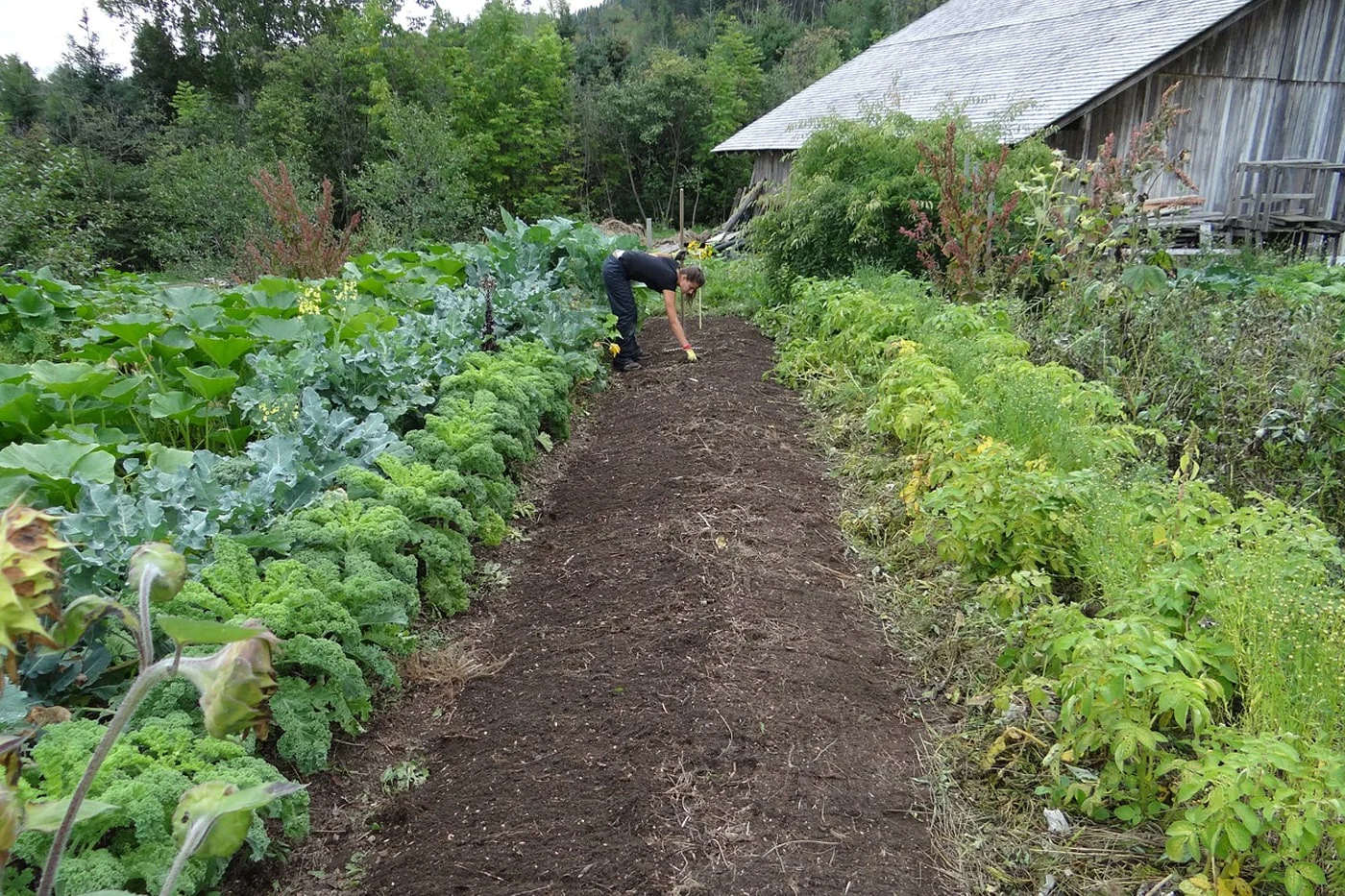
A healthy garden is not a place where one plant variety seeks endless expansion. No tomato plant is trying to colonize the adjacent garden bed. The basil does not demand the sun abandon all other plants to shine only on its leaves. The apple tree does not hoard every nutrient, choking the flowers at its roots. A thriving ecosystem depends on balance, reciprocity, and limits. It does not depend on domination.
The garden knows “enoughness.”
In a well-tended plot, each plant takes what it needs and gives something back. Shade. Nitrogen. Pollen. Fruit. Beauty. Oxygen. The success of one does not require the withering of another. And when one species grows too aggressively, the gardener steps in and gently prunes. The pruning shears is not a tool to punish its vitality, but to protect the harmony that allows all life within that space to flourish — including the one that gets cut back.
Nature, in her quiet wisdom, keeps offering us the lesson that growth without balance is a kind of killing cancer. Healthy growth is cyclical, regenerative, symbiotic. Only a sick ecosystem worships endless expansion of a few varieties.
Contrast that with the world of the ultra-wealthy, where the guiding principle is not mutuality but accumulation. Where success is measured not by what you contribute, but how much you extract. Where the goal is not to create space for everyone, but to trample on people in order to gain more space for oneself. Where the harvest is never shared, but grabbed and locked away where moth and rust destroy while starving people pound on the doors. Where one individual can hoard more wealth than millions combined, and yet still wake up gripped by the fear that someone, somewhere, might pluck a grape from their overstuffed vine.
How lonely that must be. How godlessly miserable.
Psychologists who study happiness have found again and again that well-being increases with meeting one’s needs and declines once wealth surpasses the level of comfort. Beyond that point, happiness stops rising. Often, it drops. Empathy atrophies. Trust erodes. Relationships distort. Gratitude dulls. The more one hoards, the less one feels held by others. The garden of the heart becomes mono-cropped, stripped of the pollinators of meaning.
Meanwhile, those with modest means often build lives rich with interdependence. Borrowing sugar. Sharing childcare. Fixing a neighbor’s fence. Cooking big meals that spill into laughter and the sharing of meaningful stories. Community gardens thrive in places where people have little, yet see abundance in one another. A person in harmony with themselves and the world does not need to own the whole garden. There is hardship, yes, but also connection, creativity, and resilience. These are the fruits of a life rooted in communal care.

I want to be clear that my intention here is not to romanticize hardship. Millions around the world are literally dying as a result of cruel policies. Poverty in the United States (the wealthiest nation in the world!) is on the rise as a result of corrupt, crony capitalist policies that are implemented by a handful by morally-bankrupt, spiritually-impoverished, obscenely-wealthy, miserable individuals who sit on golden calf toilets and dine with each other in gilded halls while desperation grows outside their windows and the streets begin to flow with tears. My observation is simply to observe that meaning is usually found in community, interdependence, and enoughness. Not in perpetual accumulation.
The billionaire’s crisis is not just moral. It’s spiritual.
Until we, as a society, stop treating billionaires as aspirational figures and start recognizing the emptiness at the root of such wealth, the system will keep producing misery at both ends of the spectrum.
The earth is teaching us how to live. Take your place, not all the space. Grow, yes, but not at the expense of the soil that nourishes you. Give back. Compost your success into something that enriches the world beyond your own roots. Understand limits not as scarcity, but as the natural architecture of balance. Because a garden where one plant consumes everything is not a triumph. It is a collapse.
The future we need is one patterned after the wisdom of ecosystems, not empires. A future where the measure of a life is not how high you climbed, but how well you belonged. Where prosperity is shared, is regenerative, and is circular. Where wealth is not a fortress but a common place. Where children inherit not ash, but orchards.
Maybe the future we need isn’t one where more people become billionaires, but one where no one feels compelled to try.

18 Responses
You said it well, Christy. Thanks. May we take heed.
Thank you, Christy, for taking time to intermix your composting and composing skills. We need every gardener who has time to learn and teach that silt-edged securities are the real deal for us earthlings.
Midas, his touch-tap finger, and his golden pot are all painted into a corner over there. What a desolate landfill! We can catch the spirit of Dolly Levi Vander Gelder who is utilizing the wisdom of one husband, the cash stash of another. Look at her— hopping on the manure spreader, spending down that dung heap, redistributing its value far and wide like there’s no tomorrow!
Powerful, clear, holy vision. Thank you.
There is no way around the truth that vast wealth can bankrupt the soul, which you have so beautifully stated. It continues to puzzle me how it never seems ‘enough’ for the ultra-wealthy. “The love of money is a root of all kinds of evil” is becoming too apparent day by day. Thank you for calling it out.
Well written Christie. Loved the garden metaphor in providing and enriching life when tended.
So many profound statements here! I read this over three times. When the Bible uses the pronoun you, it almost always means the plural form of you, you in relationship. Thank you, Christy.
One more thought you inspired here. The beatitudes do not teach that it is a sin to be rich. But neither is it a blessing.
Beautifully said! Thank you!
Great wisdom here about striving and contentment, perseverance and generosity, regeneration and gratitude. Thank you!
Astute observations and prescriptions reflecting The Gardener’s.
Thanks for the reminder. I believe Jesus said exactly the same thing. Several times.
I struggle with your seemingly all inclusive targeting of wealthy people. There are good and bad wealthy people, and good & bad poor people.
I look at the various institutions in many cities , such as > colleges, medical facilities,, senior centers, food banks, Counseling centers
the list could go on. Many of these are here because of the generosity of wealthy individuals. Jobs are provided for people by entrepreneurs who risked much to build a business. Your thoughts indicate that you feel if someone has wealth, they are deceitful, selfish and mean & stingy.
I had that thought too, James. But as I continued reading I felt confident that Christie is speaking only about and for the bad wealthy who become consumed by their lust for more and more for themselves.
I agree with James and Henry. Christie rightly draws our attention to the emptiness of accumulating possessions that our secular society promotes. However, this accumulation mindset doesn’t just exists with the billionairs, it is pervasive in a people of all income levels. The billionairs live high after their companies become successful. In contrast, many people of modest incomes also try to live high but they do it by going into debt or even by a variety of deceitful ways. Christy’s observations extend to everyone.
“Compost your success into something that enriches the world beyond your own roots.” Thank you for this call to be light, life, and fertile soil to those among whom we dwell.
Hi Christie, Scott here from Australia. Can I say I appreciate all your written offerings. This is a bit left field but I just watched the latest Marvel offering two days ago, Fantastic Four: First steps. The villain in the film, Galactus, is a world destroyer with an unending appetite for worlds. Galactus is looking for something and finds it in Sue Storms baby. And in an almost miss it if you’re not listening, Galactus wants the baby to take over from him to release him from this never ending, never to be satisfied hunger. But not to merely end his pain and then stop this nonsensical world eating. No, to hand it on to another as a necessary evil that must persist. It’s not just the hunger, but the perspective that its needs must be satisfied ongoing in a kind of hand me down task for the next generation. An unexpected parable for our age. Thanks again.
Sorry, it didn’t do it for me.
“Getting the rich to part with much of their wealth will absolve me of my responsibility for the ASA factor in my world”.
Shouldn’t I use 2 Tim 3:16 to correct, rebuke and admonish ME? (God and Gabriel can take care of my ultra-rich neighbor) The result hopefully would be that I help reduce the ASA factor in my church, my neighborhood, my county, etc..
Jer 9: “Let not the wise boast of their wisdom… or the rich boast of their riches, but let the one who boasts boast about this: that they have the understanding to know me, that I am the LORD, who exercises kindness, justice and righteousness on earth, for in these I delight,” declares the LORD .
Each day, may I pray and ask how I may “DELIGHT” him today.
Oh yes, ASA: the “Avoided, Shunned and Averted” population that is growing ever larger, even as we emulate the lives of the comfortably rich around us. (NA Christian population mirrors secular society–within a generation or two).
ASA: Just a start: dying, in pain, suffering, homeless, fatherless, handicapped, lonely, mentally ill, abused, addicted, in poverty, incarcerated, widows, foreigners, children, etc..