
Just exactly how it was that the famous Seminole chief, Osceola, came to be imprisoned at Ft. Moultrie in South Carolina is still a matter of controversy. In attempting to help his people—the Seminoles of Florida–he’d been led to believe that yet another treaty could be created which would be of great aid to his people as they considered a future with more and more white people spilling into their lives and their acres, threatening not only them but the Seminole way of life.
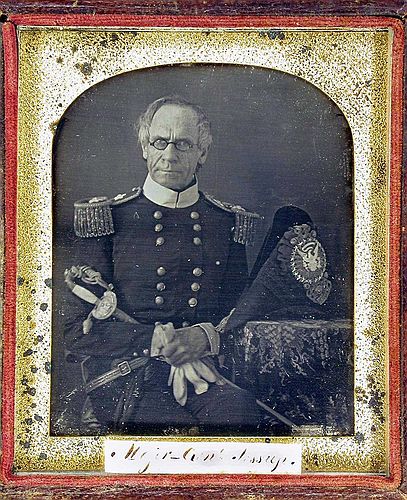
1788-1860
What had waved before them just a few weeks previous was a flag of truce, a false flag, as it turned out. Late in October, General Thomas Jesup had promised Osceola that if he came in for talks, they could together design a future for his people, a future with justice and freedom.
No sooner had Osceola crossed into the soldier’s neighborhood than he was pitched into a prison cell. Hundreds of white folks thought what the General had done was loathsome. Osceola was Native. He was Seminole by culture and upbringing, although his mother was Cree and his father was a white man of what most believed to be Scottish descent.
When George Caitlin first visited out here in the Siouxland neighborhood, there was no here here. In all likelihood, he passed the confluence of the Missouri and the Big Sioux in 1836, two years before he visited the imprisoned Osceola half a continent away at Fort Moultrie.
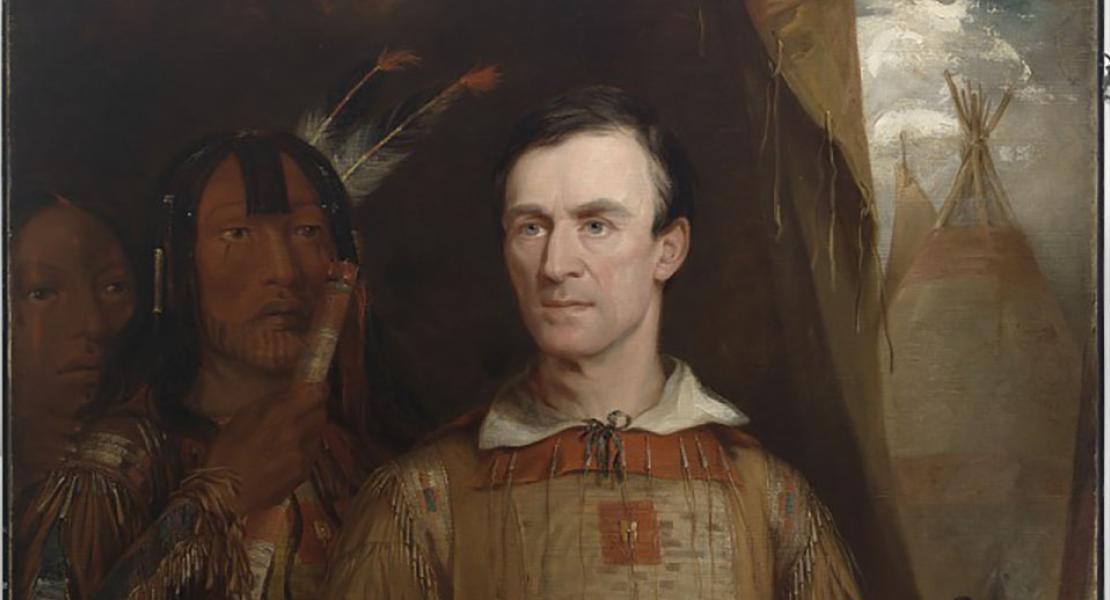
1796-1872
But it’s Caitlin who gave us the first and most memorable portrait of Osceola, the famously brave and falsely-convicted Seminole leader, a richly decorated, healthy young man in colorful garments that make him look nothing at all like a buckskin man. The eagle feathers he wears in his hair are familiar, but Caitlin’s Osceola doesn’t look particularly Native: his nose is too long and thin, as is his face; his hair has just a bit of a wave. His sash is a museum of symbols, and the print on the shirt seems almost grandmotherly.
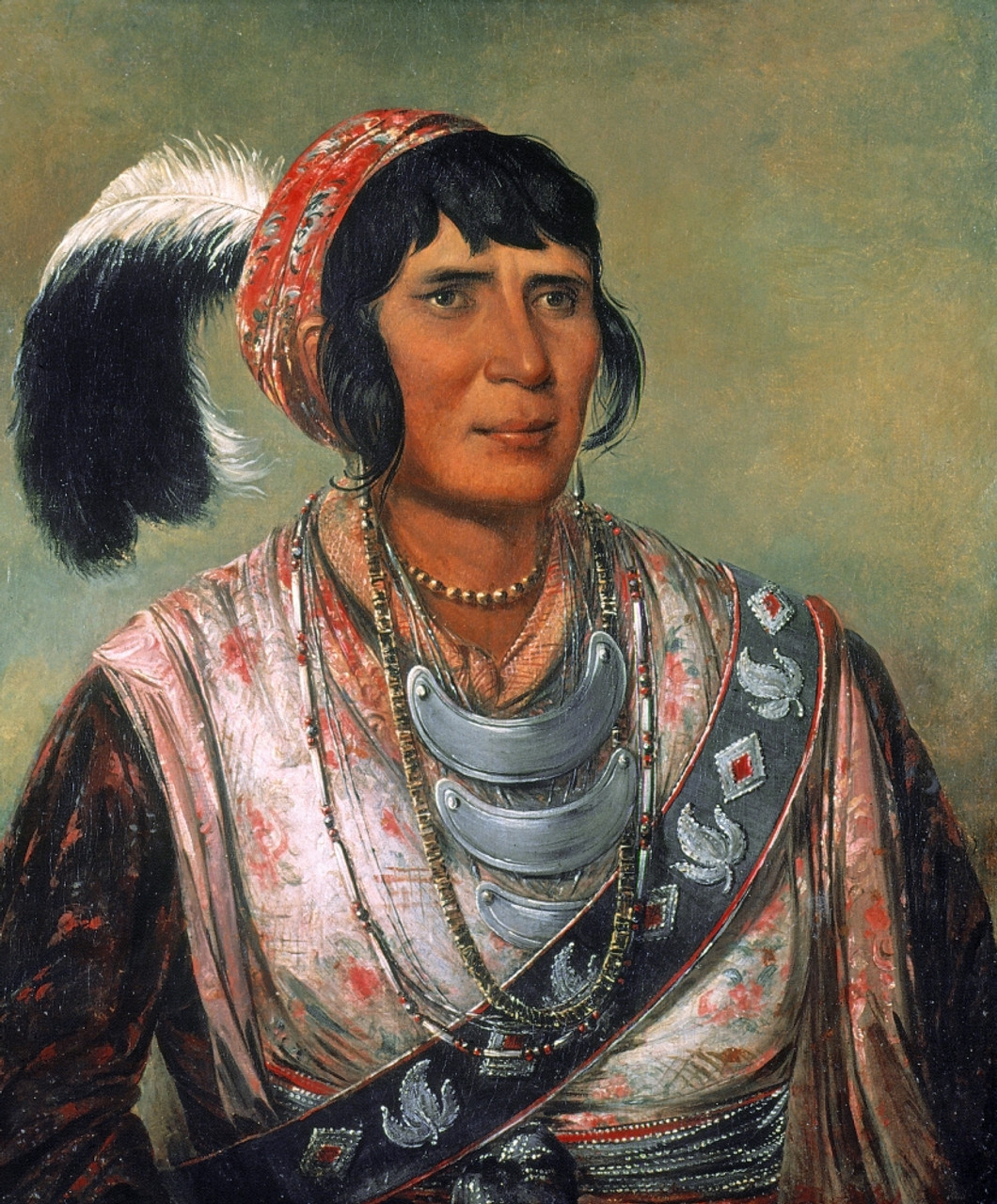
Although, by all accounts he wasn’t, he looks a bit unsure of himself. His eyes squint as if the fear that’s behind him has to be hidden from those who look ahead to his leadership. Caitlin’s Osceola is a beautiful man. Sitting Bull, in most portraits, looks like a warrior; this Osceola seems a diplomat.
Try as he might, he couldn’t keep his Seminole people at home in the American South. Like so many thousands of other indigenous, the Seminole went west under armed guard on the Trail of Tears, losing hundreds on the way, more when arriving in a land they didn’t know or understand.
Perhaps Osceola’s people tried harder than any others of the “Five Civilized Tribes” President Jackson ruled would live happily ever after in a place eventually called Oklahoma. It took two wars to get them there, the First Seminole War in November of 1817 and the Second Seminole War a couple of decades later, that one a war, not a battle. Native forces fought U.S troops for years in a campaign made difficult by the Seminole’s knowledge of their land’s shady corners.
Some White officers who did the fighting became famous later during the Civil War, including a general remembered—and hated—for his “march to the sea,” as well as his march throughout the west, a general who, strangely enough, carried a middle name drawn from this country’s Native heroes—William Tecumseh Sherman.
Why bring all this up? Thanksgiving’s warm and sweet cranberry mythos was created by a history remembered and noted by William Bradford, who sketched out an opulent dinner shared by 58 survivors of that disastrous first year in the New World (almost twice as many had died), and 90 (seriously) Native, mostly Wampanoag, tribal people, and their headman Massasoit. A good time was had by all, Bradford says, truthfully.
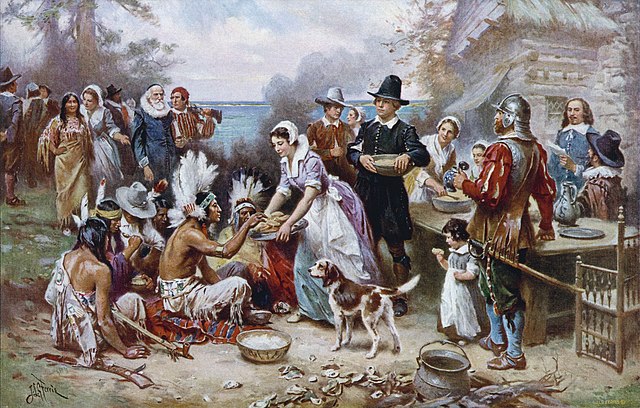
President Abraham Lincoln recreated that first harvest festival into Thanksgiving, a national holiday for which millions of others and I am greatly thankful.
But there’s more to the Bradford story. The friendly Massasoit had a son he named Metacom the pilgrims called King Phillip, King Phillip of “King Phillip’s War” (1675-76). That bloody New England mess recorded the highest casualty rate of any war in U.S. history when measured against population size.
If some remember Osceola at all, it may be for a wild moment when he flew off the handle, pulled out a knife from his belt and stabbed it through the old treaty and into the wood of the table beneath. Everything stopped. No one misunderstood his opinion.
Nine small, Midwestern towns are named for Osceola, and three counties, including one right next door to where I’m sitting.
Perhaps place names are no more reliable storytellers than are cemetery stones, but sometimes you’ve just got get out there and polish them up a bit to remember not to forget.
header image: George Caitlin, Feats of Comanche Horsemanship
Smithsonian American Art Museum
8 Responses
Remember them, O Lord, in your great mercy remember them.
Amen, Dan, and thank-you, Jim.
Thank you for this reminder of our “true American history”. I’m saddened that as a nation, we may still not have learned to treat our human brothers and sisters with respect and care because their skin is brown. Jesus gave us the example and the inspiration to do better. I pray we may follow.
Amen to “remember not to forget.”
Thank you, Jim. May we never forget.
Thanks for this reminder, Jim. We Canadians already celebrated Thanksgiving, as you know, but we wish all our American friends happy Thanksgiving. Given events worldwide, we North Americans truly have many reasons to give thanks.
Thanks for always teaching … so much for me to learn.
I really appreciate that you wrote this for today. Thanks, RJ, for the timing.