
Are members of the military required to obey illegal orders?
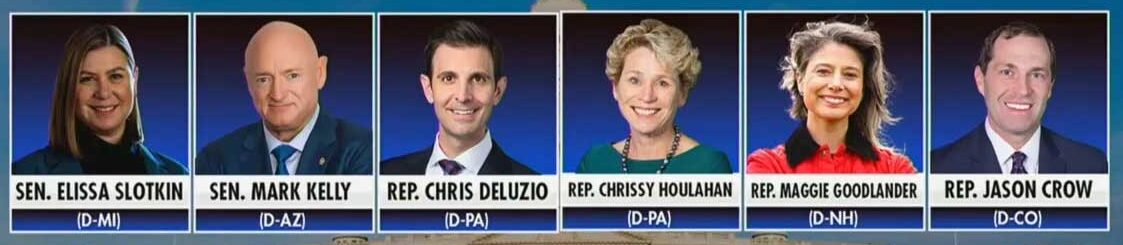
This question made headlines after Senator Mark Kelly and five other lawmakers — all with military or intelligence backgrounds — released a video stating that members of the military “must refuse to obey illegal orders.”
Absolute obedience is central to military discipline. From their first day of training, soldiers, sailors, airmen, and Marines learn to follow orders quickly and without question. It is essential that obedience to orders becomes instinctive.
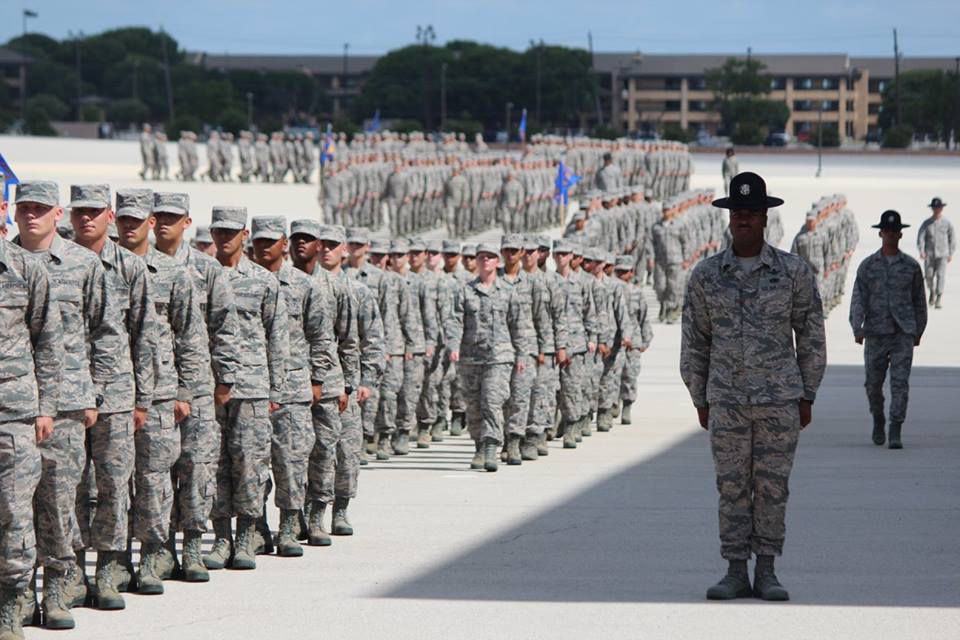
All that is true. Nevertheless, service members must disobey illegal orders. Not to do so will lead to atrocities and war crimes. The oath to defend the Constitution and the responsibility to the rule of law transcends the obligation to obey the orders of superiors.
The saying, “all’s fair in love and war” is not true. Because fewer than seven percent of Americans serve in the military, many do not understand what Kelly and the other six lawmakers were saying. What is an illegal order? Should it be disobeyed? What are the consequences for a soldier who does so?
Most Christians accept some version of the “Just War Theory.” It is divided into two parts: jus ad bellum (justice in going to war) which lays out conditions that must be met before a nation can justly engage in war, and jus in bello (justice in conducting war) which include limits on what is acceptable in war.
Jus in bello rests on two main principles: proportionality and discrimination. Combatants must use only the force necessary to accomplish legitimate military objectives and must discriminate between warriors and civilians. A nuclear strike on Baghdad to kill Saddam Hussein would have violated the principle of proportionality. Bombing a hospital would violate the principle of discrimination. Reality, of course, is not so simple, such as when Hamas placed its command center beneath a hospital in Gaza.
Though Just War Theory has no legal standing in the United States, it is the foundation of international law, including the Geneva Conventions.
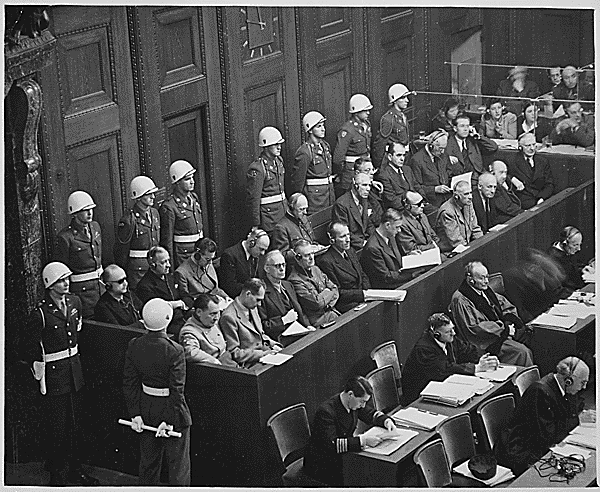
Both U.S. and international law require combatants to disobey illegal orders. The United States Code, Title X, §.890, art. 90 reads: “If a superior insists that his illegal order be obeyed, however, the soldier has an affirmative legal obligation to disobey the order and report the incident to the next superior commander, military police, CID, nearest judge advocate, or local inspector general.” After World War II, the Nuremberg Trials found that “the subordinate is bound only to obey the lawful orders of his superior and if he accepts a criminal order and executes it with a malice of his own, he may not plead superior orders in mitigation of his offense” (italics added).
Yet disobeying an illegal order is a serious and risky matter. The Manual for Courts-Martial notes that a military order “may be inferred to be lawful, and it is disobeyed at the subordinate’s peril.” However, “this inference does not apply to a patently illegal order, such as one that directs the commission of a crime.”
A “patently illegal order” is not defined. The Manual continues: “the lawfulness of an order is a question of law to be determined by the military judge.” In other words, the soldier who disobeys an illegal order takes a huge risk. The validity of their judgment is likely to be questioned by a military judge, after the fact. Ending up in a military prison is a strong possibility. In the heat of battle, these monumental decisions must be made quickly by young people rarely equipped to make such intense moral judgments. The average combat soldier in the Vietnam War was nineteen and a half years old.
The My Lai massacre of 1968 illustrates the kind of atrocity that can result from obedience to illegal orders. Of roughly 100 soldiers ordered by Lieutenant William Calley to shoot old men, women, and children crouched in a ditch, only seven disobeyed. The obedience of the others to the Lieutenant’s illegal order resulted in the most notorious atrocity of the war.
Obedience to unlawful orders can not only lead to atrocities. It also harms the warrior. It turns soldiers into a criminals and can produce extreme PTSD, what has been called Moral Injury, a spiritual injury to the conscience. They have behaved dishonorably. Honor, more than obedience, is the soldier’s cardinal virtue.
Turning to recent events, targeting a civilian fishing boat, regardless of suspected drug smuggling, violates the Just War principle of discrimination (and probably proportionality). The United States has other lawful options to stop the flow of drugs into our country. The Coast Guard was established in 1790 as the Revenue Cutter Service to capture smugglers seeking to avoid taxes. Today, thwarting smugglers remains a core mission. The Coast Guard regularly boards and searches vessels suspected of carrying drugs.
I recall being aboard a Coast Guard vessel off the shores of Venezuela for this very purpose. This is law enforcement work. When needed, Navy ships can hoist the Coast Guard flag and support Coast Guard missions. I often rode Navy frigates along the Pacific coast of Central America that fell under Coast Guard authority for counter-drug operations.
Members of the armed forces must retain the right to disobey when given illegal orders. Although recent years have seen an eroding of respect for the rule of law, both national and international law must be followed. The rule of law is vital to democracy and a core element governing our life together.

7 Responses
Thanks for this. Clarifying, authoritative, compassionate.
Thank you for providing this educated perspective on current events.
Thanks for this. What should be the consequences for the officer that gives an illegal order? Who turns them in? How far up the chain of command does legal liability and criminal prosecution extend? That is crucial now too.
Thank you for speaking an elusive truth. Having no idea of what military training consists of, other than the erasure of some sense of self for the good of the ‘unit’, is there room in training for ethics? What does ‘honor’ mean if it destroys the lives of the victim as well as the aggressor?
Super informative essay. Thank you. When I used to teach a Vietnam May Term, one time I was able to make a connection with a survivor of the My Lai massacre. He was 7 years old at the time. His mother had a “bad feeling” about the day and sent him to the river side for the day. He can back home to find his mother, sister, and aunt all dead, hiding in a dry well. We drove 4+ hours from DaNang, stood where the soldiers stood, and shared time with Mr. Luc, the survivor. None of the students (all US born) had heard of My Lai in their US history class in high school. No one left without tears. It was the most powerful teaching day I have had in 34 years.
Thanks for this. It seems that The United States Code, Title X, §.890, art. 90 is crystal clear, and thank you for explaining the implications of that.
Many thanks, Doug, for these insights into Just War theory, Title 10 of the US Code, and your own first hand account as chaplain with a Coast Guard drug interdiction mission off the coast of Venezuela. For anyone who desires more info re Just War theory I recommend the 40 page crcna Synodical Report titled “Peace and War”, Acts of Synod 2006. (www.crcna.org/SynodResources)