
Last week I accompanied my friend to the vet for the visit no one wants to make – to put down her dog.
(I know, Merry Christmas, right?! Bear with me.)
We sat in the little room at the back of the clinic, waiting for the vet technician. My friend vocalized the usual questions that arise out of fear, guilt, and anxiety. “Am I doing the right thing? Can’t I find something to help him? Is it really bad enough that this is the right thing?”
I assured her it was. Her dog had lived a long and happy life, but that life was quickly deteriorating. So we sat there as the sedative kicked in, my friend cradling her dog in her lap as his near-constant shaking ceased and he relaxed into her arms, calm, content, and free of pain. Both of us wept.
It’s hard to let something you love die.
This fall I’ve been letting some dreams die. Aspirations, versions of myself I thought I would be, goals I thought I’d one day achieve, hopes and expectations that have lived within me for a long time. In some cases, it felt like the rug was pulled out from under me, and it was no longer possible to inhabit the spaces and roles I once had. In other cases, these dream deaths have been the result of prayer and discernment and healthy conversation. Some dream deaths bring anger. Others lead to peace. But with every death, there’s grief.
And I’ve been thinking, in this Advent season, that the birth of Christ, as it happened, must have meant the death of a dream for a lot of people.
For the folks like Herod, obviously, with his thirst for power and tight control of his throne.
But also. . . for the ordinary folk. The everyday first-century Jew who had a pretty good idea of what the Messiah would be like. The aged rabbi who carried within him a hope and a prayer shaped by decades of Scripture study and storytelling. The mother for whom the death of Jesus signaled, not the smiting of Herod in some Messianic throwdown of satisfying justice, but the death of her own baby boy at Herod’s hands.
We love to preach about the surprise of Christmas, the upside-down and backwards kingdom of God being ushered in with the birth of the Messiah to a virgin and a carpenter in a manger surrounded by sheep.
We do so fairly confident that, had we been first-century Jews coming face to face with this Jesus, we would have understood and accepted him from the get-go. No incredulity here, thank you.
And there’s reason to preach this story. There’s grace in the unexpected. There is something beautiful and good and hopeful and glad in this kind of incarnation. The rest of the gospel is built on this kind of incarnation. It’s good news.
But it’s not what folks expected. It’s not what they hoped for. To open up their hands to receive this Messiah, this good news, this Godly answer-in-flesh. . . they had to let another dream die.
And with every death, there’s grief.
So this Christmas, maybe more than hope, joy, peace, and love, I’m feeling compassion. Compassion for the first-century Pharisee who probably felt like the rug was being pulled out from under him. Compassion for the person who hoped – with good reason – for a Messiah who would overthrow the Romans and lower taxes.
And compassion for the MAGA follower who’s starting to recognize that the emperor might not be wearing any clothes. Compassion for the activist student experiencing for the first time the slow march of bureaucracy.
We all put our hope in things, or people, or movements. We all have expectations. We all have imagined futures that we believe can be realized if only these certain things happened.
We all have dreams that die.
Even Mary’s heart will one day be pierced.
I wonder if Mary, cradling the broken body of her son in her arms, thought about the first time she held her son. Certainly, the pieta carries echoes of the nativity in its stone.
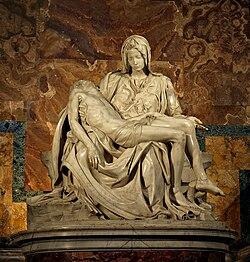
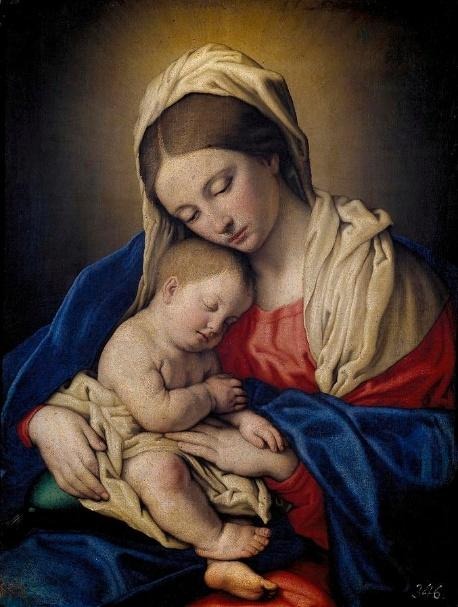
The death of Jesus was surely the death of a dream. For his mother and for his followers. Huddled in a back room asking their questions arising out of fear and anxiety. Not knowing that in this death, something else was being born.
And that’s the great mystery of Christmas, isn’t it, this paradox of life and death? This marriage of womb and tomb, this promise-fulfillment that leaves us yet in expectation.
“O little town of Bethlehem, how still we see thee lie. . . the hopes and fears of all the years are met in thee tonight.”

5 Responses
Thank you. This was a good way to start this Christmas morning.
Peace be with you.
Grief and peace. How to hold both in this world that, at times, seems to tilt too sharply toward the grief side. Thank you for naming this and giving us the compassion to see, know, and believe. A blessed Christmas to you and yours.
Right on! Thank you.
Thank you, Laura. Good to hear your voice here again!
“This marriage of womb and tomb, this promise-fulfillment that leaves us yet in expectation.” Perfect. Thank you.