
I lift up my eyes to the hills—where does my help come from?
My help comes from the LORD, the Maker of heaven and earth.
He will not let your foot slip—He who watches over you will not slumber;
Indeed, he who watches over Israel will neither slumber nor sleep.
The LORD watches over you—the LORD is your shade at your right hand;
The sun will not harm you by day, nor the moon by night.
The LORD will keep you from all harm—He will watch over your life.
The LORD will watch over your coming and going, both now and forevermore.
Psalm 121

I was once asked to talk about this psalm for an adult Sunday School class at my church. I began reading it on a regular basis, trying to absorb the words I had been assigned to memorize in elementary school so long ago. I am grateful for that memorization, because it is remarkable how those words come back to us sometimes without our having to look for them.
Two lines I loved the most. “He who watches over you will not slumber” and “The LORD will keep you from all harm—he will watch over your life.”
Because my childhood was fairly idyllic, I took those words at face value. I truly believed that all would be well. When I made my profession of faith in eighth grade, what kept me awake that night was not anxiety, but excitement. My heart raced because somehow I felt that I had just signed on to something big.
That “something,” of course, was actually Someone. At the time, I had not yet realized that God is “good but not safe” to paraphrase a favorite childhood book. Soon enough life became more complicated and more tragic. I had to re-think what “keep you from all harm” actually meant.
A few weeks ago, when I opened my Bible to look for this psalm, I saw scribbled in the margin “Emily’s psalm.” Emily was my niece, my older sister’s youngest child. She had once told her mom that this was her favorite psalm, though I did not learn that until her funeral.
Emily was a vibrant and passionate child. One day in August of 1994, she rode her bike to the local grocery store to pick up photos from her youth group retreat. In the parking lot, a woman did not see her and ran her over with her car. Emily died shortly afterward, and the woman was never the same.
“The LORD will keep you from all harm. He will watch over your life.”
Really?
Emily’s death became another crisis of faith for my son, who had already lost his brother to cancer. It nearly destroyed my sister. Emily was also the second grandchild my parents had lost—an unbearable reversal of what we believe the order of life should be.
I remember how wrong it felt when my own son was taken from us. Like the Puritan poet Anne Bradstreet, I believed fruit should fall only when it has fully ripened. But our son Adam was diagnosed with a Wilms tumor at the tender, unripened age of five, and he died two years later.
I confess that during that season it was hard to read Psalm 121 without cynicism. We were in the Mott Children’s Hospital in Ann Arbor. Adam was having a bad morning. He was in a great deal of pain, and so my husband John and I were in our own pain. There is nothing more heart-rending than seeing your child suffer and being helpless to alleviate it.
As Adam was taken for a scan, I told my husband that I needed to get away for a bit. I went to the small hospital chapel. Finding myself alone, I told God quite vehemently that I was finished with him. If this was his idea of caring for his children, he was doing a really poor job of it. I would no longer be trusting him or coming to him.
I left the chapel feeling empty and lost, and went to the cafeteria for a cup of coffee. Sitting there, staring straight ahead, I wondered how Adam was doing. When I got into the elevator to return to him, I found myself praying, “O God, have mercy on Adam.” Then I caught myself and said, “Shit! I thought I was done talking to you!” Forgive the coarse language, but I am trying to be entirely honest. I could not help myself.
That brings me to the final verse in the psalm: “The Lord will watch over your coming and going both now and forevermore.” My coming and going—not only birth and death, but also my trusting and not trusting, understanding and not understanding, believing and turning away.
The Lord was there.

Adam died in October. That Christmas I wrote a letter to family and friends, sharing an excerpt from my journal written a month before his death:
This morning Adam woke up very early with some slight pain in his abdomen. He came downstairs to tell me that the pain had returned, but he had prayed that Jesus would take it away and it had left him. I felt a sinking pit in my stomach. This is what the doctors warned us about–the beginning of the end. I am desperate to spend every free moment with him.
“Come on,” I said, with a cheeriness I didn’t feel, “let’s take a walk before anyone else wakes up.” I made both of us a cup of coffee — a sign of a special event for our children — and we set out with our steaming mugs. Early Saturday mornings are wonderful. Our huge elm tree had literally hundreds of birds perched in it, and they were making the only noise so far that day. When we clapped, they all lifted off at once, with a magnificent, beating sound. A “cacophony” I told Adam. He thought it was a funny word.
We walked to the local school and climbed the dew-soaked slide to see eight hot air balloons floating directly above us. We both talked about how this was a “memory picture” moment. We prayed together and Adam’s prayer was all praise, thanking God for this day and the wonderful way it had started.
I closed the letter by writing
And now it is Christmas, and Adam has beaten us all Home. We have come to know God in a deeper way. How beautiful and terrible this world is! I am glad Someone besides me is in control of it.”
“I lift up my eyes to the hills. Where does my help come from? My help comes from the LORD who made heaven and earth. . . He will watch over our comings and our goings, both now and forevermore.”
It is still true.
Header photo by Murillo de Paula on Unsplash
Hill photo by Elham Abdi on Unsplash
*****
Before the close of year, we sincerely ask for your financial support of the Reformed Journal.
Click on the purple button below to find out all the ways to give — online or by check, one time or monthly, and of course our famous “But Wait…There’s More!” offer. Three outstanding new books sent to you during 2026.
We run a frugal shop of volunteers. We trust we matter enough to you that you’ll be glad to support us.
Thank You!
Reformed Journal is funded by our readers; we welcome your support. This holiday season, we call your attention to our “But Wait…There’s More!” deal—three new books sent to you in 2026!
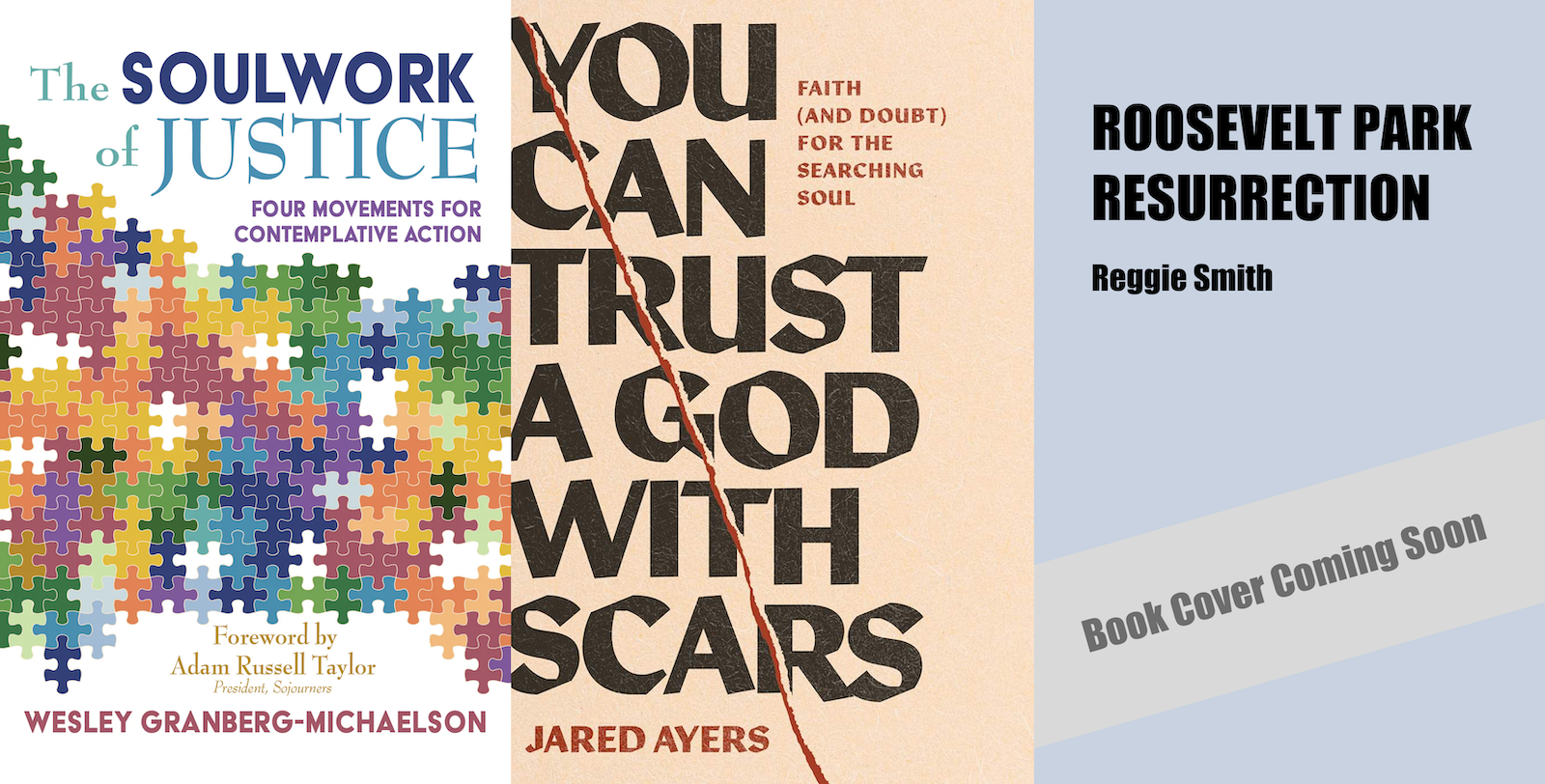
For a gift of $300 or more between now and the end of 2025, or a monthly gift of $25 or more in 2026 and you’ll receive these books. (Canadians: due to shipping costs and exchange rates, we are asking for a gift of $450 (CAD) or $38 monthly.)
Click the purple button above for more details on this year’s special “But Wait, There’s More” offer—three new books by Reformed Journal contributors in 2026! You can use the same page to give an online gift of any amount or to find info on giving by check via mail.
Checks may be mailed to:
PO Box 1282
Holland, MI 49422
12 Responses
Thank you for being honest about the soul shaking loss of a child and grandchild, held so dear by generational love. You’re right, our knowledge of “keep you from all harm” becomes something to be wrestled with as you put that beloved child in the grave, which I will never accept, but have learned to live with. There is grief that will never leave, but also a deepened trust that He is ever and forever with us.
thank you
Oh Nancy, thank you for this beautiful piece. I too have loved this psalm, difficult as it is sometimes, but so beautiful and comforting too, especially at the end of a year and the beginning of a new one. Many blessings
Yesterday, we sang Michael W. Smith’s “All is Well” in church. It’s so obvious that all is not well in our world, and yet I found the song lifting my spirit to the point of tears to some kind of perspective from God that when the everlasting arms are beneath us, all is well. As Paul said, we are “sorrowful, yet always rejoicing.” Thank you for sharing the journey of your heart with the Lord.
When I was a student in a masters of teaching class at MSU, our professor assigned us to interview a student who could honestly and candidly tell us how to improve the teaching profession. Of all the students I taught, Emily immediately came to mind. She had rare insight for her age. We had a great lunch. Her advice boiled down to, “Be genuine. Don’t be a phony. Be real.” What insight for someone so young. She lives on in blessed memories.
Looking at Psalm 121 through the process of understanding unspeakable grief is following Emily’s advice, “Be real.”
Thank you, Nancy, for this honest and heart-touching reflection on loss and faith.
It reminded me of Job and Jesus’ mother Mary – faith is accepting what we cannot understand, and embrace Emmanuel,
This article was so heartfelt. I hope to never experience the loss of a child or a grandchild. That being said, I do see enough of the St. Jude commercials to realize that children and grandchildren can die. I’ve never fully understood why God has these children suffer so much along with their families. I realize sin changed that all. So, its comforting to know that others feel this way. Thank you for your honesty and insight. God is in control, but it’s so hard to let Him be in control.
Beautiful piece. Thank you for sharing these meaningful, heartfelt thoughts.
Poignant and o so honest Nancy. Thank you.
I just read some powerful lines in “My Bright Abyss” by Christian Wiman: For if grace woke me to God’s presence in the world and in my heart, it also woke me to his [felt] absence. I never truly felt the pain of unbelief until I began to believe.
Brackets mine.
Thank you for this and your sharing. I pray Psalm 121 every night as the opening of my Compline and I love to sing it in Dutch. I connect your reflection with yesterday’s observance of the Slaughter of the Innocents. If not for the Wise Men (and their joy) those children would not have died. And where was God? Faith has to go through this to hold on.
Thanks for this. What’s Paul say about weeping with those who weep? You got it.
Holy message. A cacophony of holiness. Adam continues to be part of the foundation of my faith. Thank you for sharing intimate moments that illuminate love’s pure light.