
There was a lot going on in science in 2025. Some of it could be classified as advances—findings and reports that uncover the wonder of God’s Creation and, in some cases, offer hope and medical advances. Other notable 2025 science can be considered red flags. Warnings about what the future could bring if we fail to make changes.
Climate
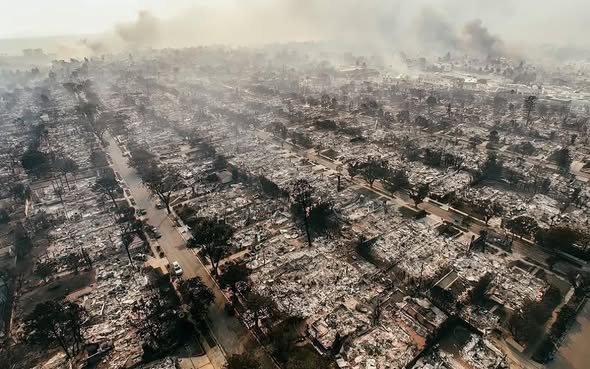
2025 started with the horrific Palisades Fire. For twenty-four days in January, fire displaced 100,000 people in LA County, destroyed more than 16,000 structures, many of them homes, and killed more than 30 people. The fire covered 23,448 acres of coastline, burning at the same time as the Eaton Fire at the foothills of the San Gabriel Mountains which was similarly destructive. While the Palisades fire was started by arson, climate change set its stage. The area was in moderate drought conditions after months without measurable precipitation and a strong high-pressure system over the Great Basin triggered powerful fire-fueling 70-90 mph Santa Ana winds. Climate scientists report that hotter temperatures and a drier atmosphere can be linked to burning fossil fuels.
In early July, we saw the catastrophic flood in the Texas Hill Country. The disaster was set in motion by remnants of Tropical Storm Barry. It led to a large cluster of thunderstorms that stalled over the Texas Hill Country for four days unleashing 2-4 inches of rain per hour and transforming the Guadalupe River into a deadly torrent. Cabins, homes, and vehicles were washed away with at least 137 dead, including many young summer campers. The disaster was intensified and exacerbated by a prolonged drought that left an already flood-prone region unusually vulnerable. The Texas Hill Country had experienced months of hot, dry weather hardening the surface of the soil and killing ground cover, making the surface behave more like concrete. The deluge of water wasn’t absorbed or slowed by the bare, hard ground.
I’m afraid our future may hold more of the same. The recent military action in Venezuela suggests that the US has not lost its thirst for oil. The continued use of fossil fuels will certainly contribute to climate change and, with it, more frequent and intense climate disasters.
Vaccines

The World Health Organization (WHO) certifies disease elimination status if countries have at least twelve months of sustained disease transmission interruption. Canada lost its measles elimination status in late 2025. The United States will likely lose its measles elimination status in the first quarter of 2026. As of December 30, 2025, 2,065 cases of measles have been confirmed in 43 US states, the most since 1999. 88% of these were associated with 49 outbreaks. 93% of the cases were in unvaccinated people. 11% required hospitalization and three people died because of the measles—a vaccine-preventable disease.
More than 26,000 cases of whooping cough have been confirmed in 2025, the most in a decade. At least thirteen infants died of whooping cough in the US in 2025.
The surge in measles and whooping cough cases is attributable to declining vaccination rates. Changes to recommended vaccine schedules, just announced Monday by Robert Kennedy and against recommendations by the American Academy of Pediatrics and the American Medical Association, mean we will likely see a continuation of this trend in 2026 along with a rise in other vaccine-preventable diseases.
Politicization of Science
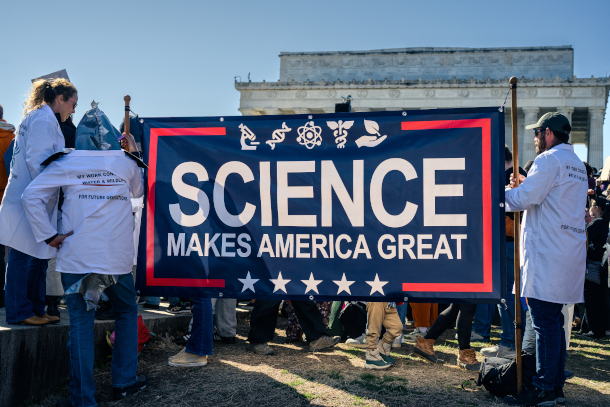
In early 2025, the Trump administration ordered massive budget freezes and cuts, layoffs and firings, and communication bans for most federally funded scientific agencies. Later, Trump turned his attention to universities, threatening to cut them off from funding and, in some cases, students. Some universities made deals to get federal funding restored. Others, like Harvard, have tried to fight back. Both attacks have thrown US science into disarray. The effects will be long-lasting and detrimental to scientific progress and the role of the United States as a scientific leader in the world.
While there was bad news in science, there also was good news.
Medicine
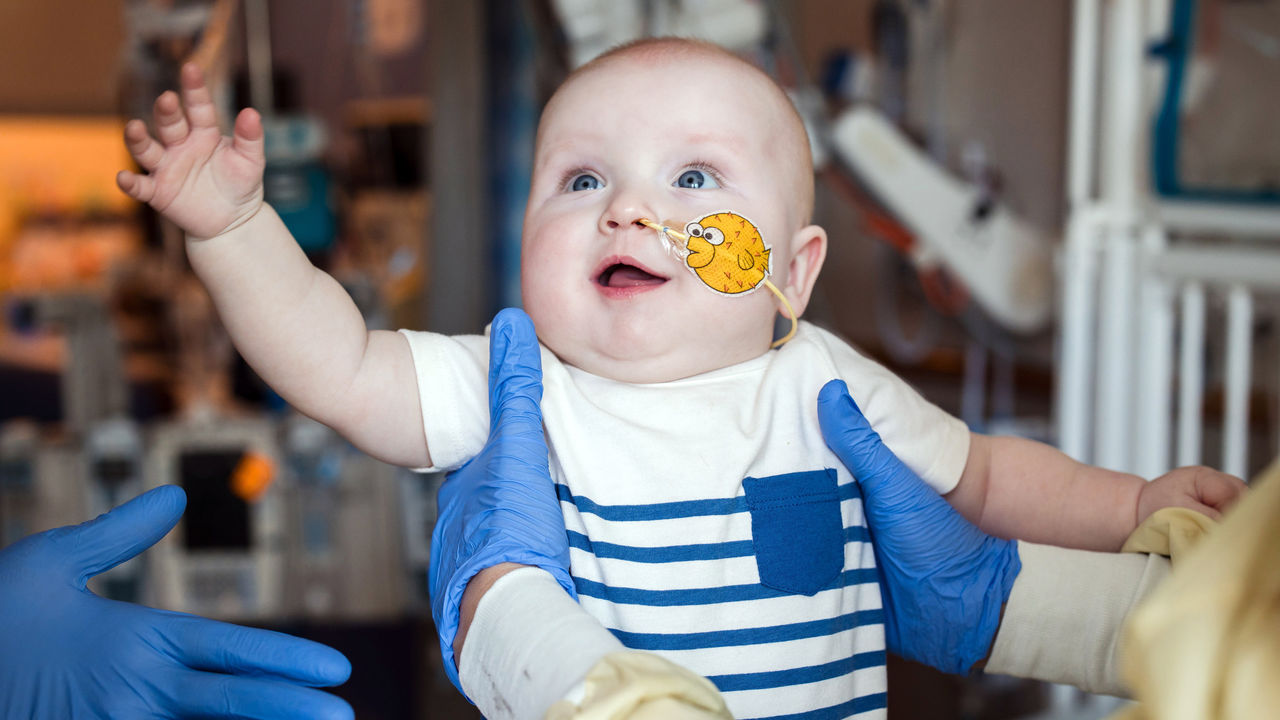
In May, scientists announced successful personalized gene editing in KJ Muldoon, a child with a life-threatening genetic disease. The treatment appears to be a success as reported in a December 2025 update. Scientists are preparing to treat more patients with genetic disorders like KJ’s. KJ’s successful treatment offers hope to families for whom little hope was available before.
The 2025 Nobel Prize in Physiology or Medicine was awarded to three scientists: Mary Brunkow, Fred Ramsdell, and Shimon Sakaguchi for their research in immunology. In work they did prior to 2025, they discovered regulatory T cells. Regulatory T cells help prevent the body’s own immune system from attacking itself and thus help prevent autoimmune disease.
Scientists have known for several years that tumors containing many neurons are more likely to metastasize (spread to distant sites). This year, in June, scientists reported that cancer-associated neurons contribute to a tumor’s ability to metastasize by transferring mitochondria from neurons to cancer cells. Mitochondria are organelles that synthesize ATP, a cell’s primary energy molecule. By transferring mitochondria from neurons to tumor cells, the tumor cells gain a metabolic advantage that enables them to spread to distant sites in the body.
Evolution
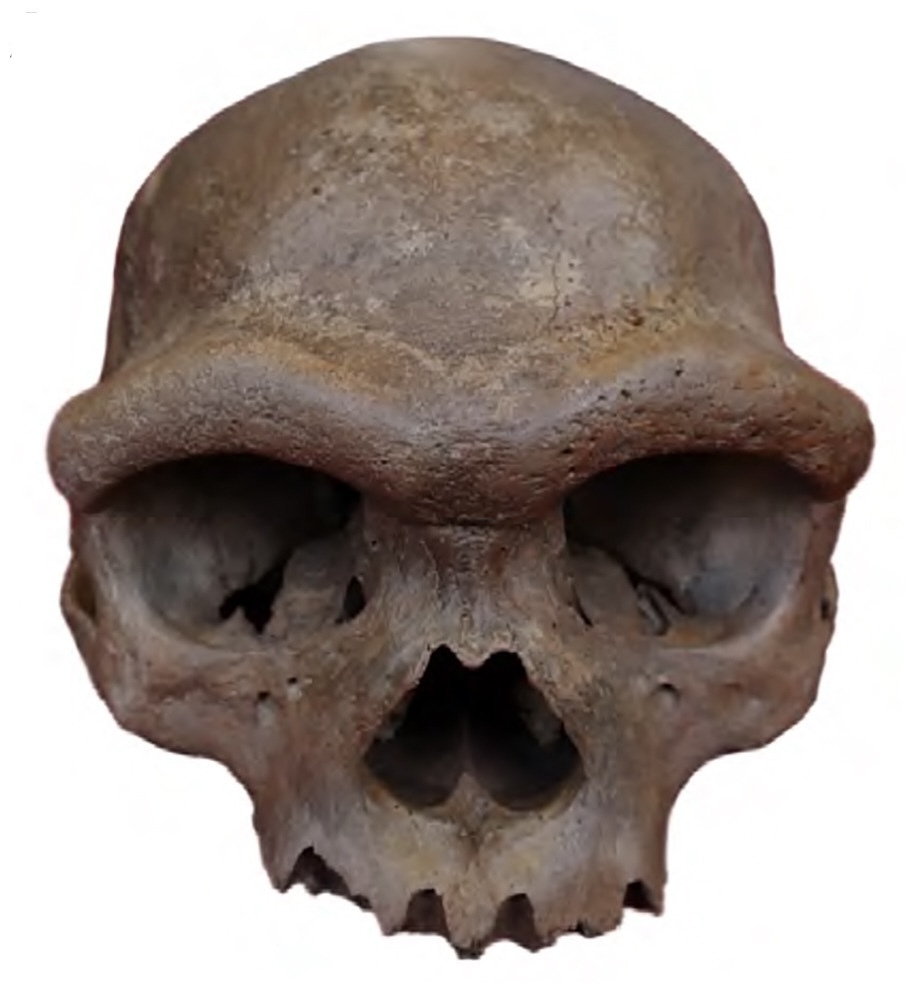
This year scientists used DNA and proteins collected from a tooth of a 146,000-year-old, nearly complete skull found near Harbin, China to identify the skull as that of a Denisovan. Denisovans lived alongside and interbred with modern humans, leaving behind remnants of their genome in the genomes of people with Asian and Native American ancestry. It is similar to the way people who trace their ancestry to northern Europe carry bits of Neanderthal DNA in their genomes. Identifying a full skull as Denisovan is an important step in understanding where Denisovans fit in the complex human evolutionary history.
There are many more notable 2025 advances science. I should mention artificial intelligence, transplantation of animal organs into humans, new antibiotics to fight antibiotic-resistant bacteria, and genetic modification of crops to withstand rising temperatures.
For these and the notable science I have not mentioned, I am grateful—grateful for the scientists doing the work, the funds to support their work, and most of all to God whose amazing Creation is what is really uncovered in all this work.

4 Responses
Thank you, Sara.
And I am grateful to you, Sara, for taking the time to educate Reformed Journal readers like me about science.
Thank you, Sara, for educating us about scientific information in ways that are easily understandable by those of us who are not scientists. And also for introducing us to more of God’s wonderful creation.
It’s a disturbing thing of the times: dismiss the results of scientific work people don’t like.