
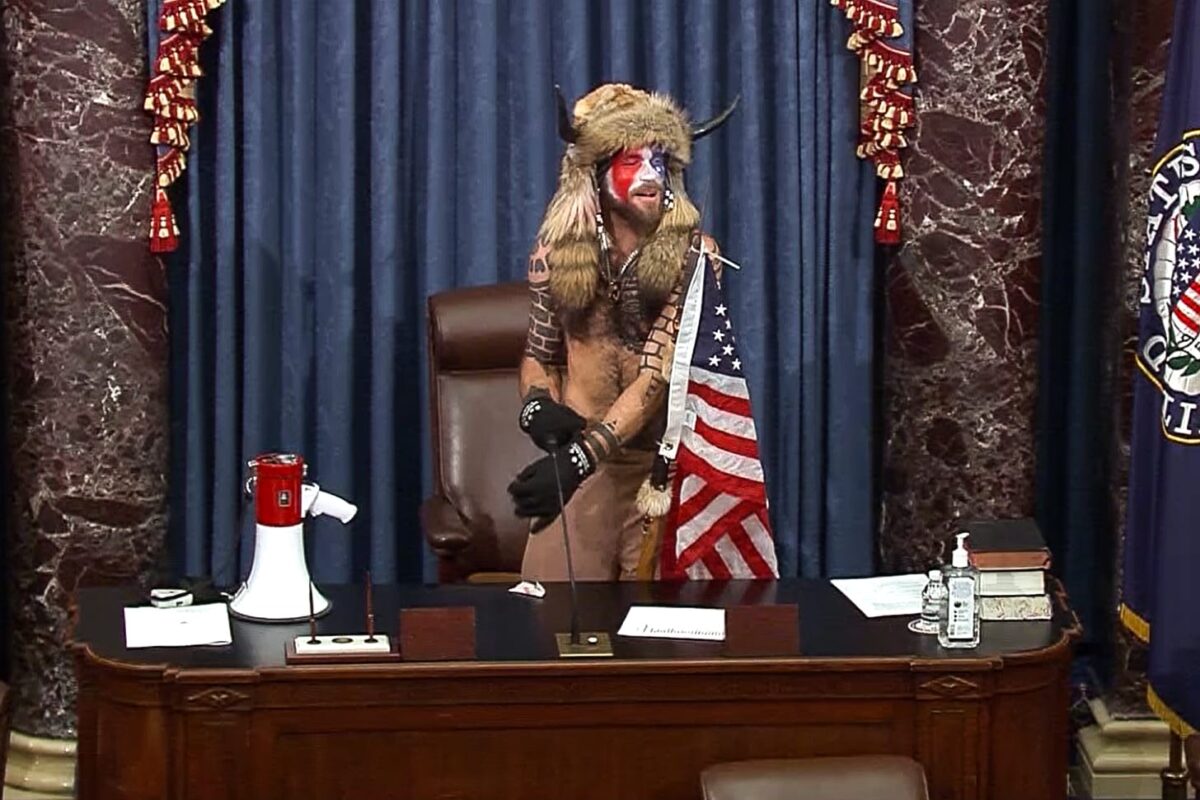
We’ve just seen the fifth anniversary of an attempted coup at the U.S. Capitol, and retrospectives on the year 2025 are still echoing in the air. Gaza and Ukraine, AI and affordability topped the latter list but, as if by some malign miracle of consubstantiation, Donald J. Trump seemed to be present “in, with, and under” them all. Indeed, as on January 6, 2021, his face pops up every morning on the news—now scowling, now sneering, petulant or arrogant, smug or hollow, but never smiling.
To be such a center of attention has ever been the man’s dream. But this center, notoriously, does not hold; new sparkles and celebrities ride in on the daily tide, so our hero must scramble to regain command, be it by outrageous claims, dramatic bombings, vague promises, or a hundred tweets per night. Throw spaghetti at the wall and see what sticks; the cameras will cover it and perhaps drive unpleasant issues from the public mind.
Capital Vices
Some loyal RJ readers are already sighing (and its critics carping) at another Trump critique in this column. Hasn’t it become a cliché? Besides, is there some Christian angle we can offer that adds value beyond the well-established diagnoses of the man’s pathological narcissism, abject corruption, and unbridled lust for power?
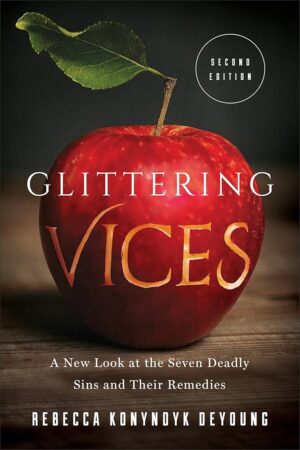
How about we take a cue from the conservative vogue for classical academies and see what ancient and medieval Christian voices might have to say? There is aid abounding in Calvin University philosopher Rebecca Konyndyk DeYoung’s prize-winning book, Glittering Vices: A New Look at the Seven Deadly Sins and Their Remedies (2nd ed., 2020).
“Vices,” first, as in vicious, the tone and substance of so much Trumpian rhetoric and behavior. And “capital vices” at that, as DeYoung defines them: not just discrete acts (“deadly sins”) but the habituated patterns behind them, from which proceed all sorts of other bitter fruit.
(A needless [?] disclaimer: the following commentary does not necessarily reflect DeYoung’s opinions but my take-off from her analysis.)
Sorting His Sins
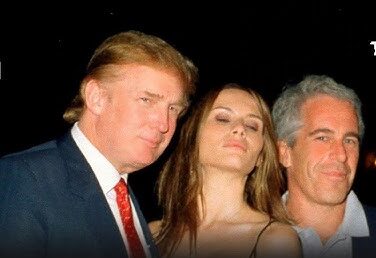
So what, from a classic Christian point of view, are Donald Trump’s compulsive vices? Lust, particularly for women “on the younger side,” as he so admired in Jeffrey Epstein, seems to be in the rearview mirror, a casualty of the aging process. Sloth seems off the table, given that relentless tweeting. (On the other hand, all those vacations, all that golfing….) Gluttony seems reserved for burgers well done and is obscured by deftly tailored suits. Certainly, avarice looms front and center, as does wrath.
But I would label vainglory (known to us as vanity, but we’re following the classics here) as the preeminent peak on this landscape, with envy erupting as an occasional volcano to both obscure and replenish the scene. Since DeYoung muses that vainglory might be the distinguishing mark of our age—she devoted a distinguished lecture series and separate book to the subject—we find Trump once again well tuned to the times.
Greed and Wrath
Still, we shouldn’t pass by those other peaks too quickly since they cast thick shadows over our subject’s soul. Greed is on sickening display in all that gold now tarting up the White House like the brothel his (immigrant!) grandfather ran during the, yes, Klondike gold rush. Trump would have a “golden fleet” of battleships and is seduced by gifts of fake golden crowns or trophies from fawning supplicants. Then there’s the cryptocurrency that his family has minted to billions of dollars of profit, celebrated by a 12-foot golden statue of Trump holding a Bitcoin.
Some ancient commentators, DeYoung notes, took greed and not pride to be the root of all sins and, nicely, to bear its own penalty, for with greater wealth comes greater anxiety about its theft or erosion. Hence it breeds a mania for more, ever more, that Trump has passed down to his children.
Wrath sits on Trump’s other shoulder, or better, regularly erupts from his mouth. The typical rhetoric of wrath, DeYoung lists, is insulting, demeaning, reviling, and deriding, seeking to humiliate its objects, holding them in constant contempt. Thus, the female correspondent with a hard question is “piggy,” Joe Biden “sleepy,” and Democrats, Muslims, Somalis, and other objects of presidential hatred alternately “scum,” “garbage,” or “scumbags” deserving of annihilation.
Vainglory
On to the central peak of vainglory. If there is one mark of the man and one aim of vainglory it is an insistence on total domination—or at least the appearance of total domination. The capital vices interlock here. It is precisely the lust for domination, says Augustine, that links greed to pride, and wrath erupts most fiercely when this pose is challenged.
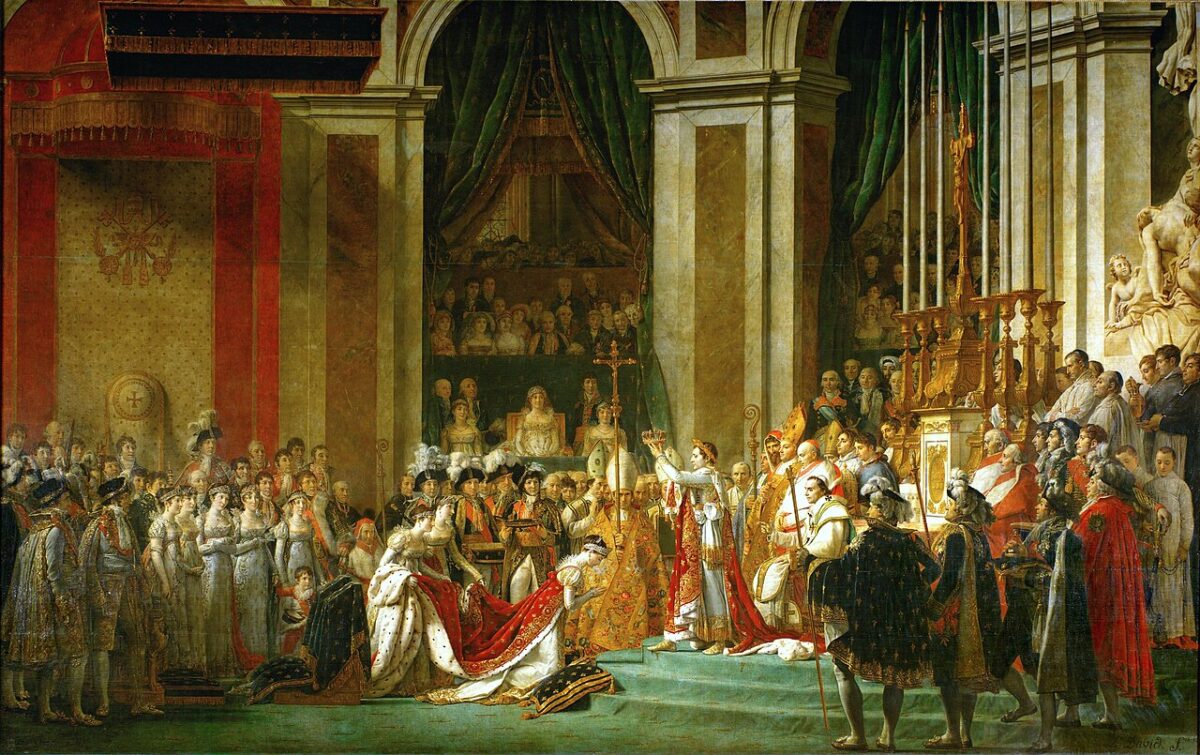
Jacques-Louis David, 1807
Vainglory best accounts for Trump’s need to put his name on everything—on battleships and the Kennedy Center; on Trump Rx prescription accounts and Trump Accounts for newborns; on Trump banners fronting the Labor Department and the Department of Agriculture; on a proposed $1.00 coin and a Trump Gold Card for expediting visas for high rollers; on the Donald J. Trump Institute of Peace and the now 400-million-dollar Donald J. Trump Ballroom that necessitated the demolition of the East Wing of the White House and will eventually overshadow the residence itself. And now, as of last weekend, the Monroe Doctrine has been improved by the Donroe corollary.
The Vice That Keeps on Giving
What are the secondary fruits of vainglory? A catalogue of Trumpian character. On the assertive side, constant boasting plus what the ancients called the “presumption of novelties,” which translates in our terms to the unending stream of exaggeration pouring from Trump’s mouth. “There’s never been anything like it,” this greatest feat in American military history, this budget surplus, this tide of revenue from tariffs, the fear instilled by his bombs in the hearts of “terrorists.” Just a year ago the USA was an utterly failed nation, the laughingstock of the world; now, in record time, all has been turned around and the glory has returned, to unprecedented praises of the most incomparable leader in history. Just watch Cabinet meetings. Indeed, there’s never been anything like it.
As DeYoung shows, however, other fruits of vainglory proceed out of fear, especially fear of exposure. She lists them as obstinacy, discord, contentiousness, and disobedience—that is, another catalogue of daily presidential behavior. The first three are obvious; “disobedience” registers as his refusal to submit to custom, tradition, courtesy, decency, international law, or the Constitution itself. Trump harbors a pathological fear of submission, of the threat that any defeat poses to his very identity. The 2020 election was just such. Hence the attempted coup five years ago; hence also Joe Biden’s continual rent-free dwelling in the Trumpian brain, the passion to demean him and to deny his victory at the polls.
A World Without Love
That his strutting is ridiculous and his claims false are standard verdicts on Trump’s character. That they proceed from monumental vainglory, the elevation of self to the blotting out of God, neighbor, dignity, and respect is more ominous. A decently self-aware human being would be terminally embarrassed by such a display. So why can’t Trump stop it?
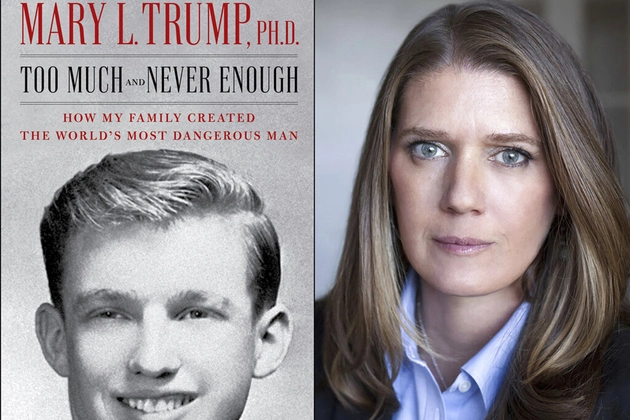
Here it helps to turn to the account that his niece, Mary Trump—out of her professional training as a psychologist and her first-hand experience in the family home—gives of Trump’s youth and moral formation. Donald virtually lost his mother at an early age to a debilitating disease and so was absorbed into the orbit of a bullying father for whom life was a win-lose, dominance-submission proposition. The pressure drove Donald’s older brother to an early grave but turned Donald into a clone of daddy. When Fred Trump Sr. fell to dementia, Donald took up with Roy Cohn instead, who had learned smear and intimidation from Joseph McCarthy and passed along the lessons to his disciple.
Compassion?
In her Christmas post last month, Laura DeJong suggested that we make compassion the mark of the season. In that spirit, and against all my inclinations, I closed Mary Trump’s portrait of her uncle feeling not only a host of negativities but also some pathos. How would it feel to have never been loved in your life? To be incapable of genuine trust, unable to extend or receive affection? To dwell beyond laughter or joy?
Extrapolating a little further, what makes a person of that character so appealing to so much of the American population? What does it say of our times that they can, and probably will, be labeled the Age of Trump? And what does it say that this absolute antithesis of Christian virtue can count on white evangelicals for his most reliable support? These, blessedly, can remain topics for another time.

13 Responses
You nailed the descriptive personality analysis. Your nod to Laura is something I have also explored in my mind: how can one be so devoid of compassion and seem to hate any and all who do not fall at one’s feet in admiration when the inside must hold a terrified child who doesn’t understand love, how to feel it, obtain it, or share it. That has saddened me more than once. “Money can’t buy me love” seems to ring so true, although at the moment holds sway. I, for one, welcome your helping us struggle with the reality that makes me open my Guardian tab each morning, wondering what in the world has now happened; looking forward to your take on your closing questions.
I echo your response, though you phrased it better than I might have, Janice.
And I should now add DeYoung’s book to my growing pile of books, eagerly waiting to be read.
And yes, looking forward to Jim’s take on his closing questions.
Yes, this essay is a sad, sad, sad commentary on a vainglorious man who has abrogated all power to himself. I have found myself more than once praying for his soul – he must have one! – but fear it is already beyond the reach of grace. May God have mercy on the USA.
Excellent…
Trump fits into Alfred Adler’s 4 point understanding of misbehaviour:
1.Power..
2 Attention..
3. Inferiority..
4. Revenge.
Re: the series The American Dream…one reporter stated that when he interviewed Trump’s Lawyer… Ron Cohn, (mentioned in the article
.he “felt like he was in the room with Satan himself”
I wish every misguided Trump supporter would read this article…
Well Done!!
Wow, such negativity. Can you admit, just a bit, that this past years changes in border control, misuse of government tax dollars, taking out of enemies nuclear war equipment, and lower crime in some of America’s larger cities are improvements over the past years ? ?
Your article gave lots of views on the current administration. How about answering some questions regarding Joe Biden’s 4 years of “leadership”
How did Mr Biden, become a multi millionaire with an annual salary of $400,000 How did Hunter become a multi millionare ? How about Hilary Clinton and Obama How did the departure from Afghanistan go compared to the capture of Maduro ? Maybe things will improve if we elect Mr Tim Walz as the next president. In summary both sides continue to blast the other side relentlessly . Often with incorrect accusations .
John S, IF what you claim about others is even somewhat true does that excuse what this administration has done? Does it explain why so many evangelicals continue to support what is anti-Christ. The counter argument “what about..” only shows there is no counter argument.
And what about the Obama administration, the GW Bush administration, the Clinton, the G Bush, the Reagan, the Carter, the Ford, and of course who can forget the Nixon administration, the Johnson, and the Kennedy’s administration? Oh right the subject was Trump. Well let’s put the negatives on one side of the list and the positives on the other side. How does that line up? And what about the results of the negatives on the list as opposed to the results of the positives? It’s apparent that the negatives outweigh the positives and that is what matters most. So stay in the present and pay attention to what the negatives are and stop trying to deflect attention from what is actually happening in our country. You’re simply and obviously attempting to turn focus away and creating a distraction from the reality. It’s a weak argument and well known psychological defense mechanism.
What is incorrect about my take on Trump’s character and personality? I did not set out to analyze his policies, nor the character or policies of his predecessors. So how about your take on my actual topic?
Thank you, Mr Bratt. Succinct and well stated. It troubles my heart and steals my joy but it helps to see it stated.
Why do you suppose that those who see good in this Administration only try to show negatives in other Administrations without acknowledging the beam in their own eye?
I miss Reverend Scott Hoezee.
“How would it feel to have never been loved in your life?”
This hit me like a ton of bricks. As a graduate of Calvin and its History program, thank you.
It’s so hard to depict this amor man correctly. It’s even harder to make me feel genuine sadness for him.
Does your title link Trump to Willie, or Huey, or Richard, or right on through to Humpty?
A fleet of vices might get recruited to do what a monarch’s best army and best cavalry never could: patch together a broken shell of a creature so it can power through.
Why do we prop the crackiest, most vice-bandaged eggs back up on our city walls? Do we believe they are the best we’ve got, or are we collectively hoping that someone from afar will notice an untenable situation, show up, and provide authentic repair? Is Trump CEO of USA Corp. our aspiration, or a surrender flegg waving a plea: we can’t repair any of it, whence cometh our help?
I don’t understand how Christian people can enthusiastically vote for either party. Both are terrible. Our votes should be cast in reluctance and in sorrow that many in the Democrat and Republican parties have descended into the moral pits. Let us pray the the Holy Spirit will breathe the breath of regenerative life into the hearts and minds of leaders in both parties.