
“There are some people who just make me glad to be alive at the same time as them,” my wife, Hannah, said recently. “Mavis is one of them.”

We were listening to A Sad and Beautiful World, the new album from Mavis Staples, released last fall at the age of eighty-six (eighty-six!). The music is everything the title promises — achingly sad and piercingly beautiful, a collaborative effort of songwriters and musicians held together by one of the most remarkable voices in American music.
Mavis has been inspiring me for years, and I felt compelled to pause and try to understand why. Of course, it’s her voice — husky, resonant, powerful. Within that power is a tenderness that can express grief and celebration, wonder and conviction, laughter and anger, sometimes within the same notes. What strikes me most is the utter aliveness in her music, something she hasn’t lost since traveling the Civil Rights trail with her family gospel group, The Staple Singers, in the 1960s.
Her music spans genres, but the core is always gospel music, which is to say socially conscious music. Machines of war, police brutality, acts of terrorism, and the slow violence of poverty, racism, and loneliness all find expressions of lament on the new album. “Can’t stand the coppers / up in their choppers / flying overhead,” she sings on Kevin Morby’s “Beautiful Strangers” (and this before the ICE occupation of her hometown of Chicago).
There are obscure soul gems (Eddie Hinton’s “Everybody Needs Love”), selections from artists who could be her grandchildren (Frank Ocean’s ”Godspeed”), and deft picks from Curtis Mayfield, Tom Waits, and others. In Mavis’s treatment, they’re all gospel songs — suffused with a vision of a world made new. “Pick up a dusty old horn and give it a blow,“ she sings on a cover of Gillian Welch and David Rawlings’s “Hard Times,” somehow even better than the original.
It’s the same Mavis who’s been inviting us all to a place where “ain’t nobody crying” ever since “I’ll Take You There,” her family’s biggest hit, in 1972.
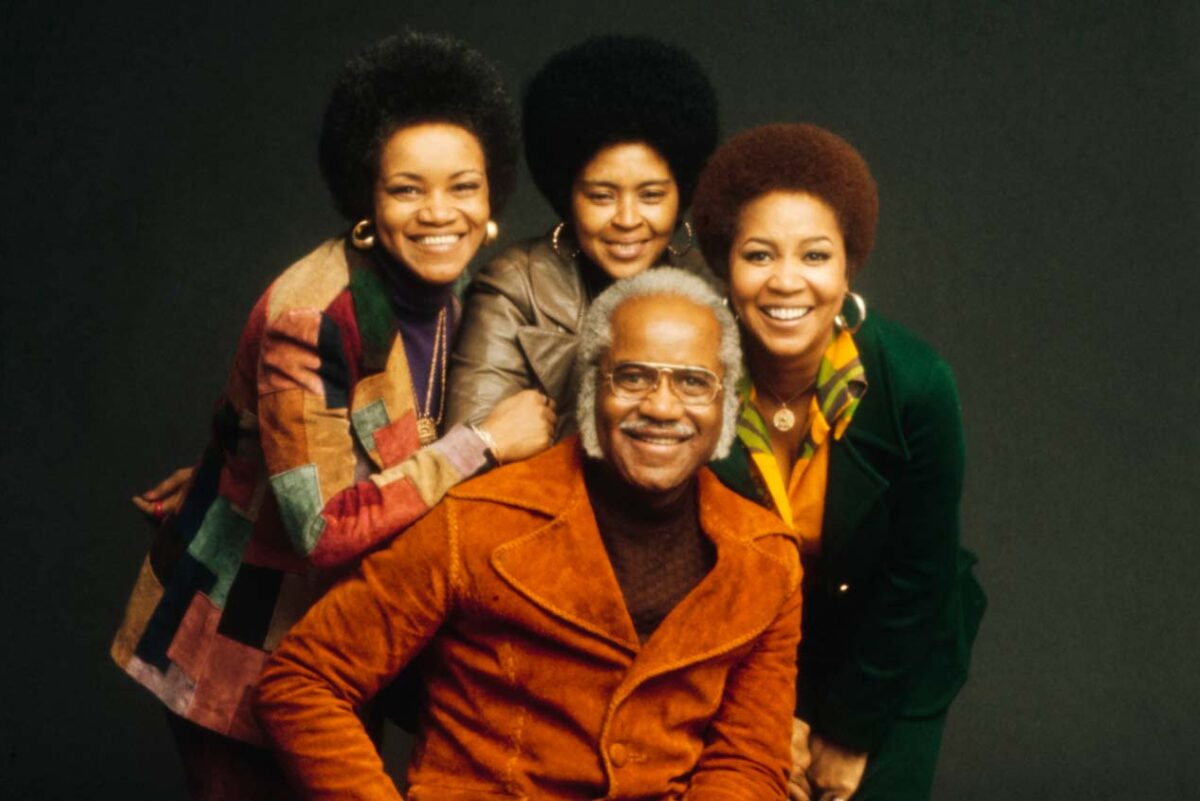
Fifty-plus years of channeling grooves and lifting spirits — maybe that’s enough. But there’s something about her late-career renaissance that strikes me as profound. Maybe you know her backstory: South Side childhood in the church, teenage star harmonizing with her siblings Cleotha, Pervis, and Yvonne and their father Pops, with his signature “trembling” guitar sound. For years they traveled the South with Martin Luther King Jr., warming up crowds at his rallies, marching, enduring jail time, making good on Pops’ epiphany when he first met Dr. King: “If he can preach it, we can sing it.” There’s more, including a marriage proposal from Bob Dylan, which she rejected. It’s all in Greg Kot’s excellent biography I’ll Take You There: Mavis Staples, The Staple Singers, and the March Up Freedom’s Highway (2014).
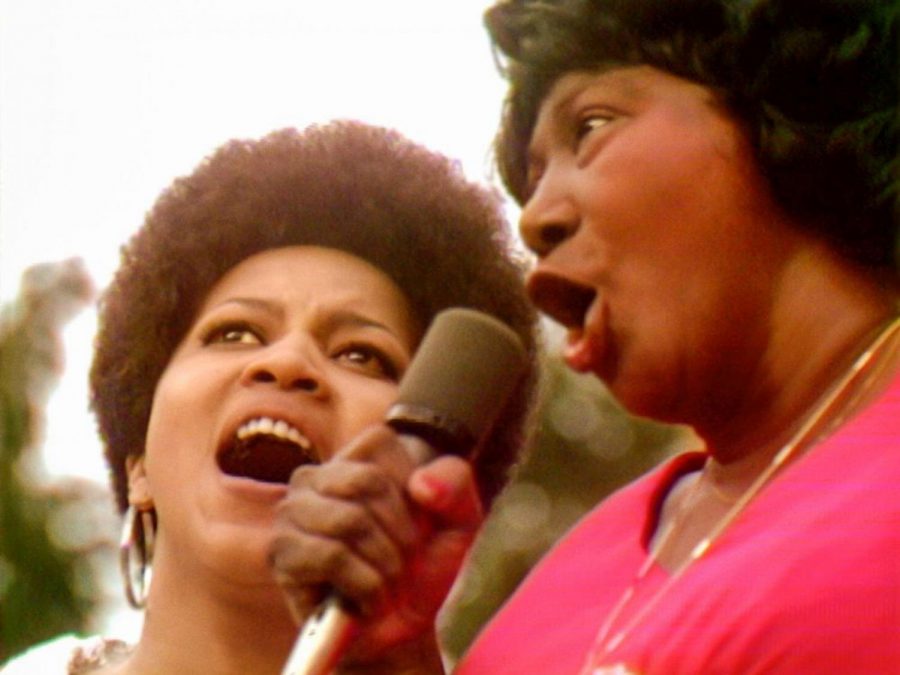
There’s also Summer of Soul (2021), a compelling documentary about the 1969 Harlem Cultural Festival, which captures a profound passing-of-the-torch moment when gospel icon Mahalia Jackson asks Mavis to join her on stage singing “Precious Lord, Take My Hand.”
There was a relatively quiet period in the 80s and 90s, then a remarkably creative run that began with We’ll Never Turn Back (2007) with producer Ry Cooder, an album heavy on Civil Rights standards and the stunning “My Own Eyes,” whose refrain deserves its own essay. There have been six albums and countless collaborations since then. My favorite might be Live: Hope at the Hideout (2008), which showcases the sheer delight she takes in performing and connecting with an audience, using her laughter as an instrument just as deft and virtuosic as her singing voice or the rhythms of her band.
On the new album, it’s her sense of vulnerability that feels most relevant. The last surviving member of her family, she describes spinning records to hear her siblings and father sing once more: “I am the last, Daddy / Last of us / Ain’t always easy to believe / I miss my family, Daddy.”
The lines come on “Human Mind,” by songwriters Allison Russell and Hozier, the one song written specifically for this album. The sadness is almost tough to bear. But here, too, the ache gives way to something new: “God bless the human mind / Who would dream the sweet design? / Even in these days I find / This far down the line / I find good in us sometimes.”
The music is sparse, letting her voice take center stage. Restrained horns give the feeling of a jazz funeral. Her longtime guitarist Rick Holmstrom adds texture, an homage to the Pop Staples sound.
In an age of political trauma, it takes courage to remain artistically curious. That’s true in any age. And at any age. Mavis is the kind of artist who makes me want to create art. She’s the kind of artist who embodies a hope deep as a river. What a gift.

6 Responses
Man, I feel like I’ve been missing the boat. I’ve always liked the Staple Singers from their radio hits (“Respect Yourself” was my favorite), but I wasn’t aware of all the great music that Mavis is still putting out. Thanks for letting us know.
With Mavis, we long for a place where there are “no smilin’ faces lyin’ to the races.”
Today’s (1-12-26) Chicago Tribune included a review of the Saturday (1-10-26) concert by Mavis Staples at the Chicago Theater written by Bob Gendron, a superb pop music critic who deeply supports Jonathan Hiskes’s view. This is a link to the article:
https://digitaledition.chicagotribune.com/shortcode/CHI785/edition/48b95a80-5331-4c76-9985-239dcec83919?page=66dead82-4f1c-4c0b-a719-588de239f875&
When my wife and I searched for a song for the first dance at our wedding reception we settled on Mavis’ performance of Jeff Tweedy’s “You’re Not Alone.” We’d both lost spouses to blood cancer, and her soulful rendition spoke volumes as we danced to celebrate God’s care. Thanks for reminding us that her music can be “achingly sad and piercingly beautiful.”
Thanks, Jonathan. And Jonathan almost certainly knows her rendition of “Hard Times, Come Again No More,” but if there are readers here who don’t know that song, take a listen here: https://www.youtube.com/watch?v=-ixbah9u234
Yep, it takes courage all right.