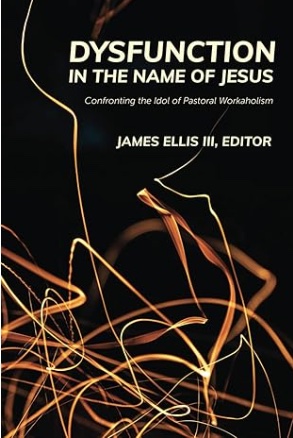
James Ellis III’s Dysfunction in the Name of Jesus: Confronting the Idol of Pastoral Workaholism (DNJ) offers a timely and practical guide for sustaining pastoral health and joy in ministry. Framed as “triage,” DNJ is a resource designed to call pastors to return to the Great Physician for healing and restoration, while warning that ministry can become idolatrous when career success and institutional growth overshadow the call to model Christ’s love and grace.
The book addresses the pervasive and complex issue of pastoral workaholism – where unrealistic expectations and relentless demands erode spiritual vitality, personal well-being, and family relationships. DNJ, through candid reflections, amplifies anecdotes–including those of a minister’s spouse–explores sabotage in ministry, and affirms that God’s grace and Scripture sustain leaders through adversity and the paradoxes of ministry, emphasizing the importance of learning to “wait on the Lord” (Isaiah 40:28–31).
Throughout its chapters, DNJ provides practical strategies to prevent burnout. Drawing on Moses’ example, the book underscores shared leadership, delegation, spiritual direction, and accountability. It identifies “hurry” as a spiritual enemy and advocates rhythms of rest, solitude, and trust in God. The book also examines temptations–relevance, popularity, and power–that drive exhaustion, reminding pastors they are not saviors. As Cardinal Dearden prayed: “We are workers, not master builders; ministers, not messiahs.”
Later chapters deepen this vision. For example, one chapter introduces “charismatic memory,” the Spirit’s activation of the church’s historical memory as a gift of grace, renewing pastors and empowering preaching. Drawing on Peter’s restoration at Pentecost, this chapter in DNJ illustrates how burnout can give way to renewal amid perceived failures and pressures.
Diving deeper into the dangers of workaholism, the book warns that ministry can become an idol when passion eclipses Christ, resulting in stress and failure. Critical principles emerge:
- Family must never be sacrificed for ministry,
- Authentic ministry aids in resisting the “demon of busyness,”
- Prioritizing intimacy with God over ministry performance,
- Renewal flows from grace, not ambition, and
- Identity, rooted in Christ, sustains long-term faithfulness.
Paraphrasing Exodus 18:13 and the words of one of DNJ’s authors: ”If we persist in the unhealthy habits discussed in DNJ, we will not find direction from God, we will not endure, and those we serve and love will not go to their places in peace.” Rather, pastors are living balanced lives–seeking forgiveness, yielding to the Spirit, and embracing grace over striving.
Key Insights
- Avoid the Messiah Syndrome – Pastors must resist the urge to “do it all,” which glorifies the instrument rather than the Maker.
- Navigate Ministry’s Tensions – Ministry is deeply rewarding yet relentlessly demanding, often producing burnout and identity confusion.
- Return to Christ – DNJ calls pastors to Christ-centered service, resisting narcissism, competition, and spectacle.
- Embrace Practical Encouragement – DNJ offers wisdom and hope from seasoned leaders, guiding pastors toward joy and purpose in humble service.
In summary, DNJ serves as a wake-up call and a beacon of hope. It reminds pastors that ministry is not a race to achieve but a journey of grace–anchored in shared responsibility, deep communion with God, and reliance on the Great Physician. In a culture obsessed with productivity, DNJ affirms that abiding in Christ, not striving, is the essence of faith.