
It’s hard to think of another modern art form so successful at delivering spectacle as movies. Few movie subjects are more spectacular than science. “I have seen the future”, Hugh Jackman’s Angier solemnly warns us in Christopher Nolan 2006 The Prestige, “and it is a strange future indeed. The world, ladies and gentlemen, is on the brink of new and terrifying possibilities.” Movies’ own capacity to imagine and illustrate “new and terrifying possibilities” more than fuels our very real fears.
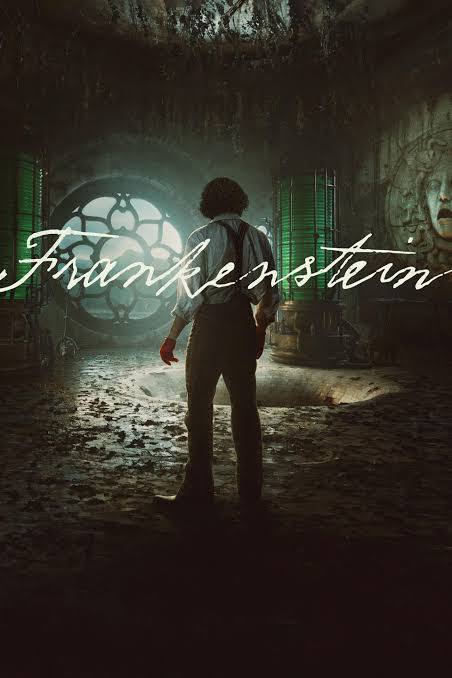
The mother of our fictions of scientific spectacle is Mary Shelley‘s 1818 novel Frankenstein. And who better to dramatize her novel than the remarkable Mexican director Guillermo del Toro? Shelley and James Whale’s 1931 version inspired him to become a movie maker. Del Toro’s remarkable knowledge of the horror tradition helped him honor in various ways what is worthy of those many predecessors as well as Shelley’s remarkable story.
Shelley’s novel puts little detail into the science of what Frankenstein called “the ideal bounds” of life and death, breaking through which he might “pour a torrent of light into our dark world.” The daughter of two of Britain’s most notorious radical reformers, Shelley was well educated in contemporary debates over human nature, the origins of social evil, and political reform. She published the novel at nineteen after the French Revolution, that massive political earthquake rippling from Paris across the Atlantic world. Shelley casts a scientist grieving his mother’s death by scarlet fever to swear no one must ever suffer such loss again. His answer is not a virological breakthrough, but to invent a perfected human impervious to injury, illness and death. Frankenstein fails to build a beautiful new Adam and abandons his newborn son. The Creature—unnamed and alone—is yet a stunning success. He is intuitively brilliant, naturally resistant to violence, and driven by one purpose. He seeks a community, companionship, to love and be loved. No other character in the novel has his poetic and philosophical intensity; no one speaks so eloquently.
I can’t recall another film version that captures so intimately this part of Shelley’s vision. The Creature is another of del Toro’s broken-hearted loners (The Devil’s Backbone, The Shape of Water, and Nightmare Alley) orphaned, isolated, driven to despair, hideous and judged as ugly inside as outside. The movie is most affecting when the Creature befriends a blind elderly man left behind by his family away on a long hunting trip. This ends shockingly, convincing the Creature he is condemned by all humanity and spurring the Creature to brutal vengeance.
Del Toro set some of his earlier movies, such as The Devil’s Backbone and Pan’s Labyrinth, in Franco’s fascistic Spain. His Frankenstein criticizes state violence and corruption in the industrial production of a creature who can exceed human limits. Frankenstein collects human remains from a battlefield filled with frozen corpses. Del Toro’s movie spectacle illustrates his disgust at modern war whose product is death, paying homage to the British Great War vet and director John Whale. Boris Karloff’s Monster purposefully resembled the surgically repaired casualties of that industrial slaughter.
The spectacle of horror vividly illustrates the nature of evil. Del Toro has discussed his Mexican Catholic upbringing, his movies often filled with Christian and Catholic images and themes. Frankenstein is no exception. He apparently recognized that Shelley was deeply inspired by John Milton’s Paradise Lost (1667). Milton intended his own revolution-era epic poem to be a theodicy (the word itself would be invented early in the next century). Could God be defended against charges that he created humans knowing that their future rebellion and sin? Shelley revised Milton’s drama with Frankenstein in the roles of God and Satan—creator and audacious rebel against the natural order—while the Creature was first Adam, later Satan in revolt against his creator. Shelley’s human and God share a divine as well as satanic character. We might read Shelley’s novel to satirize the creation/fall/redemption/restoration story. Shelley’s God/Frankenstein abandons his creation to solitude and misery. Shelley’s Creature/Adam cries in agony, “I am miserable because I am alone!”
Del Toro’s movie follows the novel’s desperate race of Creature leading vengeful creator deeper into the killing cold of the north. The novel ends with Frankenstein’s death, reducing his nemesis to a new depth of despair. He scoops up his dead creator and flees alone into the stygian polar wilderness. But as Frankenstein dies, del Toro lets the scientist ask forgiveness of his creation. The Creature’s heart opens, death bringing reconciliation. It’s rare for movies and TV shows to place forgiveness at the center of cinematic spectacles of vengeance (for another example see my friend Bob Hubbard’s lovely review here of the HBO series Task). That seems especially true of horror. While the novel powerfully depicts a scientist who “bears” a child without a mother, the most notorious dead-beat father in literature, del Toro turns the story into a father/son tale reminiscent of God the creator and God’s creation.
Yet I had a feeling del Toro even glances for a moment at the relationship of God the Father to God the Son. Shelley no less than del Toro explored what it might mean for modern humans to reflect on themselves as the “image of God.” Shelley’s scientist intended his perfected human to be beautiful. But his clumsy technique depended on raiding graves, mortuaries—even Shelley wrote, slaughterhouses. She wanted our disgusted reaction to human audacity betrayed by failed human technique. The Creature’s striated musculature in the movie recalls illustrations by the Romantic William Blake (see his 1795/1805 “Newton”). As in The Shape of Water del Toro charges his audience to imagine spectacular physical difference as another kind of beauty.
The New Testament’s version of “the image of God” depicts Jesus Christ, God’s icon of flesh, bringing humans into imaging God. The strange spectacle of Jesus of Jewish flesh, of the flesh of laboring commoners, eventually of humiliated and destroyed flesh, is how God tabernacles among us and pours the divine torrent of light into our dark world. I don’t think I’ve seen a film version of Frankenstein so self-conscious of Shelley’s own fascination with revising, secularizing, the so-called biblical narrative of creation/fall/redemption/restoration. Concentration on the story’s father/son drama lets del Toro retell that old Christian story to ask other questions. We didn’t ask to be created. Do we feel as ill-shaped if not ugly? Do we share the sense that we’re alone, abandoned by God? Do we pursue transcendence through outsized ambitions to impose our will on nature? Yet do we hope that at our death we are also reconciled to our creator father who in del Toro’s story discovers intimacy with his suffering creation? Whatever distance del Toro would express about his childhood Christianity and the Church, his commitments to telling movie spectacles of sympathy and compassion, attacking injustice and vengeance, his character’s longing to join in intimacy with an “intimate circle” of parents and siblings, recalls to me the best of that heritage of Christ’s followers.

6 Responses
I don’t like horror films but you tempt me to peek through the curtain with your review. The history as always, helps the intrigue. Thank you.
What say you about the film, “Sinners” which I and my wife viewed recently? Horror with a purpose?
https://reformedjournal.com/2025/06/25/sinners/
Mike wrote an excellent review of Sinners! You can find it here: https://reformedjournal.com/2025/06/25/sinners/
I’ve often wondered why there are so many movie versions of Frankenstein (and yet another new version of Dracula coming); perhaps, not just trying to outdo the previous versions in horror or technical interpretation, but also trying to get it right?
I think Del Toro gets it right in this film.
Thanks for help with “Sinners.” Now I remember reading Mike’s review of it in an earlier RJ essay. Many layers. . . .