
The story of a young girl carrying her infant brother is first recorded in James Wells’ 1884 book, Parables of Jesus. When someone asked whether she was able, she replied, “He ain’t heavy; he’s my brother.”
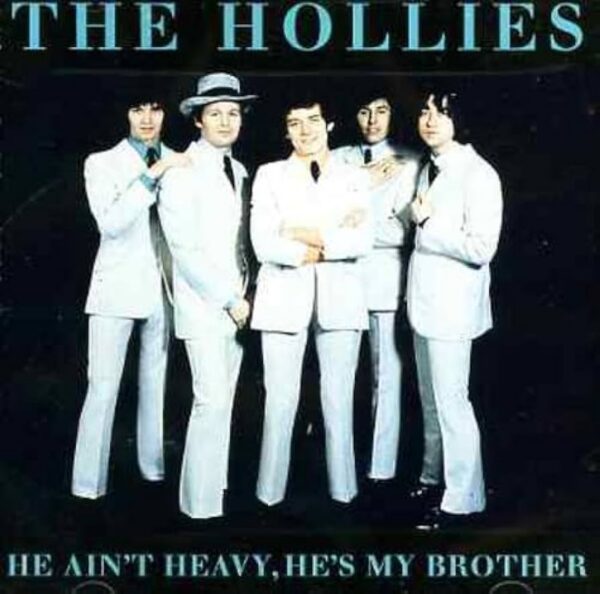
That poignant line inspired the famous song, He Ain’t Heavy; He’s My Brother
So on we go;
His welfare is of my concern;
No burden is he to bear;
We’ll get there.
The quote also inspired Father Edward Flanagan in the founding of Boys Town, outside Omaha, Nebraska. At Boys Town stands a statue of a young lad carrying another child about his size, who is paralyzed.
The quote is in stark contrast to Cain’s question after murdering his brother, Abel. Cain, trying to evade all responsibility, famously asks “Am I my brother’s keeper?”
Scripture offers a very different answer in the story of Joseph. In Genesis 37, when Joseph is asked by his father, Jacob, to go check on the welfare of his brothers, Joseph replies simply, “Here I am.” In Hebrew, Hineni. It is a surprising response since Joseph knew his brothers hated him and he could easily be walking into an ambush.
Hineni (Here I am, Lord) is a common biblical phrase, spoken by persons to give an affirmative nod to the call of God, no matter how challenging the divine expectation. Mary, the mother of Jesus, adapted the phrase with the words, “Let it be according to your word.”
Genesis 1-11 tells us how God ordered the universe. One basic understanding of human existence is that we are responsible for the welfare of our siblings and kindred in the world. We are responsible for one another. Everyone is a neighbor and our life’s work is to love one another.
Like Cain, the lawyer in Luke 10, tries to avoid responsibility by asking Jesus, “Who is my neighbor?” Jesus replies by telling the story of the Good Samaritan. In other words, your neighbors are both the people you like and also the people you despise. All the families of the earth are our neighbors.
I remember a visit by an old elder many years ago. We were having a pleasant conversation while sitting on my front porch. He noticed my neighbor struggling with the construction of a sidewalk.
“Let’s cut this visit short. You have to be a neighbor,” he said.
I am no expert at flatwork concrete. I do, however, know how to hold the other end of a tape measure. My neighbor needed help. It was a matter of course to help.
When Ukraine or Palestinians ask for help; when victims of violent sexual exploitation ask for justice; when immigrants ask for opportunity; when starving children ask for food — we have to say yes. Hineni. There is no wriggling out of responsibility. Really, no question. It’s our job.

Recently, the Bishops of the Evangelical Lutheran Church in America in Minnesota issued a message addressing the horror of the mistreatment and murder of their neighbors at the hands of Immigration And Customs Enforcement. The primary author of that message is Bishop Regina Hassanally.
I was the college chaplain where Regina did her undergrad. I remember her as an attentive and bright student. Even as a teenager in her first year of college, she was called, without drawing attention to herself, to encourage others. I was not surprised that she became a bishop at such a young age. I was amazed that a church synod could make such a wise decision.
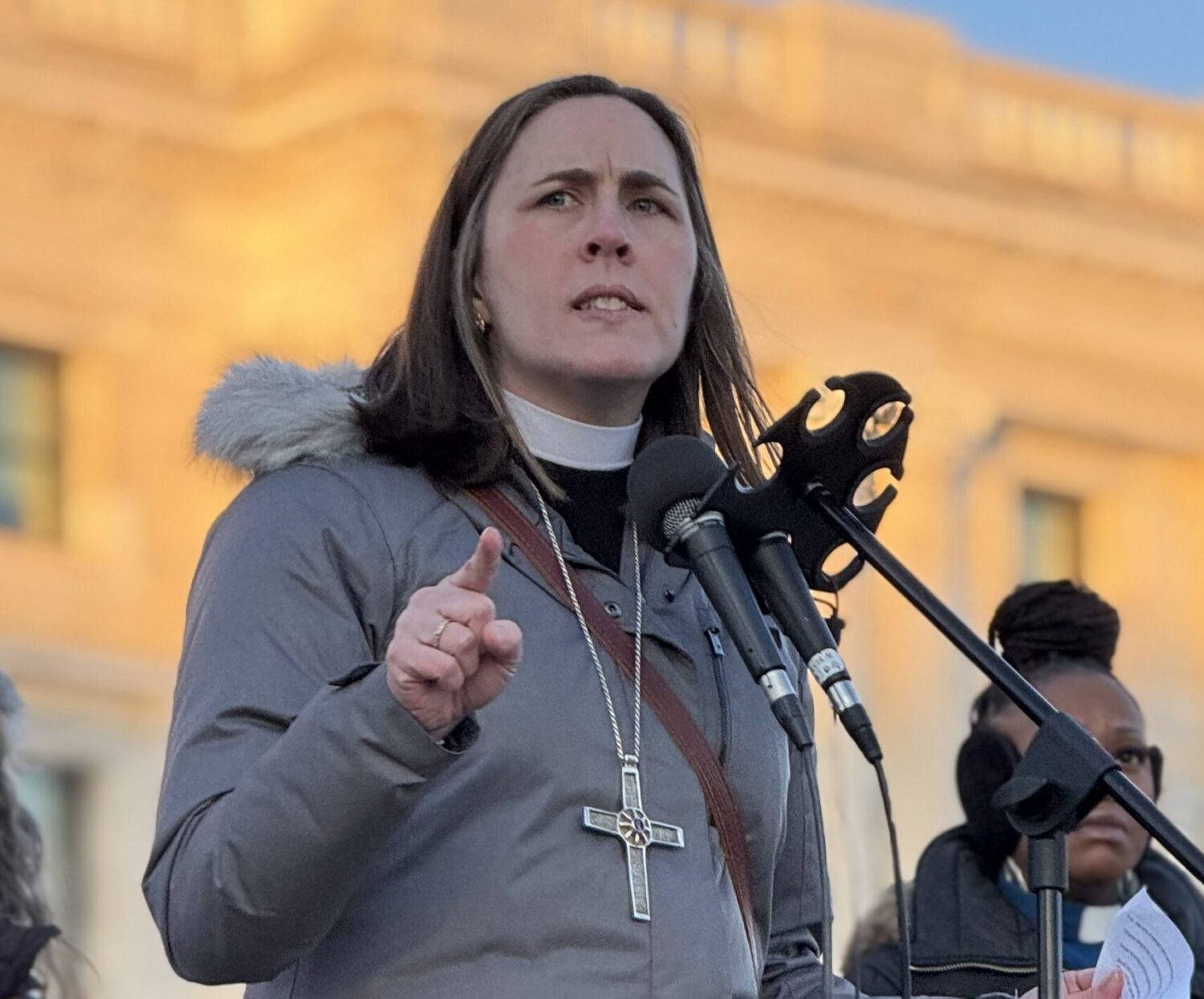
In the Bishops’ message, Regina reminds the church that God’s people will prevail, not because of their own strength and wisdom, but because of God’s Truth. God has ordered the world so that human beings are designed to worship God and care for each other. Someday everyone will know.
With her words of encouragement, Bishop Hassanally is carrying the weight of the church in a state watched by the whole world. Some may wonder if this young bishop is able.
I can easily imagine her saying, “They’re not heavy. They’re my siblings.”

14 Responses
Thank you for these simple but powerful reminders, Harlan!
Funny coincidence that I just read an article in Huffington Post about how MAGA Christians are not calling the skill or quality of empathy as a sin and something toxic to their version of Christianity. It if frightening to read about it.
Article: https://www.huffpost.com/entry/maga-christians-empathy_n_69826fc3e4b0f9ced96f23e5?
Thank you Harlan. Thank you for the reminder of our duty and the hope of reconciliation and shalom.
Thank you, Harlan. I remember belting out those lyrics (probably out of tune) as a high schooler at Denver Christian. The lyrics of that song have stood the test of time and are more than relevant today (although I would make the song more gender inclusive 😂).
I did not know that about Bishop Hassenly’s alma mater. Score one for the NWC Red Raiders.
Sorry, misspelled her last name–Hassanally. A score another one for Harlan’s deep-cut knowledge of the music of that era. Love The Hollies.
Thank you for this, Harlan. Simple truth. Deserves repeating over and again!
Thank you, Harlan. May each of us be ready when we are called.
It is a privilege to serve in that denomination, and a privilege to call Regina a wingmate.
Harlan: Siblings matter, and Genesis makes it clear we are all desended from a beginning, Somewhere. So siblings are all around.
I again re/read your 2/13 Blog……Thank you Harlan, for those clear reminders that we need over and over again! Blessings in your retirement!
Thank you
“He ain’t heavy; he’s my brother”. These are convicting words for us to ponder.
I have something to add. In the parable of the Good Samaratan, it was the Samaratan himself that helped the man in need. The Samaratan didn’t call on the government or others to help him. Today, it is easy for us to call on our government to be responsible for all the world’s neighbors.
The US government
decideds how to spend its money and what benefit programs to offer its citizens and how much aid it will give to other countries. The money collected in taxes can’t cover (by far) all what is needed to help our neighbors of the world.
The Samaratan parable is calling us, as individual Christians, to help our neighbor. Perhaps we should sell our cottages on the lake or our winter home in Florida? Maybe pass on a river cruise to Europe? We could tighten our belts in our spending habits, living frugally and simply, which would free up our time, money and hearts to help our neighbor.
We all need this message- Thanks Harlan!