
We assembled as an extended family and stayed up late to welcome in 2026. We all watched the ball drop in Times Square and kissed at just the right moment. 5 – 4 – 3—2. . . Our adult children tried to embarrass their children by calling out: “Look, Grammy and Papa are smooching!” The young ones didn’t need any encouragement. They were all eyes and their faces were flush with that embarrassed/pleased look.
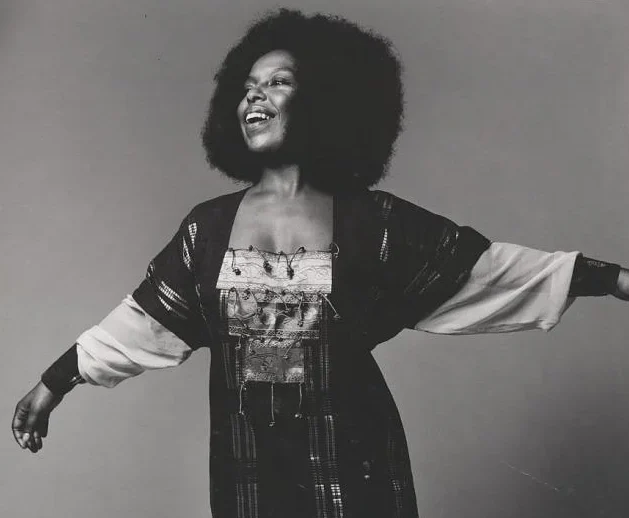
1937-2025
Smooching led to a Roberta Flack moment. They all wanted to know our origin story. How did we meet? Judi shared her recollection and I shared mine and then we synthesized the difference. Maybe the exact details aren’t so important because, yes, I can remember the first time I ever saw your face.
The first time, ever I saw your face
I thought the sun rose in your eyes
And the moon and the stars
Were the gifts you gave
To the dark, and the endless sky. ~ Roberta Flack
Today, I’m musing on the fact that our recorded Scriptures begin with an origin story. “In the beginning. . .”
What follows those opening words is a litany of failure, grief, and pain. There are moments when it looks like humanity has turned the corner, moments when people are represented as being closer to God, only then to be followed by falling away. Were you to illustrate the history of humanity, it would look like an electrocardiogram graph of the human heartbeat, rising and falling.
Heartbeats don’t begin themselves. I’ve met people whom I admire. And I’ve met people whom I disliked. Nevertheless, they all continued on, one heartbeat after another. But none of them could claim any ownership. They didn’t begin themselves. Beginnings are the one foundational fact which we all share. Beginnings remind us that we are a part of, but not the purpose of life.
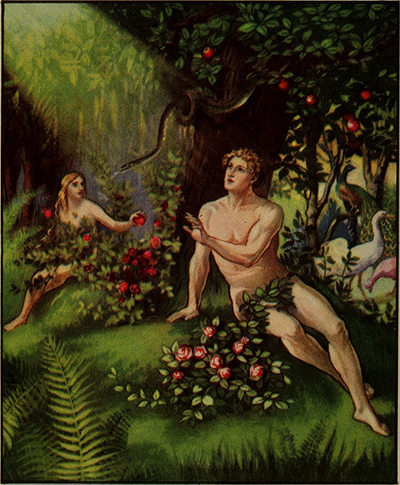
My relationship to the Genesis origin story has changed over time. Somewhere in my childhood—maybe it was all those fuzzy-glow Sunday School pictures—I understood that God was something like an architect. There was a design, in infinite detail, which prescribed the way in which the world was to work. God then, being something of a builder and supply chain manager, assembled all the pieces to fit that predetermined design. Each day of creation was like a brick. God, as if building a house, laid each brick into place. Creation, was in fact, an artifact—glorious, but limited in scope and value.
Today I think of Creation as being more like an ecosystem, a collection of beings—plants, bacteria, humanity, insects, birds, and animals—all of which interact in such a way as to determine their common life together. The life systems which emerge at any one location depend upon the interactions of all of the elements and all of the beings. Difference, from location to location, may not be negotiable but neither is it random.

The reintroduction of wolves in Yellowstone illustrates this dynamic. Wolves hold the elk in check. The elk, hiding out in the woods, stop foraging the streamside vegetation which then favors the return of shrubbery, which in turn encourages the return of beaver. The beaver ponds expand the wetlands, which then facilitate the return of insects, which, in turn invite the return of insect-hungry birds. Small mammals, drawn by the abundance of seeds and grasses, return only to be followed by predators which view them as lunch. In the end, human observers noted that all this activity literally changed the course of the Yellowstone River.
Seems to me that, in Genesis, God is about the business of assembling a cast of actors. Whatever happens after that, for good or ill, will be determined by the way in which the characters interact. Scripture provides two polar examples, each a variation on an origin story. First, the flood story with Noah, which reduces humanity’s role to that of a tiny seed pod floating atop the flood waters, illustrating the consequences of human domination. The second image, the Tree of Life, under whose spreading branches life flourishes and expands, represents abundance, thriving and divine dominion.
Origin stories have consequences. Whatever you believe, consciously or not, is the way things “really are” will become your stage directions. Each of us will live into the story we believe.
So much of the political divide in the United States today grows out of the tension between origin stories. Are domination, self-interest, and violence the way things really are? Or, are cooperation and alliances the way to go?
When John the Baptizer asked Jesus, “Are you the one?” he was essentially asking an origin question. In the midst of chaos, fear, and confusion, John wanted to know what story to follow. Which one was really true? Interestingly Jesus doesn’t give him a straight answer. But Jesus does give him the metrics with which to discern the answer for himself. In essence Jesus says; Look for those places where the hungry are fed, the naked are clothed, and prisoners are set free. Where these things appear, you will find the truth; there you will find where God is present.

9 Responses
So thought provoking…
“Origin stories have consequences. Whatever you believe, consciously or not, is the way things “really are” will become your stage directions. Each of us will live into the story we believe.”
My dear Wise Wes often said, “Children (I would say in this case -we) are great observers but lousy interpreters”. Can we step back and be open to a different interpretation to live into? Changing a belief system can extremely difficult—from my experience. However, maybe it doesn’t mean throwing out the proverbial “baby with the bathwater” but a reframing the interpretation. Hmmm. Thank you!
Thanks for an excellent reflection! Just for clarity, although Roberta Flack made “First Time…” popular, it was actually written in the 50’s by Ewan MacColl. It was covered by many folk artists of the 50s and 60s until Flack reinterpreted it into the song that inspired many as they fell in love for the first time.
Thanks, Peter. I think you’re right about the importance of all kinds of origin stories. I wonder if sometimes they’re not added, “after the fact.” For the ancient Israelites, for example, isn’t their origin story actually the Exodus? Then, as every religion and “big system of ideas” needs to address “where did this come from?” the biblical creation accounts were developed later. And then I also wonder what has been the impact of the creation stories eclipsing the Exodus as “the” origin story of the Israelites?
Interesting thoughts, Steve. When you say the Genesis origin story eclipsed the Exodus one, are you talking about how that has happened in our time or in biblical times? As far as I can tell, in the Bible itself both origin stories get featured a lot, like in the psalms. And Isaiah weaves them together well with its talk of a new creation and a new exodus. Even in the Exodus story, we see God’s great power over creation in the plagues and the parting of the Red Sea. As for how our own era thinks of origin stories, if you asked Christians, what’s the origin story of the universe, most Christians would refer to Genesis 1-2. But if you ask what’s the origin story of the nation of Israel, they might think of Abraham, Exodus, and some might even think of David or the return from the Exile.
Hi Dave, I was thinking primarily of ourselves, and “Christian thought” through the ages. We think of ourselves as made from the earth, bearing God’s image, “fallen,” given dominion of the earth, some find gender identities, and much more in Genesis 1-3. What if instead our primary identity was freed and escaped slaves, wanderers? I think of the Creeds, for example. I don’t deny God is “Creator of all that is seen and unseen,” but how would it be different if we first confessed God is the covenant-keeper, the liberator, deliverer, defender of the downtrodden, freedom-giver”?
To my understanding, the structure of the Torah itself makes Exodus the most important and defining part, while the purpose of Genesis is “preface,” to answer Who are we? and How did we get here? and Who is this YHWH God? Genesis is written backwards from Sinai, so to speak, which is why the Joseph stories are functionally bigger than the creation stories. We Christians tend to overemphasize the importance of Genesis relative to Exodus, and we hardly even know the most important chapter in the Torah, which is Exodus 24.
Hi Peter: I think you’re right that origin stories play a big role in how we live out “the way things are.” But I have to admit that I operate with many origin stories. I pick up that I made for a relationship with God and others from Genesis 1, that I’m of the soil from Genesis 2, that I’m a sinner through and through from Genesis 3, that I have been set free from Exodus, that I’m loved by God and a new person in Christ from the gospels, etc. And my more near-term origin stories tell me that I’m of not-so-emotional northern European stock, that I’m the child of grace-filled parents, and more. All those origin stories weave together in my soul.
Thank you, David. Your origin stories sent me into my own soul-forming and enlarging self reflections.
Thank you, Peter, for your whimsical and thoughtful reflection! It has helpfully provoked my own and others wonderings about our own respective and shared origin story/stories.