
Psalm 10: Meet Your New Favorite Psalm
Some psalms rarely see the light of day. One imagines them languishing in the shadows of their more popular siblings, wondering whether they will ever get the recognition they deserve.
Over the years I have often told my students that there is a psalm for every season under heaven. In other words, if we wait long enough, we may find ourselves in a situation where even the most obscure, unpopular psalm will speak to us in powerful ways.
I don’t know whether Psalm 10 has ever lost sleep over getting stuck in Psalms 23’s shadow, but I can easily imagine Psalm 10 screaming to be heard in our current context. I dare you to read through it without feeling like the psalmist has been marching with protesters on the streets of Minneapolis, or listening, horrified, to the latest revelations from the Epstein files.
“Why, O LORD, do you stand far off?” it asks, straight out of the blocks.*
“Why do you hide yourself in times of trouble?” So much for polite formalities.
Those aren’t so much questions as accusations—and they are rooted in a reality that sounds all too familiar: “In arrogance the wicked persecute the poor.”
Most lament psalms would spend several verses complaining, but this psalm gets straight to the petitionary point: “Let them be caught in the schemes they have devised.” It’s the old “hoist on their own petard” prayer, popular in every heart that longs for poetic justice.
Like many of us these days, this psalm is utterly gobsmacked by the arrogance and cruelty of the wicked. You can see the psalmist shaking his head incredulously as he marvels over how–
Their mouths are filled with cursing and deceit and oppression;
under their tongues are mischief and iniquity.
They sit in ambush in the villages;
in hiding places they murder the innocent.
Their eyes stealthily watch for the helpless;
they lurk in secret like a lion in its den;
they lurk that they may seize the poor;
they seize the poor and drag them off in their net.
They stoop, they crouch,
and the helpless fall by their might.
They think in their heart, “God has forgotten;
he has hidden his face; he will never see it.”
The wicked of both the psalmist’s world and ours seem to assume that their deeds can be done in secret—that no one will ever hold them accountable for their actions. And alas, even a sea of cell phones cannot capture every atrocity, much less cause the incriminating footage to see the light of day in a court of law.
In the face of this outrage, the psalmist hurls another petition toward heaven: “Rise up, O LORD; O God, lift up your hand; do not forget the oppressed.” It quickly gives way to an anguished question: “Why do the wicked renounce God, and say in their hearts, ‘Your will not call us to account’?”
If the psalm ended there, it would still be worth its cathartic weight in gold. But it presses on—and presses us—to affirm our faith in a God who DOES see, and DOES care, and DOES act for justice in an unjust world.
But you do see! Indeed, you note trouble and grief,
that you may take it into your hands;
the helpless commit themselves to you;
you have been the helper of the orphan.
Then, after reminding God to “break the arm of the wicked,” the psalm ends with an affirmation of faith that rings true in any age:
O Lord, you will hear the desire of the meek;
you will strengthen their heart; you will incline your ear
to do justice for the orphan and the oppressed,
so that those from earth may strike terror no more.
“Amen!” my heart wants to say. I long for some crumbs to fall from the table of this psalm’s confidence. But then I doom-scroll through the day’s latest obscenities, and I’m left with precious little of the psalmist’s confidence.
Maybe that’s why the biblical editors decided to link this psalm with the one before, tying them together by way of an acrostic that needs both psalms to cover the Hebrew alphabet. While the sentiments and the subject matter of Psalm 9 are similar, there is one important feature that distinguishes it from Psalm 10: Its pleas for the oppressed are grounded in memories of God’s help in the past.
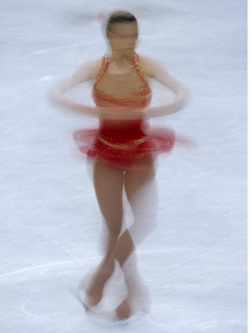
So, maybe Psalm 10 still needs a little help from its friends. Like the still point that saves spinning Olympic figure skaters from getting dizzy, the memories of God’s past faithfulness are what keep us from spinning into despair…enough to help us believe that “the needy shall not always be forgotten, nor the hope of the poor perish forever” (Ps. 9:18).
*All biblical quotes are from the NRSVUE.

8 Responses
Beautiful. Amen.
Thank you, Carol. What a lovely piece.
Thank you for this today, so appropriate.
The still point that keeps the skaters from getting dizzy – I have been wondering lately how they do that! Our still point in this crazy, spinning world is that ability to remember God’s faithfulness in the past and keep it in front of us – what a beautiful thought. Thank you, Carol! The psalms are so relevant, an honest and holy companion on this journey.
Spot on, indeed. Thank you, Carol. In hopes of Psalm 10 perhaps needing “a little help from its friends,” I wonder if including Psalm 10 as part of the prayers of the people might be a way to help more of us us pray what we indeed need to today.
Terrific! Thank you!
“Memories of God’s faithfulness” Yes, for many reasons… “Memories that help us believe” Yes. Help us to believe, and trust your faithfulness.
Bless you, Carol, for giving us hope through these words from the Psalms – a favorite book for many of us. I am grateful.