
Four novels have landed on my favorites shelf in recent months. They share, I think, a single thread: the kind of grace that seems most available to people who’ve run out of time to be stingy with it.
First, I read The Correspondent by Virginia Evans, an epistolary novel in which I was quickly charmed by feisty 73-year-old Sybil Van Antwerp. Through Sybil’s letters, I witnessed her slow process of confronting old wounds and tattered relationships, finding ways to make amends, especially with herself.
Then Annie Hartnett’s The Road to Tender Hearts took me on a cross-country journey with PJ Halliday, an aging lottery-winning alcoholic hoarder determined to win back his high school sweetheart. Along for the ride were his reluctant adult daughter, two newly orphaned children, and a death-predicting cat named Pancakes, an unlikely crew that made this road toward redemption both chaotic and tender.
When a friend at church told me he had bought countless copies of The Borrowed Life of Frederick Fife by Anna Johnston to give away, I made it a priority to meet Frederick: a lonely, broke 82-year-old man who mistakenly assumes the identity of a missing nursing home resident. What begins as deception becomes an unexpected second chance—an opportunity to reckon with regret and choose connection over isolation.
And finally, after hearing glowing reviews of Theo of Golden by Allen Levi—and after Jeff Munroe introduced us to Allen here on the blog—I moved Theo’s story to the top of my stack. I finished it just last weekend, endeared to the octogenarian and convinced of the power of quiet generosity, curiosity, and slowing down enough to truly see others.
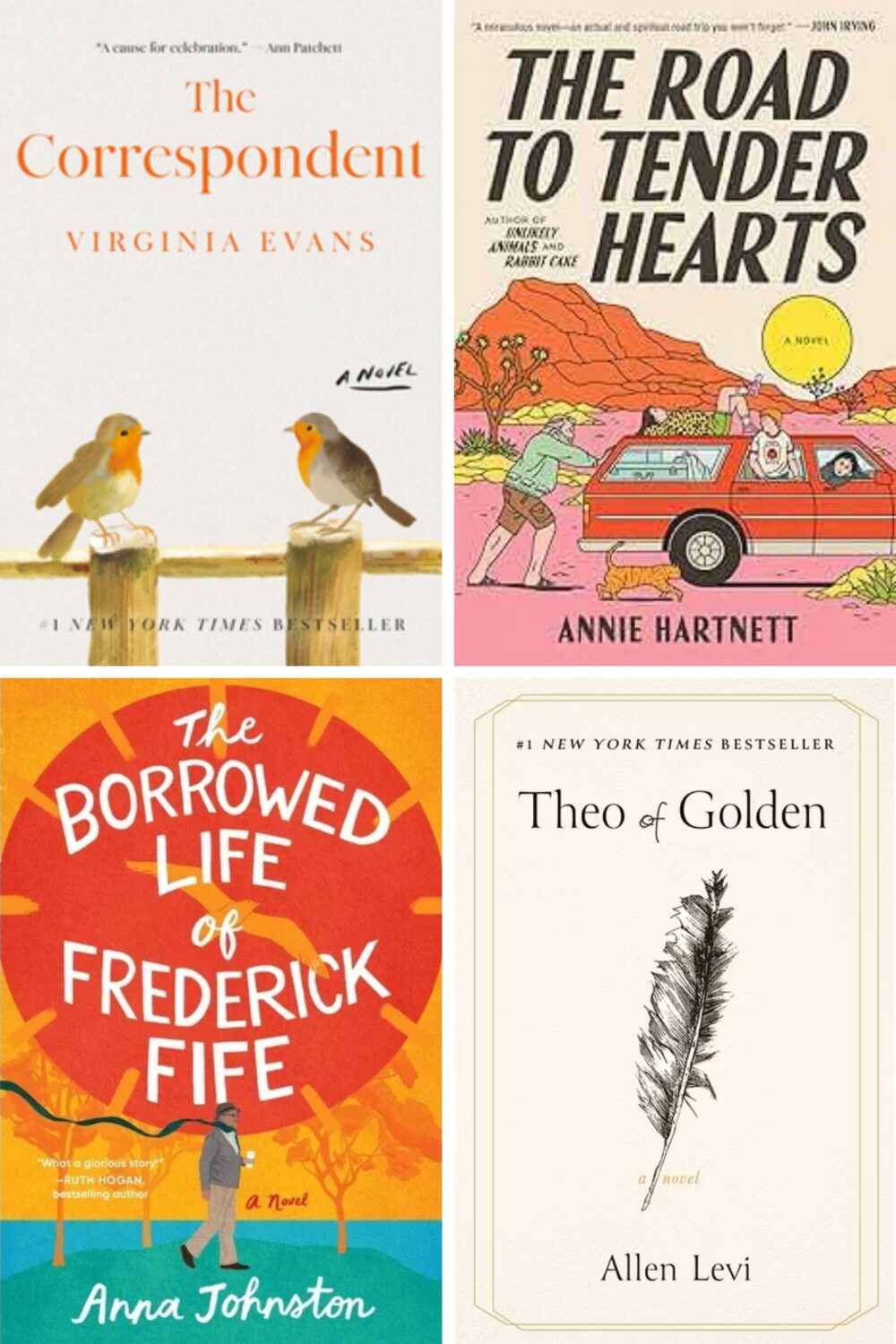
There is a salve—especially in today’s hurting world—found in stories that are not sugary or sweet, but good. Each of these main characters, a couple of generations older than me and in a sunset season of life, provided an example of what it looks like to live long enough and experience enough pain to release any illusions of control and accept grace, for others, but also, more painstakingly, for themselves. All are stories that, in the end, endorsed connection over isolation, wonder over cynicism, and tenderness over brittle judgment.
I find hope in stories that don’t offer false perfection, but remind us of the depth of human experience. Stories that insist getting others—or ourselves—to heaven is not our sole assignment. That the Gospel is not reduced to Jesus dying for our sins, but is an offer of goodness and redemption here on earth, too. That the kingdom is not reserved for later, but can be witnessed in small slivers of life now. That our lives are not about waiting for a magical land beyond us, but about a real responsibility to look for wonder, to cultivate goodness, and to care for our neighbors in the midst of pain.
These stories have also made me miss my grandparents.
I often think, especially in this particular season of life in which I’m raising teenagers, about the way my grandparents gave me a safe place to land, especially during adolescence. It might be because while I watch my boys grow up, figure things out, make mistakes, find paths into their own adult identities, I remember the way my grandparents did this for me, with hope and excitement about my future—and a love that wasn’t conditional on my success.
My grandparents offered a kind of more-than-you-really-deserve, unearned, relentless, and perhaps a bit audacious kind of love.
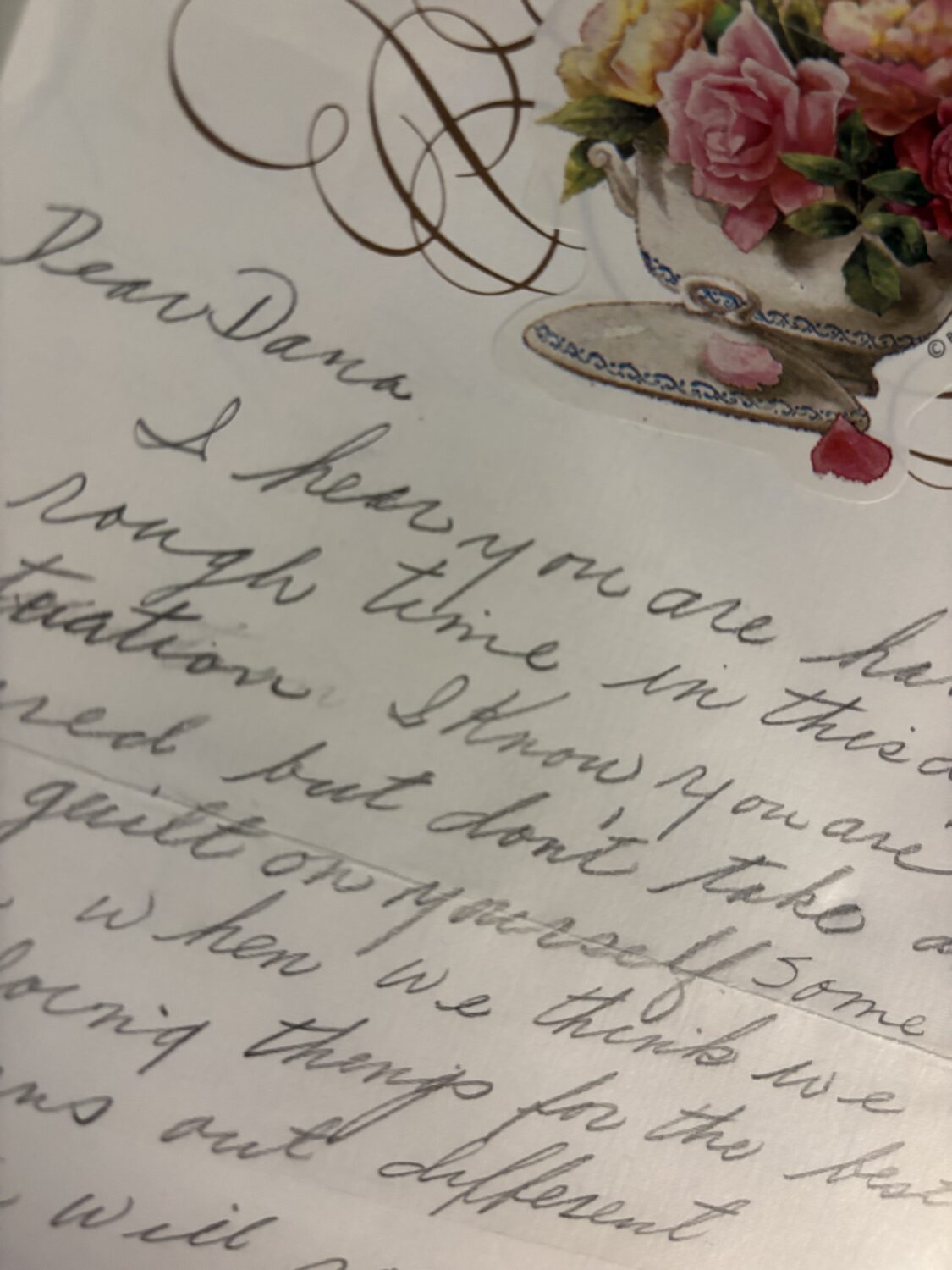
In my basement are bins of old letters, pictures, scrapbooks, and journals. Tucked inside one of them is a letter from my grandma, written to me at twenty years old — just after I’d gotten myself into a wee bit of trouble at a party that made the local news. I was embarrassed, quick to blame everyone but myself, and quietly wrestling with who I was and how I was showing up in the world.
It was a situation that called for a stern warning—or at the very least, a gentle tsk, tsk of disapproval.
But rather than either of those things, Grandma sent a letter to my dorm room. In her familiar cursive on flowered stationery, she wrote, “Dear Dana, I hear you are having a rough time in this difficult situation. I know you are scared, but don’t take all the guilt on yourself. Sometimes, when we think we are doing things for the best, it turns out differently.” She went on to encourage me to “not let anything destroy my beautiful spirit” and assured me that I was supported and loved.
It was a small gesture. But two and a half decades later, now a parent myself, I better understand the weight of her decision to choose mercy over judgment.
That kind of love is transforming, enough to show you what you can’t see in yourself. That kind of love gives you space to forgive others—and yourself. And it opens you to pass that kind of mercy on to others.
Grandma was not so different, I think, from the characters I’ve been meeting in books lately.
In my Grandma and in these aging characters, is found a softening that comes with experience and making one’s own mistakes. It’s the opposite of ego and armor, of outdoing and outrunning. The opposite of gaslighting and fire-stoking, of division and noise. The opposite of striving, proving, and never being enough.
This wisdom reverberates in these lines from Theo of Golden:
There’s justice, and there’s mercy. If you’re not sure what to do and you gotta choose one or the other, I say always go the mercy way. If you make a mistake, make it for mercy. Bad mercy don’t hurt nearly like bad justice, and always, the eye of God can see.
I want that mercy for others. But I want it for myself, too. Because it is only in accepting that kind of love— the kind my grandma folded into an envelope and mailed to a girl who needed it—that we crack open enough to let the light in. And we can only shine what we’ve first been willing to receive.
Header photo by Towfiqu barbhuiya on Unsplash
9 Responses
Much appreciated.
thanks Dana
Thank you! I have read two of the four books that you mentioned and will put the other two on my list. Your grandmother is my new role model.
As a grandparent presently reading Theo of Golden, I say amen, well said and thanks. (I even wrote a quote from you on a bookmark to keep reminding myself.) T
You always write lyrically and from the heart, Dana, but this piece is particularly lyric and lovely. Thanks for this. It gave a few rays of sunshine on a dreary and foggy morning.
Yes! When unsure, choose mercy. What a wonderful grandma. And obviously, she is shaping your heart now–even though it is harder as a parent to respond to our kids with such equanimity! Thanks!
Thank you for sharing about your grandmother’s wise and caring heart, and her example to those who have weathered the slings and arrows of life. Who better to model mercy than those with long experience of receiving it? I’ll be thinking about your words for a long time.
Thanks so much! Ive read all 4 and agree with your response to them. I’ve led a book club for over 25 years and our April book is “The Borrowed Life.. .” The other 3 are on my list for potential reads next season. I’m excited! Books like these open us up to sharing both the good and gracious as well as the hard stuff of life. Another book with a similar theme is “The Brilliant Life of Eudora Honeysett” by Annie Lyons.
Thank you Dana, not only for the books recommended (Theo was great!), but mostly for your grandma story. Choose mercy. Such a needed direction in our present world. (Another delightful read that gives a picture of similar pure goodness is The Sideways Life of Denny Voss.)