
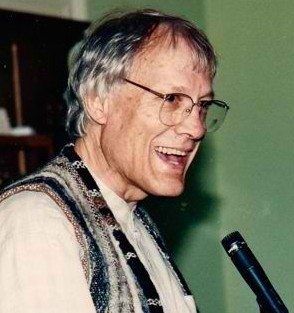
1935-2012
I thought of the late Walter Wink when I saw video of smoke billowing from the American naval base in Bahrain this week. My mind went to Wink’s brilliant exegetical analysis of the powers and principalities found in the biblical narrative in his award-winning trilogy of books on the subject. (Naming the Powers, 1984; Unmasking the Powers, 1986; and Engaging the Powers , 1992. All published by Fortress Press.)
I recognized what I was seeing—the naval base in Bahrain is adjacent to the school our two children attended while my wife and I worked as Reformed Church in America missionaries in that country.
The strike on the American naval base was one of the first retaliatory actions Iran took after the United States and Israel began their assault on Saturday, February 28. Death totals are hard to ascertain, but so far at least six American service men and women have been killed along with over a thousand Iranians, including 178 girls who died when a missile struck their school.
My mind went to Wink’s work because of what he calls the “myth of redemptive violence,” which he describes in great detail in the third book of the trilogy. According to Wink, the roots of this myth go back to the ancient Babylonians, as witnessed in a ritualistic drama acted out at the beginning of each new year.
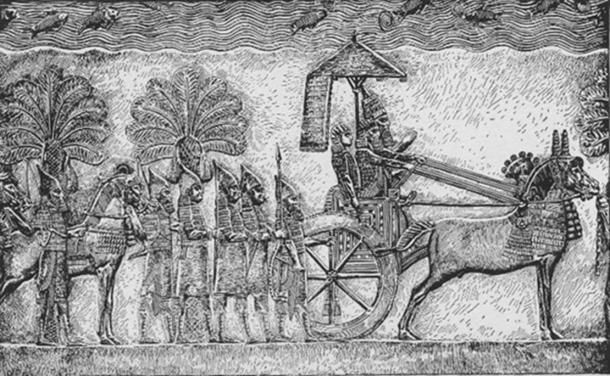
The drama featured actors dressed as vengeful spirits, and represented a cosmic battle between the gods on a large public stage and the emperor on his throne. The actors playing the gods would take turns trying to humiliate the emperor. They would slap his cheeks and pull his ears, appearing to have the upper hand. Then in a ritualistic act of violence, the emperor would slay the spirits, thus reassuring those watching that chaos had been averted for another year. The good guy won through violence, but it was redemptive violence because it assured law and order would prevail. Violence in this view is neutral—it’s bad when used by the bad guys but good when used by the good guys.
According to Wink, the story line undergirding this myth has perpetuated itself in American culture (and several other cultures) through its endless repetition in popular media. Children of my generation were indoctrinated through Saturday morning cartoons like Popeye. Later generations had the same stories told through shows like the Power Rangers. Here’s Wink describing the basic plot:
An indestructible good guy is unalterably opposed to an irreformable and equally destructive bad guy. Nothing can kill the good guy, though for the first three-quarters of the strip or show he (rarely she) suffers grievously, appearing hopelessly trapped, until somehow the hero breaks free, vanquishes the bad guy or prevents his reappearance, whether he is soundly trounced, jailed, drowned or shot into outer space.
Engaging the Powers, 17
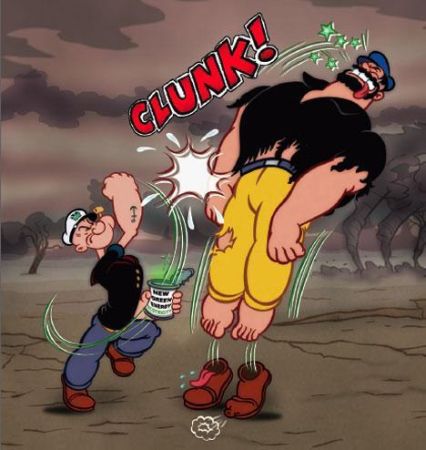
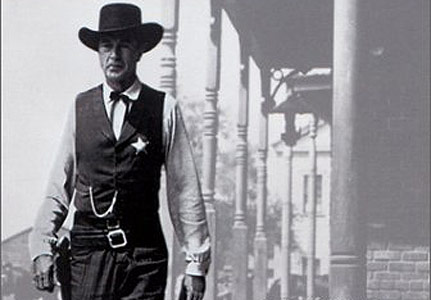

It’s the plot of a thousand Westerns, Rambo, various installments of Star Wars, several superhero stories, and countless other movies and television shows.
Wink maintains that this myth — much more than the alternative Christian story of the redemptive sacrifice of the hero (Jesus) — is America’s true religion, even among those who claim to be disciples of Jesus. It is, in fact, so deeply embedded in our psyche that it’s hard for us to contemplate alternatives.
Evil, we believe, can only be defeated through redemptive violence.
America warmed up for the action in the Middle East by targeting boats off the coast of Venezuela. Evil people are smuggling drugs into our country? Kill them! In fact, we know very little about the actual people killed on those boats in the Caribbean and what they were doing. But we don’t let complicated facts stand in the way of a simple narrative.
And thus Iran. A despotic ruler, whom we have caricatured as a cartoonish villain, is oppressing his people? Kill him! Baptized as we are into the myth from an early age, it’s hard for us to imagine anything different. It’s the only pragmatic response to evil, we say, the only thing that works . . . despite the fact that it rarely does.
Violence, in point of fact, only begets more violence. Those who live by the sword die by it. We have started something in Iran and have no idea how the story will end. (We might consider looking at the nearby country of Iraq for clues, but once again we choose simple narratives over complicated ones.)
There is an alternative, Wink says, but it requires us to be more honest about ourselves than we are typically willing to be, more honest and open to bucking the currents that push us to consider violence as our only option. It requires letting Jesus determine the way both for self and society. In Wink’s words:
Is there no escape from this myth of redemptive violence? Yes, there is, but it is difficult. To face the fear of enemies would finally require us to acknowledge our own inner evil, and that would cost us all our hard-earned self-esteem. We would have to change, laboriously, struggling daily to transform or redeem our shadow side. We would have to see ourselves as no different in kind from our enemy (however different we may be in degree). It would mean seeing God in the enemy as we learn to see God in ourselves – a God who loves and forgives and can transform even the most evil person or society in the world. Such insight would require conversion from the myth of redemptive violence to the God proclaimed by the prophets and by Jesus. . .
We could no longer rely on absolute weapons for the utter annihilation of an absolute enemy. We could no longer justify unchristian means to preserve at all costs the hollow shell of a ‘Christian civilization’ that has, in effect, been filled with the creed of redemptive violence.
Engaging the Powers, 30
How willing are we to go there?

9 Responses
Oh John, thank you. So right on.
The Gospel! Thank you, John!!!
Yes. Thank you.
Thank you for remembering the work of Walter Wink, an inciteful scholar, historian and theologian. In my younger years his writing was required reading. Many thanks for your article today.
Thank you, indeed, John.
It seems to me that we can only honestly grapple with your final question – both as individuals and as a society – if we are truly willing to embrace the work of learning to “see ourselves as no different in kind from our enemy.”
Amen and again I say Amen. What happened to “vengeance is mine saith the Lord”? I’m working on my daily mantra being: “Let there be peace on earth and let it begin with me.” That “let it begin with me” part is difficult unless I am willing “to see ourselves (myself)as no different in kind from our enemy (however different we may be in degree).”
I desire a deeper peace for myself and the world. As one of my favorite authors Wendy M Wright says in her book The Vigil, ”Peace has to do with the fullness of of things, with the lion and the lamb lying down together, not the absence of lions.”
Thank you, thank you, thank you.
During this Lenten season, are we trusting in redemptive violence or redemptive sacrifice? The cross or the sword?
Unfortunately you have given us another “simple narrative over a complicated one.” In the Reformed Tradition we affirm the Just War Tradition as articulated by St. Augustine. War, according to the Saint, must be an act of love in pursuit of justice. Determining what is a Just War is incredibly difficult (complicated), especially in this era of terrorism.
I have also been to Bahrein when I was on active duty with the US Navy. St. Augustine was a theological lifeline for me during my service. We are not pacifists. There are times when violence is necessary to destroy evil. Come to think of it, Good Friday was one of those times.
Thank you again for this posting. It raises many questions that deserve further debate and reflections. Blessings.
I did a paper examining every official RCA response to war going back to the revolutionary war after laying out the criteria for Augustine’s Just War thesis. The only time the RCA actually used this criteria to debate our part8cipation in it was during the Vietnam conflict. In every other case we used what is best known as holy war criteria, giving our blessing after the fact.
The very idea that we can claim to kill people “in love” is the reason why the early church refused to take up arms. It is a contradiction to the heart 9f the Gospel which Wink convincingly show to be the central message of the cross.
Sometimes simplistic is the best course to take.
John, you have given us lots to ponder. I’m challenged as to how I act and speak to violence. Nonviolent communication starts first with a change of heart and mind.
Joyce, the quote from Wendy Wright is a wonderful image for me to carry in these times. Thanks.