
Do not repay anyone evil for evil, but take thought for what is noble in the sight of all.
If it is possible, so far as it depends on you, live peaceably with all.
Beloved, never avenge yourselves, but leave room for the wrath of God; for it is written, “Vengeance is mine, I will repay, says the Lord.”
No, “if your enemies are hungry, feed them; if they are thirsty, give them something to drink; for by doing this you will heap burning coals on their heads.”
Do not be overcome by evil, but overcome evil with good. Romans 12:17-21
The Apostle Paul is an interesting character.
He goes from holding the cloaks of the crowd while they stone Stephen (Acts 7:59-60) and “breathing threats and murder” (Act 9:1) to writing the above passage after Jesus stopped him on the road to Damascus. He goes from Saul to Paul, and from violent religious zealotry to becoming the Apostle who would risk his freedom, safety, health, and even life to serve as an ambassador of Christ’s reconciliation.
The historical and early Christian mandate had been to assume risk to oneself rather than harming an enemy or retaliation. Jesus said to love your enemy. Turn the other cheek. Go the extra mile. Do good to those who hate you. Jesus said not to fear death or physical harm, but to fear the losing of one’s soul. The Apostle Paul echoes Jesus and leaves no question about how we overcome evil and build peace with our enemies. We don’t repay evil for evil. We overcome evil with good.
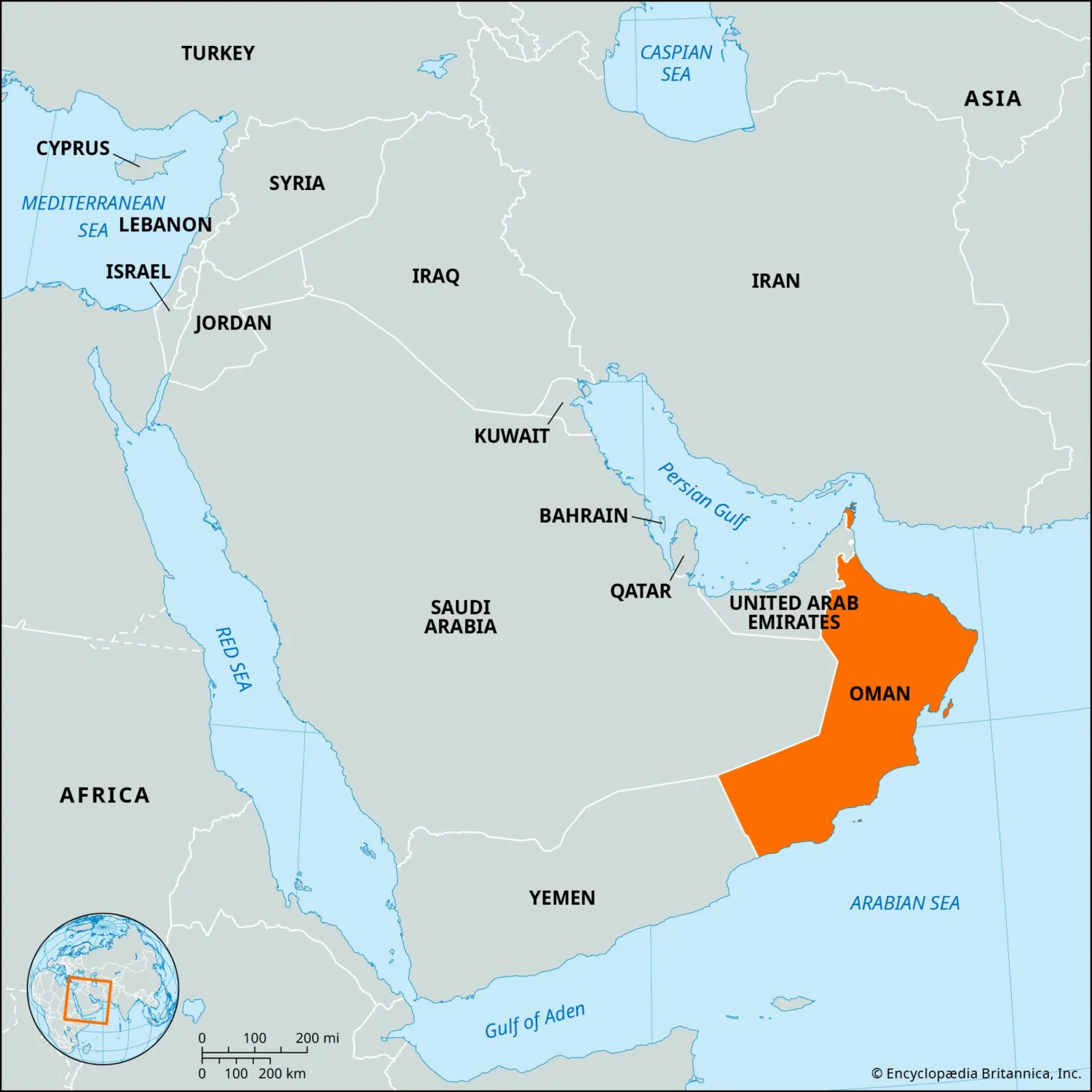
For the last 13 years I have called Oman my home. I have raised my children here. We feel safe here. This nation’s security is built upon being a peacemaker and doing what is noble in the sight of all its neighbors. Oman has largely escaped the violence of the ongoing war.
Oman, a self-described Islamic country, is home to people of many religions. There are Omani nationals who are Hindu and Christian. There are non-citizen residents who are Muslim, Christian, Hindu, Sikh, and many other religions.
Oman’s actual foreign policy is “Friends of everyone, enemies of no one.” As far as it depends on them, they live peaceably with all. This is not to say Oman is a perfect country. There are internal matters, just like any country, that can be improved, but this essay is not about that.
One of the questions Omanis, and others from the region, consistently ask me is, “Isn’t the US a Christian country?” I then go into a brief civics lesson about separation of Church and State, but usually I must acknowledge that many US citizens would claim, or wish, that it is.
When people in the region meet me it is hard for them to wrap their heads around an American, Christian peacemaker. To them, and the vast majority are peaceful Muslims, the history of the US in the region is one of violence. Wars in Iraq and Afghanistan. Drone strikes in Pakistan when hunting bin Laden. Support for Israel’s attacks in Gaza, Lebanon, and Syria. These are what they associate with Christianity and the United States.
I keep coming back to Paul’s words to the Romans, “As far as it depends on you” and “do not be overcome by evil, but overcome evil with good.” Let’s be clear, violence, especially as something other than last resort, is evil.

The beginning of the current war, and the strikes on Iran last summer, took place while Oman was hosting peace talks between the US and Iran. The day before the US struck Iran in February, the Minister of Foreign Affairs of Oman briefed Vice President Vance saying that Iran was ready to give up all nuclear weapon aspirations to maintain peace in the region. The US did not need to go to war to protect the region from a nuclear Iran.
The case for regime change is a different issue. The US has a long history of failed regime change in the region and in Iran. As we’ve now seen, the Iranian regime has already replaced the Ayatollah with his son, who may be more extreme than his father.
I know that many people in the United States believe that peace comes from strength or at least from mutual deterrence. But Paul shows Christians that there is another way. Instead of preemptive violence, we need to advocate for, and practice preemptive love.
Of course, I am not advocating a religiously-based government in the US. But Christians in the US must recognize that to my Muslim neighbors whether Christians do or do not support our government’s violent actions is a key part of our witness to Muslims, and to the larger world.
What does preemptive love look like?
- Learn about the history of the region, with the people of that region as our teachers. Learn how they see the world, not just how US history books and media report it.
- Recognize that most Muslims want peace. The restraint of all the Gulf countries, every one led by Muslims, is notable. They are advocating for peace and for a ceasefire. None are violently retaliating.
- Find ways to meet the needs of countries and the people in conflict. Offer asylum or aid to people who are being oppressed and abused. Help build life-saving technology like water desalination and renewable energy sources. So far, the US has spent over five billion dollars on the war. That would buy a lot of aid or provide for safe immigration.
- Recognize that there will always be some abuse of the aid given, just as a handful refugees might pose some risk. Nonetheless, the greater good will be served, and peace will be sought by more people, when basic needs are met. If we do good and help others, the oppressive regimes we want to end will lose power over their people.
When I served as pastor of churches in the US, I never advocated for a specific political candidate. I would, however, encourage my congregation to consider how we best help the people that Christ calls us to serve — even if it wasn’t in our own apparent best interest. My plea to my US friends now, and to the Church, is to show preemptive love to the world. How the people of world, especially my Muslim neighbors, hear the Gospel depends on it.

12 Responses
Your witness, Justin, and the witness of the Al Amana Centre, is important in Oman, but maybe even more important back here among us. Thank you for this. Straightforward, clear, stark, and very practical.
Very informative, helpful, and inspiring, Justin. Thank you for teaching us today from your life and experience.
Thank you for sharing this important perspective from Oman, and for a reminder of the challenge given to us by St. Paul as to how we are to conduct our lives toward others.
Thank you Justin. Prayers ascending….
Justine, really excellent perspective: biblical, Christian, relevant, practical. American Christians need to “witness” better.
Thank you, Justin. With many Muslims living in Canada, we know some in St. Catharines. Your essay is a helpful nudge to witness to Xn peace right here at home.
Justin,
Thank you for this clear-eyed call to preemptive love. Your work and writing is inspiring.
Thank you Justin, for sharing your different personal boots-on-the-ground perspective and the importance of our Christian witness to the world. “They will know we are Christian’s by our love”.
Hope you will share it again. 🙏🏻
“But Christians in the US must recognize that to my Muslim neighbors, whether Christians do or do not support our government’s violent actions is a key part of our witness to Muslims, and to the larger world.” This, along with learning history and providing for basic needs, is what our call as Christians is and what we need to talk about more. Thanks, Justin!
Thank you, Justin, for your clear, powerful message of love which cuts through the smoke of war!
Thank you, Justin!
Eye-opening. Thank you for your insights. Praying we can demonstrate that preemptive love.