
I remember the line from Rhymefest, a Chicago hip-hop artist, that stopped me in my tracks. The young man in the song, fresh out of high school, enlists with an Army recruiter at the mall for the promise of a scholarship. A few bars later he’s finished boot camp and taking gunfire in Iraq:
He ain’t really a killer, though, taking a lot of risk.
This is what a poor person do for a scholarship.
I remember, too, the line from Steve Earle, a Texas alt-country troubadour, that caught me cold and put a lump in my throat. The young man in the song, bald eagle tattoo, red-white-and-blue to the bone, enlists in the aftermath of 9/11 to defend what he loved:
Left behind a pretty young wife and a baby girl.
A stack of overdue bills and went off to save the world.


I was in my early 20s when I heard Rhymefest’s “Bullet” and Earle’s “Rich Man’s War.” I worked hard for my education, but I never had to make a choice as difficult as enlisting to pay for college. “Bullet” put the life-changing gift of education in a whole new light. My convictions led me to anti-war marches, letter-writing campaigns, and voluntary service overseas. “Rich Man’s War” showed me there were young conservatives every bit as idealistic as I was, their convictions leading them to support the wars in Afghanistan and Iraq. Both songs offered reminders, as great art often does, that we are not alone in the face of violence.
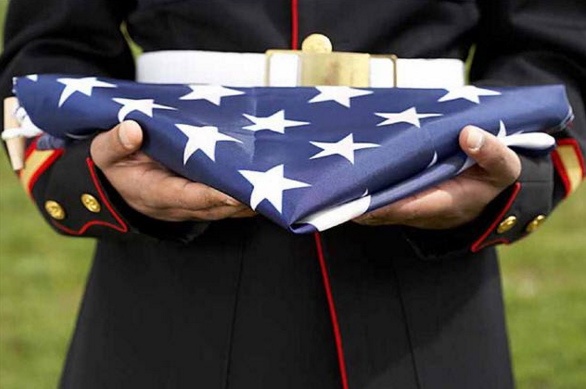
Now, some twenty years later, I no longer identify myself with the young soldiers sent to fight overseas. I compare them to my sons. I suppose I’m joining an endless line of parents throughout history in worrying about their children under war-hungry rulers. In his eloquent post last week, Tom Walcott reflected on serving as a military chaplain, accompanying officers as they delivered death notifications to the families of service members. Like him, I think about the families of service members now. What must it be like to serve under a Commander in Chief who can’t articulate a clear reason for starting a war with Iran? What must it be like to serve under a manifestly unqualified and unserious Secretary of War?
Wars are fundamentally uncontrollable. The enemy always gets a vote, as the saying goes. That’s true in the best of cases, with careful planning, well-articulated goals, effective checks and balances, and humble and prudent leadership. We don’t have any of that.
I didn’t realize it until now, but those two songs have something else in common. Each presents a young person in a world that defines them as individual consumers. One figure wanders aimless in a shopping mall, the other is bound by the bills he’s left unpaid. So much in our culture trains us to see ourselves this way. George W. Bush famously told Americans to go shopping to support their country after 9/11–the economy must be nurtured at all costs.
One of the reasons we take our kids to church, as often as we can, is that we are looking for counterprogramming to this consumerist ethic. “We have erred and strayed from your ways like lost sheep,” we confessed this past Sunday in our opening liturgy. “How long will you grieve,” we read from 1 Samuel. “You spread a table before me in the presence of those who trouble me,” our choir sang from the Psalms.
“Lamb of God, you take away the sins of the world, grant us peace,” we sang during the Eucharist.
I’m not sure how it all holds together. I’m not sure what our boys took away as they fidgeted beside me. But I wonder if the most important words we read are “we” and “us”—the words that affirm our collective identity.
What I want most for my kids, after their safety, is a sense of self rooted in others. I want them to know that they are fiercely beloved as family, as community, even as citizens, with all the obligation and accountability that role requires. I want them to understand citizenship as more than voting every couple of years, more even than attending protests or posting on social media or putting up with fundraising texts or political attacks ads (thank you, YouTube, for serving up those to my kids).
I want them to see citizenship as participating rec sports leagues and potlucks and bringing groceries to neighbors and even waiting in the back of community organizing meetings, video console in hand, when we don’t have childcare.
Is that enough to stop wars? No, of course not. But maybe that’s the wrong question.

The most compelling piece of journalism I’ve read this year is Adam Serwer’s dispatch from Minnesota in The Atlantic in late January, “Minnesota Proved MAGA Wrong.“ Serwer followed everyday Minnesotans who, in addition to following ICE with whistles and car horns, quietly brought groceries, diapers, rent assistance, and school supplies to families afraid to leave their homes. They were doing the opposite of virtue signaling: Conducting generous acts without any signal that might bring unwanted attention. Few considered themselves activists before the federal occupation; one mother got involved when more than 100 students at her daughter’s elementary school stopped coming in out of fear. She helped organize playdates for kids stuck inside.
Serwer describes the unifying philosophy of the Minnesota resistance as “neighborism” – “a commitment to protecting the people around you, no matter who they are or where they came from.”
“Minnesotans are insisting that their neighbors are their neighbors whether they were born in Minneapolis or Mogadishu,” he writes. “That is, arguably, a deeply Christian philosophy, one apparently loathed by some of the most powerful Christians in America.”
The piece is worth reading in full for the heartening stories of resistance. But if you don’t get to it (or if it’s paywalled), take a moment for this section:
Every social theory undergirding Trumpism has been broken on the steel of Minnesotan resolve. The multiracial community in Minneapolis was supposed to shatter. It did not. It held until Bovino was forced out of the Twin Cities with his long coat between his legs.
The secret fear of the morally depraved is that virtue is actually common, and that they’re the ones who are alone. In Minnesota, all of the ideological cornerstones of MAGA have been proved false at once. Minnesotans, not the armed thugs of ICE and the Border Patrol, are brave. Minnesotans have shown that their community is socially cohesive—because of its diversity and not in spite of it. Minnesotans have found and loved one another in a world atomized by social media, where empty men have tried to fill their lonely soul with lies about their own inherent superiority. Minnesotans have preserved everything worthwhile about “Western civilization,” while armed brutes try to tear it down by force.
I don’t know how it all holds together. But there’s a moral clarity here that I want for my kids, and for all of us. To see ourselves more fully as citizens, not just consumers. As neighbors. As beloved.
Header photo by Filip Andrejevic on Unsplash

17 Responses
So good, thank you. We so need the encouragement along with the challenge.
And may we see ourselves in solidarity with the people of Iran who are not free to speak truth to power.
Thank you for putting into words what I also feel. My daughter lives in Minneapolis and was one of those who quietly “welcomed the stranger” and “fed the hungry”. I’m so proud of her and all of Minneapolis for showing the rest US and of the world a better way.
Sorry to read this, It pains me to listen and read comments from those with a one side view. Your statement saying that the commander in chief who can not articulate why he started a war in Iran.. WHAT ! Do you not read or listen to anything else but biased news . The wicked regime in Irag was murdering many of their own people. They were building nuclear weapons. Our commander in chief is not trying to take over and own another country. He wants them to have a democracy, where good people can live safely. The Iranian people who don’t agree with the dictators are murdered. At least the Minnesota government used their tax payers dollars in a unselfish, and legal way to help, not others, but themselves.
Answering a question with a question – Curious – what news do you listen to?
All the various news stations & papers
Thank you John for voicing your point of view. It is the beauty of a democracy. It’s complicated and important to hear from those we disagree. I would note based on some of the comments here that apparently not ALL the news stations are in support of what you are stating. Are you listening to those stations as well?
John,
I just can’t help it.
In 1992, Netanyahu told the world Iran was 3 years from a Nuclear Weapon
1996, they were “extremely close.”
2002, before a congressional committee, both Iraq and Iran were close
2009-2012, told congress they were 1-2 years away, and then in 2012 told the UN, Iran was “months away.”
2015 the JCPOA would lead to a bomb for Iran
2018 had secret files that Iran had a hidden Nuclear program (conveniently never released them)
From 2020s-2025, continuously and consistently said Iran was on the brink of a bomb.
I’m sensing a theme.
The following governments consistently and throughout long periods of their history mistreat and abuse, including kill their citizens and people within their borders:
China, Iran, North Korea, Myanmar, Russia, Saudi Arabia, Syria, and Nicaragua
I assume we’ll be invading them, overtaking their governments, and establishing democracy, because that is so crucial to our safety as a nation, and you know, we also need to make sure that all those nations have democracies like us.
Maybe we don’t want to do that. After all, we weren’t exactly successful in:
Latin America (Guatemala-1954, Chile-1973)
Vietnam
Iraq
Afghanistan
Libya
Haiti
Venezuela (2019), we’re on take two of this one.
Maybe we should focus on democracy at home. You know, plank in your own eye …
Totally agree!!
We have government who destroys and kills our own people and people of other nations. Very sad.
Thank you, John, for your response to this blog. It is a reminder to us RJ readers that the situation is more complex than we sometime admit. What is the just, loving, Christian response to 30,000 or more protesters being slaughtered on the streets because they Demonstrated for freedom? May God who is able to bring good out of even this messy situation do so.
Thanks Jon I appreciate this train of thought. It reminds me a bit of a church and critical mass, loyalty, and consensus. I do not know what the percentage is exactly, but for a pastor to be successful in a given congregation, she or he must have, perhaps 80% approval/ confidence. When it dips to 70%, 60%, 50% or less, the end is inevitable. So it is with war: Korea, Viet Nam, Nicaragua, Iraq, Minneapolis. We have seen this play out before. Unwanted and show-off wars erode a society and rarely end well.
Another parallel haunts me. Our Christian missionaries ( like Justin Meyers in Oman), living in these regions, our “boots on the ground,” warn us about the false narratives being sold back home.
Your comment about out tendency to see ourselves as individual consumers got me thinking. Christianity is a consumeristic faith. Every week in the sacrament of the Lord’s Supper we commune with our Savior in the eating and drinking of ordinary bread and wine. The Lord sets a table before us in the sanctuary (Psalm 23) and a table before us in the created order. We are consumers. In the Christian faith, we eat and drink to imbibe the love of God and become more like Jesus. In the Neo-capitalist faith, we eat and drink to become gods ourselves, autonomous and self-actualizing. Neo-capitalism is a sacramental faith gone awry.
Tom,
This is something I will be thinking about for a while. Thank you
Regardless of which narrative is being presented by DT, Hegseth, Rubio, any legitimate news outlet domestic or international, any war “excursion” includes that horrible phrase, “collateral damage.” Besides the horrendous and heartbreaking loss of Iranian school children and civilians, and our own military personnel, there is inconceivable damage to property and livelihood of a people, and I fear irreparable damage to our international reputation, regard, and trustworthiness. Shame on us.
What is our justification for supporting the war in Ukraine? I assume that most RJ readers are supportive of that war, or am I wrong? I didn’t care for Mr. Biden, but I supported his attempts to help Ukraine resist Russia’s aggression. This war is not a threat to us. Sometimes we have to choose to support wars that are not a direct threat to us–for the sake of our allies and their safety. Perhaps the same could be said about Iran. I don’t know how imminent a nuclear threat Iran is, although they seem busy in their attempts to enrich uranium and prevent anyone from inspecting their arsenals. Certainly they were/are an imminent threat to other countries in the Middle East. Perhaps we could have avoided the carnage that we inflicted on Gaza by going after Iran right away, since they are behind most of the terrorist attacks in that area. I am not saying the the Israelis have been angels in this whole conflict, either, but at least they don’t go about calling for the destruction of an entire race or country.
And as for those noble people in MN who resisted ICE–yes, the tactics of ICE are despicable, and I do feel very bad for the illegals who are living peaceably in this country. I think they should be allowed to stay in this country and be granted a path to citizenship. But where is the pity and compassion from citizens in MN for people who are waiting in line to get into the US? And what about all those poor people in MN who did not receive financial aid because they were being fleeced by massive fraud and corruption? Where is the pity and compassion for them?
Where is the outrage from western feminists about the suppression of women in Iran? Or the outrage from people here who are so loving and caring about gay rights and who are silent about those who who cruelly abuse gay people in Iran? Where is the outrage that the Iranian regime has killed 30,000+ of its own citizens?
I realize that the war in Iran may not end well. As Rev. Kiekhover says, the situation is very complex, more than we often care to admit. But by consistently presenting a one-sided view on the topic, all that’s achieved is preaching to the choir. If the aim is to convince others of one’s position, try throwing some balance into the equation. That’s Persuasive Writing 101.
All reports from the US’s intelligence agencies cast strong doubt on the claim that Iran was close to being a nuclear threat
Yes, the govt of Iran is evil. But I’m not sure that the desired end justifies the means being used to overthrow it, not to mention that we are not close to overthrowing it yet.
Our govt has yet to give a clear statement of the goals of this war. So far Russia and Israel are the ones who have gained the most at our expense.
Hi, Tom, Thanks for your post. You make good comments and observations here. You write: “All reports from the US’s intelligence agencies cast strong doubt on the claim that Iran was close to being a nuclear threat.” Perhaps that is true. But what I don’t understand is the moral outrage on these pages about this war. Is it wrong to endorse toppling an evil regime? No. It’s another question whether or not it is possible to do so. And you are right that the goals of our government in this conflict are muddled and fuzzy, which doesn’t help matters. To argue that this is a war that may be impossible to win, that’s a worthy argument, and thank goodness it’s not the same as accusing those who are supporting it as being immoral (as many in these pages have done), although they may be foolish. To be consistent, shouldn’t those who are in a moral meltdown over this war be equally outraged over our involvement in the war in Ukraine? Maybe I’ve missed it, but I’ve noticed a curious silence on these pages about that conflict. This smells like thinly-veiled partisanship to me. Although I was no fan of President Biden, I did support his attempts to stop Russia’s aggression in Ukraine, and I still do. We don’t know if Iran has nuclear weapons, but we do know that Russia does. Given the fact the the Big Russian Bear is armed to the teeth with weapons of mass destruction, how winnable is that war and what is the end game here? It may be more foolish to poke the Big Russian Bear than it is to poke the hornet’s nest in Iran.