
I was sorting through old magazines, deciding what was worth keeping as I retired. In a 1970 issue of Interpretation, I found this line:
A great danger and temptation in our modern culture is an unhealthy polarization—the tendency to choose up sides and to struggle for control…The current mood is not a polite debate about what is right, but a profound crusade to destroy those who disagree with us.
It sounds like it could have been written last week. It was written more than fifty years ago.
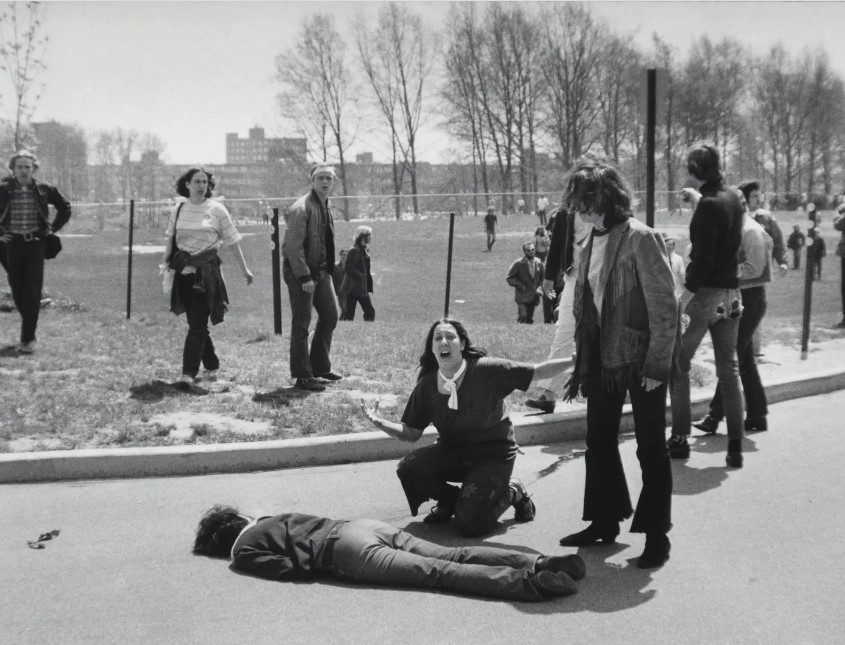
Between 1968 and 1970, when I was a young teenager, thousands of US soldiers were killed in Vietnam. Four student protesters were gunned down in Ohio and two others in Mississippi. Martin Luther King and Bobby Kennedy were assassinated. A cyclone in Bangladesh killed half a million people. Airplane hijackings occurred about every six days. Charles Manson led his followers in committing grisly murders. It was a tumultuous time. Much like today.
It’s wise to avoid trying to figure out whether we are better or worse now. It’s better simply to say that along with all the blessings of life, it has always been bad.
There’s a measure of comfort in acknowledging that. When the second question of the Heidelberg Catechism question asks what we must know to live and die in the comfort of belonging to Jesus, the first item is “how great my sin and misery are.” That may strike us as an odd source of comfort. But comfort starts with facing the reality that it’s always been bad.
A diagnosis can give comfort to those suffering from some symptoms, even if it’s not a positive diagnosis. At least then we know what we’re up against. Similarly, says the Catechism, it’s comforting to know that our troubles are not unique to us, to our generation, or to our nation. As Paul wrote, “No testing [or temptation] has overtaken you that is not common to everyone” (1 Corinthians 10:13).
Knowing this helps us avoid some dead ends.
One is nostalgia. It’s fine to remember the past fondly and with gratitude. But of course, the good old days were not always so good — for some, they were traumatically horrible. My ninety-year-old mom remembered her three young sons as angelic creatures. The picking on each other, crying for a certain toy, not cleaning our rooms was all scrubbed from her mind. Selective amnesia has a good side. Life would be unbearable if the weight of all past woes remained heavy on our minds. Still, God does not call us to live in a falsely-sanitized past.
Another dead end is rage against the machine — reacting with perpetual outrage to the news, either left or right. Ragers don’t actually do anything about what upsets them, except constant doom-scrolling, and a little trolling. These armchair warriors know it’s bad, but they have forgotten that it’s always been bad. Do they really expect that if only the right people were elected or if everyone thought exactly like they do, we’d have “kingdom come”? Outrage at injustice has its place, but perpetual outrage doesn’t help. Psalm 30:5 reminds us that God’s “anger is but for a moment; his favor is for a lifetime.”
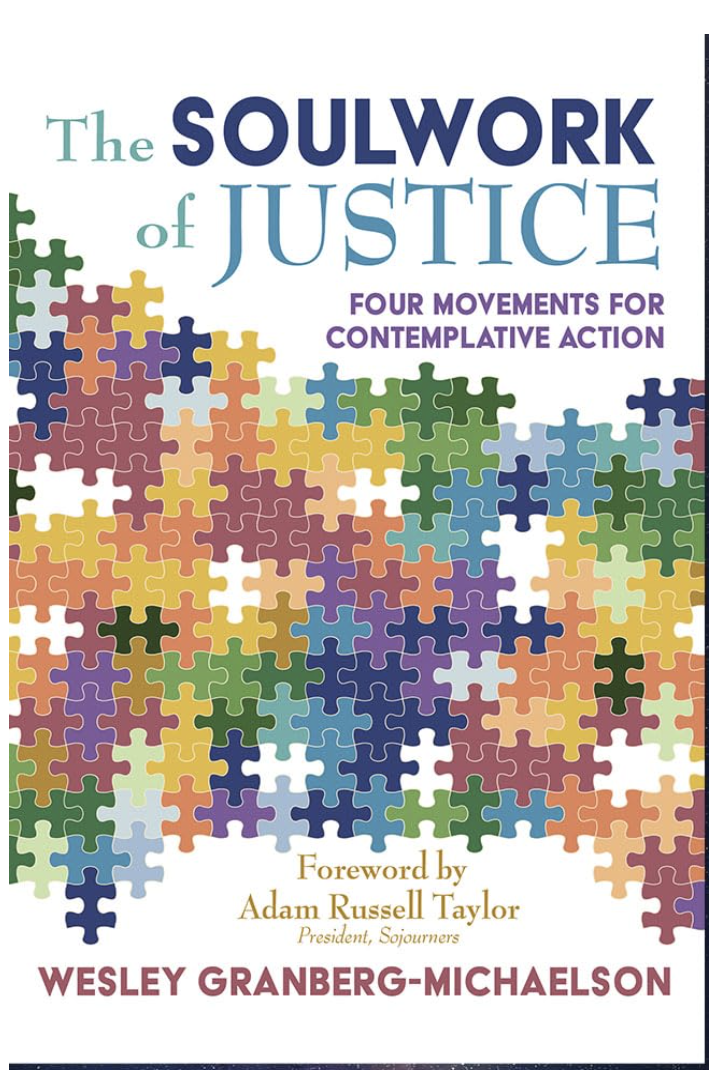
Still another dead end is unrealistic, frantic activism, believing we can engineer the kingdom by sheer will. I almost hate to bring this up because already there’s so little activism among Christians. In The Soulwork of Justice, Wesley Granberg-Michaelson warns that justice work detached from soul work will drive us into the ground. Singer-songwriter Mark Heard sang (autobiographically?) of the futility of a self-sufficient activist: “Shake your fist and bet your soul, you’re in the way and the big wheels roll.” There has to be a way to be a hopeful activist who recognizes that it’s always been bad and yet presses on for justice and mercy.
What do we do in a world that has always been bad—and will be until Jesus comes again?
I’ve found help in Jesus’s question “When the Son of Man comes, will he find faith on earth?” (Luke 18:8) Jesus is looking for faithful people, not grumpy, angry, fearful or despairing ones. Jesus asks this question at the tail end of the Parable of the Persistent Widow, who sought justice from an unjust judge. Part of faith is persistence in seeking justice for marginalized people (like the widow), even if the powers-that-be are not interested in justice.

More to the point in the parable, our persistence includes seeking justice in prayer. “Then Jesus told them a parable about their need to pray always and not to lose heart. . . and will not God grant justice to his chosen ones who cry to him day and night? Will he delay long in helping them?” (Luke 18:1, 7).
These prayers can sound like the cries of lament. “How long?” They can also come in the form of praise. When Paul says, “The Lord is near” (Philippians 4:5), he surrounds that promise with a call to rejoice always, to let gentleness be evident to all, to avoid anxiety by praying thankfully, and to think about what’s honorable, pure, and right (Philippians 4:4-9).
What our always-bad world needs is not more doom-scrolling, but instead hope-scrolling. The writer of Lamentations 3 was a notorious doom-scroller. He tells us that he is afflicted, driven into the dark, walled in, besieged, broken, lonely, and mistreated, even by God. Nonetheless, he was also a hope-scroller. He writes
The steadfast love of the Lord never ceases,
his mercies never come to an end;
they are new every morning;
great is your faithfulness.
He was hope-scrolling in a world that’s always been bad. Even in bad news, we too can search for signs of God at work. Clarity about the world’s condition need not lead to despair. Instead, it steadies us for faithful, prayerful, and hopeful endurance.

7 Responses
Our persistence includes seeking justice in prayer.
Dave,
Thank you for this meditation. So easy to go overboard in our rage, or indifference, or activism.
I’m trying to do my part and wait on God, knowing God is taking action in God’s persistent “Way.”
The Psalm for tomorrow (146) says it best. “I will wait on the Lord.” (But, do my part as well. Much prayer)
Thanks again.
Thank you, David. If you’re still preaching, I encourage you to build another story or two on this meditation with a sermon that seems just waiting to burst out of your words and Jesus’ Words. Or maybe this is a sermon made leaner? Blessings and thanks again.
Thank you for your encouraging essay; it helped me to put our current political situation in balance.
Amen to Jim Dekkers suggestion.
Yes! Thank you for this. I find it full of truth and grace. Truth about history and grace about how to live in hope.
Thank you, David, for this blog. I find it to be peacemaking, balanced, reasonable, helpful.