
The opening verses of Psalm 137 give voice to a cry that echoes across the centuries and gives words to those whose grief has left them speechless:
By the rivers of Babylon—
there we sat down, and there we wept
when we remembered Zion.
On the willows there
we hung up our harps.
For there our captors
asked us for songs,
and our tormentors asked for mirth, saying,
“Sing us one of the songs of Zion!”
But grief turns to rage—and something darker—in the concluding verses of the psalm:
O daughter Babylon, you devastator!
Happy shall they be who pay you back
what you have done to us!
Happy shall they be who take your little ones
and dash them against the rock!
Before you back away from this text in horror, pause for a minute to think about what’s behind it. And before you wish you could somehow cut it out of the canon, consider what it asks of you. Finally, bear in mind the awful possibility that you might need it someday.
Now, let’s look at all these suggestions one at a time.
What’s behind this outburst? The first clue comes from the opening of the psalm, which is unusual for the specificity of its context. Most psalms are hard to pin down historically, but this one is clearly a psalm that was written “by the rivers of Babylon.” In other words, it was written by someone who had experienced the trauma and disillusionment that came when the Babylonian army swooped into Judah in 587 BCE. This was written by someone who had seen the Temple burned, the land lost, and scores of friends and relatives murdered. (So much for God’s promises to Abraham…) This was written by someone who had been carted off into a strange land to wait and wonder if God was even paying attention.
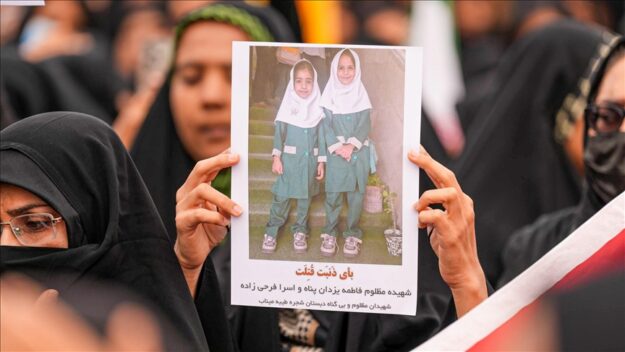
The second clue as to what brought this on is in the words, “Happy shall they be who pay you back what you have done to us!” What’s been done, specifically? The next verse offers another clue. Imagine reading it with this inflection: “Happy shall they be who take your little ones and dash them against the rock!” That’s right. These are the words of someone who has witnessed their children dashed against the rocks. (I can’t help thinking about the 140 schoolgirls killed by an American missile in Iran earlier this month…)
Suddenly, this psalm doesn’t seem so repugnant. Or perhaps it is, but we are beginning to understand why someone would scream it. We might scream it, too, if we had experienced what they had. Given the circumstances, it is as much a cry for justice as for revenge.
Now let’s consider what this psalm asks of us. At the very least, I think it’s an invitation to stand beside people who have suffered such atrocities. Unfortunately, war crimes are still being committed. (Sometimes by our own leaders.) While we may be tempted to run away, this psalm asks us to stay—to stand beside those who suffer and listen to their lament. Even more, it invites us to do whatever we can to put a stop to such horrors.
Finally—though it pushes us to think about the unthinkable—we need to bear in mind the awful possibility that we might need words like this someday. God forbid we should, but the very fact that this cry from the heart of darkness is part of Scripture implies that these words are not off limits. They are not pretty, but they are permitted. We may say them, and God can handle them.
The last half of Psalm 137 will never win any popularity contexts. But before we cut it from the canon, we need to imagine ourselves standing beside the person who wrote it. Because it is with Bible study as it is with real estate; the three most important words are location, location, location.
Though we’re still in the midst of Lent, Nigel Weaver’s Easter hymn, “The Risen Christ” captures something of this psalm’s invitation.
The risen Christ, who walks on wounded feet
from garden tomb through darkened city street,
unlocks the door of grief, despair, and fear,
and speaks a word of peace to all who hear.
May we, Christ’s body, walk and serve and stand
with those oppressed in this and every land,
till all are blessed and can a blessing be,
restored in Christ to true humanity.
What does it look like for us—for you—to “serve and stand with those oppressed in this and every land”? That, I think, is one of the most important questions for the church and for individual Christians in this excruciating season.
*All biblical quotes are from the NRSVUE

7 Responses
Thank you Carol, for this reminder to look and listen with our hearts to the real pain of the psalmist and why the pain is there…on both sides. Then and now.
I recently listened to an interview with Krista Tippet-On Being-3/12/26
Her words in the intro:
From Krista:
“A few months ago, I was invited to sit with four people sharing a very different Israeli-Palestinian story than that which comes to us in headlines. They are members of the Parents Circle – Bereaved Families Forum, a very special community. It’s composed of hundreds of Palestinian and Israeli families, who despite having paid the highest price of the conflict between their peoples, choose to metabolize their loss as ground of shared suffering and possible reconciliation…”
It moved me to tears and I hope you as well.
Thanks for this, Carol. For the better part of my life I’ve understood this Psalm similarly, even though I doubt that I’ll ever quite be at any level of ease with its presence in the canon. Of late my sense of the frst part of the Psalm has shifted from reading it purely as an articulation of grief, to reading it as moving from grief to defiant protest. We “wept when we remembered Zion” – looking backward. But when looking around at the present scene, “We hung up our lyres” “when they demanded songs of us,” which sounds to me like they’ve gone from weeping to shouting “No, we’re not going to sing for you! We’re not going to go on stage for you, whether for your enjoyment or your derision.” That’s a fancy way of, let’s just say, flipping the bird at the Babylonian captors. Then, on second thought, more than protest is demanded. Lyre-hanging protest is controlled, organized, symbolic. But in the end the writer loses control, forgoes inhibition. And, yes, God can handle even our vilest outbursts. But, still, that thing with the babies……oy.
I am thinking how fortunate your students over the years have been to hear you interpreting the psalms.
Thanks, Carol. Well done in laying out what’s happening in Psalm 137. I have always appreciated Walter Brueggemann’s comment about this psalm: ““It is an act of profound faith to entrust one’s most precious hatreds to God, knowing they will be taken seriously.” But I also wanted to move past this hatred, because even though the psalm ends on verse 9, the word of God does not. The same exiled people who expressed a desire to dash Babylonian babies against the rocks will hear Jeremiah say, ““Seek the peace and prosperity of the city to which I have carried you into exile” (Jeremiah 29:7). And then we move on to Jesus who said to love our enemies. Vengeance is mine, said the Lord, and that’s why Jesus took it upon himself on the cross.
Thanks for providing this precious theological context.
I always liked what John Bell and the Iona Community said about Psalm 137 in Psalms of Patience, Protest and Praise: “It may therefore be as intercession for other exiles that we sing this psalm, not offering to God how we feel, but, for a moment, taking on our lips words which express the brokenness of refugees and exiles world-wide… It should not be forgotten by those who have never known exile, dispossession or the rape of people and land.” Sad that we have to keep singing this communal lament down the centuries in so many different contexts. Thanks.
As always, thank you Carol. And now I’m off in search of a new-to-me Easter hymn.