
Recently, I attended a denominational meeting and listened to a discussion on unity.
It was measured. It was respectful. It was recognizably Reformed.
We cited confessions. We pointed to polity. We invoked synodical decisions and doctrinal distinctions. We talked about fellowship and doctrinal integrity. No one yelled. No one stormed out of the room. It was a communion breakfast after church in some versions of church.
Except as I listened to these familiar tones and rhythms, something in me began to recoil.
We were talking about unity.
We were not confessing.
I left that meeting uneasy. On the plane ride home, I mulled over the Belhar Confession. I reflected back on hearing it read for the first time in worship years ago. It did not sound like an institution staking out its territory. It sounded like the truth.
The authors of Belhar did not pen this confession during some smooth patch in church history. Belhar came out of apartheid South Africa when racial segregation had been justified politically and theologically. The Dutch Reformed Church had constructed a comprehensive vision of separate development that spoke Bible-talk. Silence was complicity.
In that moment, a confession was required.

Belhar confessed that unity, reconciliation, and justice were not peripheral issues of the church but integral to its obedience to Christ. It declared enforced separation within the body of Christ to be sinful. It called the church back to what it had already confessed: Jesus Christ is Lord.
Belhar did not define unity. It proclaimed it. It reminded the church that Christ had torn down the dividing wall of hostility, and anything that continued to uphold that dividing wall opposed the gospel.
And I’ve wondered ever since:
If apartheid South Africa demanded confession from the church, then what might America demand?
I ask this question as a Reformed pastor worshiping with a church in Los Angeles. Our church is marked by Black and brown histories, immigration stories, generational tensions, and hopes. We gather in a city where the beautiful and brutal of American life converge regularly. In our sanctuary every Sunday, you will find languages, accents, and life experiences that do not easily cohere into a monolithic narrative.
In our context, unity cannot be a concept.
I love the Reformed tradition. I love its conviction that Jesus is Lord over all things. I love its covenantal vision that views the church not as a voluntary association but as a family bound together by promises. I love its biblically shaped seriousness about sin and grace, the visible church, and its mission to the world.
But love thinks anew.
The Reformed confessions were never crafted to be armchair theology. The Heidelberg Catechism was birthed in the anxieties of political uncertainty and religious division. The Belgic Confession was written by immigrants who faced oppression and persecution. The Canons of Dort addressed controversies ripping churches apart.
Each confession emerged in response to some perceived urgency. Each confession laid bare the gospel.
Let’s put Belhar in that category. Belhar refused to allow the church to pretend that racial segregation was an unfortunate social policy. It named it sin. It named it theological error. It trusted clarity would sanctify the church.
So what should we name?
The fact is, we do not live in apartheid South Africa. But we live in a country that was built on racial hierarchy. That grapples with immigration fears. Economic inequality. Political polarization. Our cities remain segregated by custom if not by law. You can often tell which churches various people attend by looking at where they live.
We talk about diversity. We want to embrace inclusion. But we also know how comfortable our churches can be. We know how easy it is to conflate familiarity with fidelity. We know how quickly discussions on race, power, and justice can be brushed off as politicizing “the real gospel.”

I have experienced this tension in my own pastoral ministry. I have seen the beauty of what God is doing in a multiethnic community. I have seen older members expand their understanding of worship. I’ve seen younger members push back, not out of defiance but yearning for authenticity. I have seen reconciliation at a small, human scale.
And I have also seen wounds reopen. I have felt the cloud of past injustices that linger when we pray the Apostles Creed together. I have heard members ask if they really matter to the larger denomination.
These are not hypothetical questions.
As we talk about unity in denominational forums, I cannot help but ask: unity to what end?
Are we seeking unity as an institution? Are we willing to consider how we live our lives together actually reflects the gospel that reconciles us?
Belhar named an evil. It said that a church that justifies racial separation on theological grounds denies the gospel it confesses. It took a risk. It did not couch its language in seeking approval. It trusted clarity was love.
What evils do we need to name today?
Maybe it’s evil to treat racial reconciliation as “extra” gospel rather than evidence of the Spirit at work. Maybe it’s the evil of treating “justice” language as a means of politicizing scripture rather than obeying it. Maybe it’s the evil of silence masquerading as safety.
The Belgic Confession lists the marks of the true church as the preaching of the gospel purely, the administration of the sacraments rightly, and the practice of church discipline. We typically think of discipline as regulative of personal morality. What if discipline is also communal? What if the church must confess patterns in our communal life that contradict our confession?
We are Reformed and always reforming according to the scripture. People love to use this phrase to empower new initiatives in church life. But at root, it is about submission. It is a confession that we can always be called into further correction. It is a confession that tradition does not justify itself. It is about the lordship of Christ over our systems, our prejudices, and yes, even our comforts.
In recent years, we have seen splits. Denominations have fractured. Friendships ended. Words have been exchanged that can’t be taken back. In times like these, it is easy to cling tightly to clarity of conviction. We speak forcefully about who we are. We guard what remains.
Belhar forces us to consider whether confessing our faith together is only about guarding lines or about embodied reconciliation.
Unity of the church is costly. Vulnerable. Reality often intrudes upon our unicorn worship services, and it asks hard questions. Unity asks us to listen to others. To see those with whom we disagree as image bearers of Christ. Unity asks us to acknowledge that power and privilege are realities in community life. They will not distribute themselves equally until we tell them to.
Listening is not selling out. Listening is obedience.
The Heidelberg Catechism begins with comfort. We belong, body and soul, in life and death to our Savior Jesus Christ. That belonging is communal. If I belong to Christ, I belong to his body. And if his body bears ethnic and cultural distinctions that bear the wounds of sin and history, then my comfort as a believer is tied up with our reconciliation.
Belhar confessed that the church rejected that truth. That confession was an act of love for the church.
When I ask, “Where’s our Belhar?” I am not calling for the next big church document to be sung in our worship services. We should not lightly add to the confessions. Confessions should arise from necessity, not novelty.
My question is about probing doors.
Are we willing to confess how we’ve contradicted the gospel of unity we preach?
Are we willing to acknowledge how history impacts the present? Are we willing to consider if our theological terms sometimes function to insulate us from uncomfortable realities? Are we willing to repent, knowing that love will only make us bigger?
This past summer, my congregation hosted a workshop on reconciliation. It was not groundbreaking. It was friends breaking bread together, having honest conversations, offering correction and forgiveness in community, and praying for one another. There was space for lament. There was forgiveness given and received, not rushed or coerced.
It was slow.
But gospel.
The Reformed tradition is not triumphalism. The Reformed tradition is sanctification. It teaches us that God is slow to anger with hardheaded people. The Spirit sanctifies the church. Sanctification occurs through Word and sacrament. Sanctification happens through disagreement and grace.
Confession belongs in that mix.
Confession grows us up.
When Belhar was written, its authors could not foresee how Belhar would be used by churches in America years later. They wrote because they were obedient to the time and place they were in. They put their trust in the Spirit, believing that clarity would benefit the church’s future.
Maybe we’ve been called to do the same.
Not repeat their pain. But be obedient to ours.
At that denominational meeting a while ago, what gnawed at me was not the tone of disagreement. Conflict is not novel to the Reformed tradition. What grieved me was the lack of kneeling. We reasoned rightly. We argued our positions. But nobody kneeled down and asked where we might need correction.
The authors of Belhar knelt.
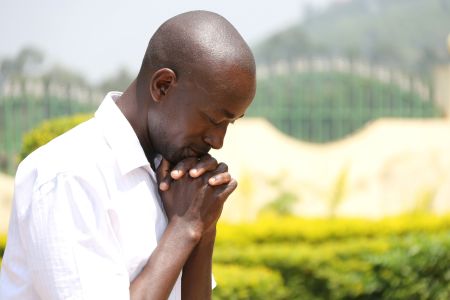
Let that be our question behind “Where’s our Belhar?” Do we need another confessional document? But are we willing to kneel and hear what the Spirit may have to say about our communal life together?
Confession won’t destroy the Reformed tradition. Confession will sustain it. The church reformed and always reforming does not mean we are never finished with the past. It means we’re continually made straight. It means we can say “We were wrong” when we need to. It means we believe Jesus is Lord, not of our theology but of our fracture lines.
If we kneel, we just might learn that the Spirit will lead us deeper into communion with one another. We might discover that repentance doesn’t threaten unity; it matures it. We might recognize that reconciliation isn’t trendy social justice. It’s the kingdom of God breaking in.
Belhar reminded us that we’re united in Christ. Our job is to live like it’s true.
So maybe the question isn’t “Where’s our Belhar?”
Maybe the question is, “Where will we kneel?”

12 Responses
Ooo, the idea of community-based church discipline is powerful. Thanks for this piece.
Thanks for this article. I really resonated with the visual poster in the middle of it (“Racism is so American that when you protest it, people think you are protesting America”). I know the Belhar came out of tremendous suffering, but I always wished the wording had been more hard-hitting. For me (and I may be the dunce here), it was worded so nicely that I’m not sure many people who read it, even caught on to the radical truth of what it was saying.
Nicely done, Dr. Davis.
Praise God, dear nephew, Dr. Tony, for bringing these God-ordained and absolute truths to the fore! We, and our church members are in complete agreement with you, and we are also believing God for soon manifestation of these truths!
Many thanks for this excellent article. The Belhar Confession emphasizes three key points, in my view: 1) the unity of the church and of all people; 2) reconciliation within the church and society; 3) the calling to pursue God’s justice. At my recent classis meeting (City Classis) we listened to Dirk Smit, the primary author of the Belhar, tell the story of its writing, reception, and ongoing relevance. In our day and in the U.S context, we witness almost daily incessant political attempts to divide people, scapegoating those who are “different;” a politics the intentionally pursues polarization, vindictiveness and vengeance; and the escalation of social and economic injustice. So I also ask, “Where’s Our Belhar?”
Wes. This is a timely article as a small delegation from the RCA is in Cape Town at the church in Belhar having discussions around this topic and others.
Pastor Tony,
Wow sounds like a. Revival is coming…
Maybe God is calling you to step out and change the church cultures I know revival is coming.
It could start with you.
Starting with this beautiful written
Truth thank you Pastor Tony
Thank you Dr. Davis, recently I have been challenged by the observation that all the prophets and Jesus, rarely expounded on matters of belief, always on how one lived. Beginning with the Reformers, the tradition that raised me was usually preoccupied with determining which beliefs should be called orthodox and which deemed one unfit to be part of a worshipping community. You cite the “three marks of the true church,” thank you for expanding an understanding of what is meant by them, but I wonder, can a church be the true church when it destroys unity, when it refuses to practice Biblical/social justice, or when it affirms “white supremacy”? In my experience the Reformed church has accepted and promoted a false dichotomy of faith-belief vs. works or obedience, the writers of the Belhar rejected that false dichotomy, and called followers of Jesus to actually follow Jesus. The Church in America needs your voice, thank you for using it.
Great piece! Thanks for sharing, Dr. Davis.
Convicting!
Dear Dr. Davis, thank you for such a comprehensive presentation—not only on the Belhar Confession, but also on other confessions, offering us a fresh, fully contextualized perspective for our time and a call toward the future as servants of Christ.
It is a great joy to be your classmate in the Standards and Polity course at NBTS and to learn from your experience in a multicultural church setting. As an Elder currently undergoing the ordination process within the RCA—and, like you, serving in a new multicultural Hispanic church plant in New Jersey—I truly value your thoughts, comments, and contributions during our class sessions.
Your reference to the Heidelberg Catechism is exceptional: “The Heidelberg Catechism begins with comfort. We belong, body and soul, in life and death to our Savior Jesus Christ. That belonging is communal. If I belong to Christ, I belong to his body. And if His body bears ethnic and cultural distinctions that bear the wounds of sin and history, then my comfort as a believer is tied up with our reconciliation.”
Apreciado Ivan,
Quisiera conectar contigo nuevamente.