
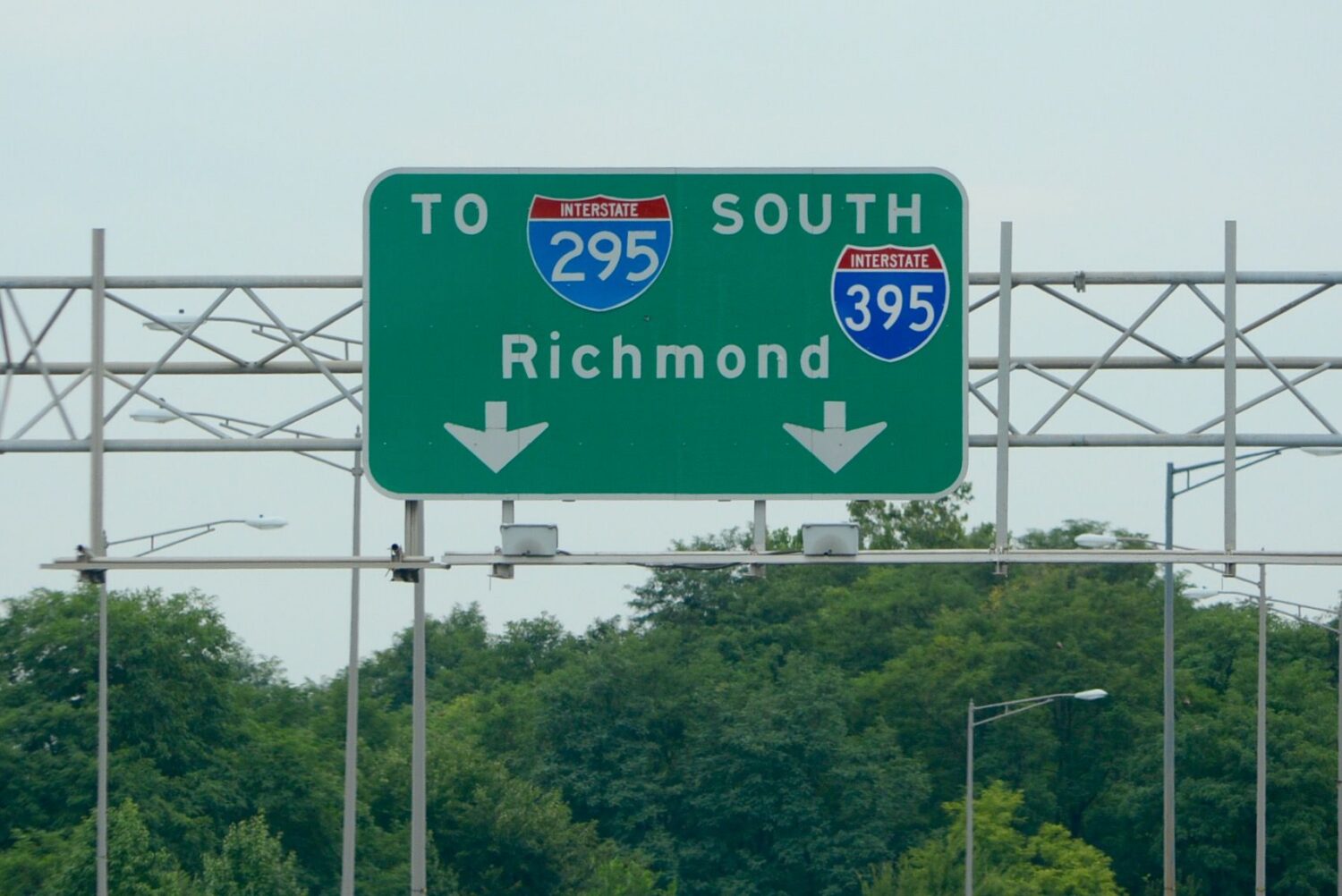
A few weeks ago, I made the drive from Charlottesville to Richmond to spend a couple days at a retreat center in downtown Richmond. This year, I’ve been part of a preaching cohort for early-career preachers, and part of this program involved gathering together for this in-person retreat in April.
I’d had a chaotic few months and was looking forward to some time away, both to learn a little more about preaching and to have a little space from my busy weekly rhythms.
After a rush-hour hour drive on the Virginia interstate, I arrived at the retreat center, where someone helped check me in and showed me on a map where I’d be able to find my room. I carried my backpack with me up to the third floor, and saw all the doors to the individual retreat rooms were labeled with the names of different saints and a short phrase or virtue that described a theme of the saint’s life or writing. Many of the virtues were pleasant phrases like “recognition of God” and “compassion for others.”
I found my name next to a door with “St. Teresa” painted at the top of the doorframe (so far so good), and then read the virtue painted in even larger letters.
“Love of suffering.” Hmm.
I dumped my backpack on the bed and immediately took a picture of the doorframe and texted it to my spouse Josh, with this caption: “So, what do you think God is trying to tell me with this retreat room door labeled ‘Love of Suffering’??”
I couldn’t help but laugh a little bit, and then I went down to dinner.
The next two days were a lovely time of connecting with other early-career preachers, sharing advice and funny stories, and hearing some great sermons. On our last afternoon, we had some free time, and I planned to spend it in solitude in the retreat center garden. I sat on a stone bench, surrounded by this beautiful garden in the middle of downtown Richmond, and as I was reflecting on the past few months I started to get a fuzzy spot in the middle of my vision.
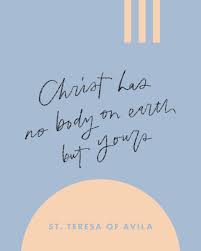
I immediately knew a migraine was coming on, and walked very quickly (and a bit unsteadily) up to my room to take my meds and lie down with my eye mask to try to keep it from getting too bad. I stumbled into my room and glanced at the modern-day icon of St. Teresa on the wall, a nun in a habit on a bright green background surrounded by her words: “Christ has no body but yours. No hands, no feet on earth but yours.”
I couldn’t help but think that this particular form of embodiment seemed like a pretty unreliable choice, but I figured St. Teresa already knew that, so I couldn’t get too grumpy with her.
Thankfully, I was able to sleep off the worst of the migraine and emerged none the worse for wear after a number of hours in my “love of suffering” retreat room. I joked to a few folks afterwards that I really felt I was becoming one with Saint Teresa.
In hindsight, I find the whole experience quite funny. But one of the things I remembered that evening, when I had a moment to spend some more time with the icon of St. Teresa without a large spot missing in my vision, was the way that St. Teresa’s writings have surfaced at moments in my life when I’ve needed grounding or time for reflection.
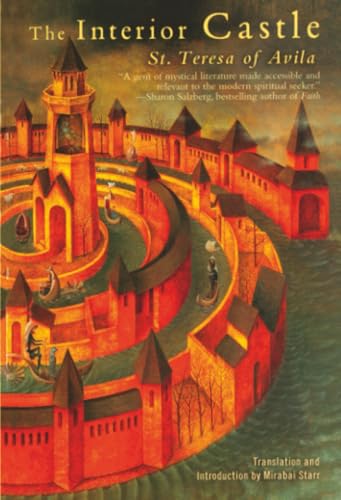
In college, when I first began reading some Christian mysticism, Interior Castle was one of the first books I picked up, one that challenged me to pause and to seek the Divine during years where I was over committed and very resistant to slowing down.
When I lived abroad in my early twenties, I picked up a used copy of the original Spanish text and read through it as I was beginning to develop chronic health issues that often flared up into pain and fatigue, marking passages about God’s call to us and presence with us as I read.
I revisited this text during my contemplative listening class in seminary, finding a reminder not to neglect prayer and other spiritual practices even in the midst of several years of primarily intellectual theological training.
And I’ve found some comfort and some challenge in layering St. Teresa’s words over my own experiences, experiences of solitude, of yearning for closeness with God, even of lying in a retreat center bed as a migraine aura takes over my vision.
That afternoon, I needed to remember again that Christ’s body is all of us, not just in our goodness and steadiness but in our aching and in our pain, in sleepless nights and in chronic illness and in cancer diagnoses.
And we are invited, even in our suffering, to share compassion, to bless all the world.
Christ has no body but yours,
No hands, no feet on earth but yours,
Yours are the eyes with which he looks
Compassion on this world,
Yours are the feet with which he walks to do good,
Yours are the hands, with which he blesses all the world. — St. Teresa of Ávila
4 Responses
While laying on an ice pack to alleviate chronic lower back pain I read with appreciation your insightful and compassionate reflection on your own experience of suffering as illuminated by the storied wisdom of Therese. Thank you!
Thanks, Bethany.
Steve
Great reminders to prioritise prayer and meditation – thank you Bethany and St Theresa 🙏
You probably know that St. Teresa is the patron saint of migraine sufferers. I’m not even kidding.