
I would not want to be Christian Pulisic this summer.
So I thought, coming into this year’s World Cup. To be dubbed “Captain America,” to carry the expectations of a nation and the eyes of the world—who can perform under that kind of pressure?
As I write, the USMNT (US Men’s National Team) has finished first in Group D despite dropping the last match to Türkiye on a late goal. They now play Bosnia-Herzegovina on Wednesday, July 1, in the first knockout round. There are those who will say this team has failed unless they advance on Wednesday and some who will not be satisfied unless they make the quarterfinals.
I am not one of those people.
The USMNT met and exceeded my expectations in their very first match against Paraguay by playing the most beautiful soccer I have ever witnessed by a US side. Several times during the match, I had to remind myself that this was in fact US men’s soccer—creative, adventurous, attacking soccer. Even with a loss Wednesday, a new standard has been set, one that will be measured against the level of excellence they achieved in the first match of this World Cup.
Coming into the match, I would not have wanted to be Christian Pulisic, but coming out of it, if I were Chrisitan Pulisic, I would want Mauricio Pochettino as my manager and this US team at my back.

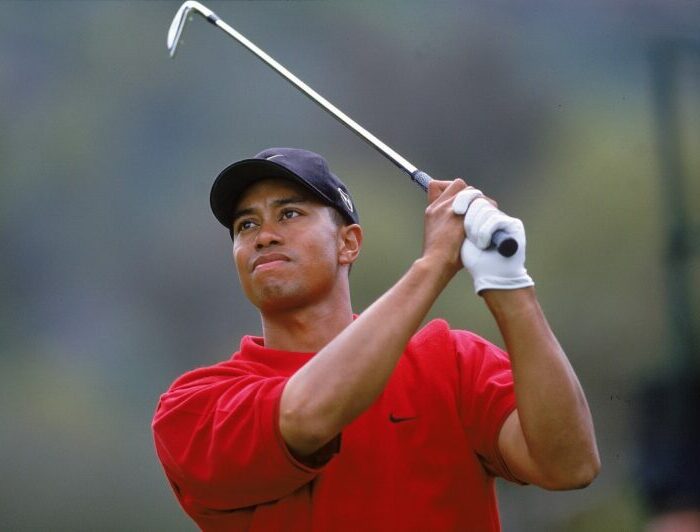
To back up a little, I’m a fan of good sport wherever I can find it, but I’m a sucker for the transcendent in sport. I cut my teeth on the 1980s LA Lakers, fell in love with the indomitable Michael Jordan, followed peak Tiger Woods, crushed on Liverpool’s “heavy metal football” title team, love me some Anthony Edwards for the way he can drive the final dagger for my hometown team, the Minnesota Timberwolves.
I know just enough about competition to know how taxing it is mentally. After graduating from a small high school, I was fairly shocked by the intra-team competition on my college basketball team—cutthroat competition against each other to eventually compete with each other. Even during certain pickup games down at the local gym, when I’ve needed to be the one who carries the team to the spoils of “winner stays,” I find myself thinking, “Wait, I can’t do that again.”
To get “up” for game after game is exhausting, and the way most professional athletes manage to do it and to be human beings immediately after the final whistle is why we call them professionals.
It isn’t easy.
Sometime after the documentary The Last Dance was released, I heard Bill Simmons characterize Michael Jordan as someone who was “homicidally competitive.” It’s one of those journalistic phrases that may be more catchy than true. However, it revealed something to me about the nature of the highest level of competition: it’s dangerous. The stories are legion. Consider a local high school girls basketball coach who, after losing an important mid-season game, locked himself in his house for days and went on a bender—and subsequently lost his job.
On the other hand, lacking the competitive edge often means lackluster performance. Take Jayson Tatum and Shai Gilgeous-Alexander, who were both criticized during the past NBA season for smiling too soon after losses. Or take the Denver Nuggets, who were criticized for not joining in the theater of competition after one of my Minnesota Timberwolves called out their defense.
The failure to compete was part of the criticism of the U.S. Men’s National Team under the last manager, Greg Berhalter. The team apparently had a very good feeling under Berhalter, but not the sharp edge it took to actually win matches.
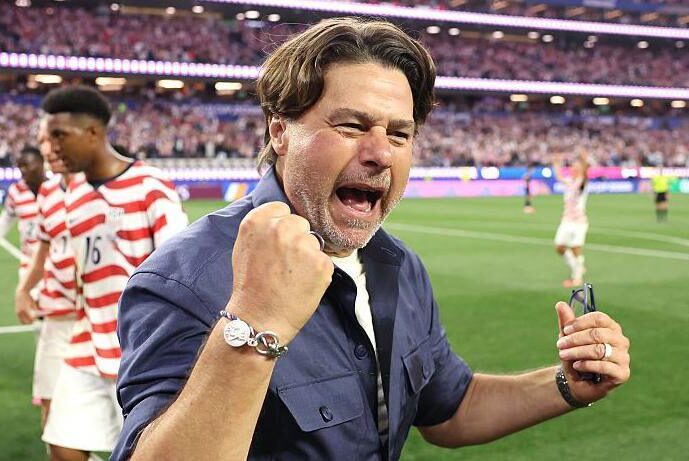
Enter Mauricio Pochettino, a seasoned Argentinian football manager and former player, who had success most recently with one of the highest-pressure clubs in England, Tottenham Hotspur.
For a while, things did not look good under Poch. There were losses, and top-level players declining to play, and questions about just what was wrong with American soccer culture.
Then came Friday night, June 12.
Turns out, Poch knew what he was doing.
Brazilian fans call the kind of soccer their team is capable of playing—a mercurial and improvisational style—“the beautiful game.” I had never witnessed the beautiful game from a US men’s side until the game against Paraguay. It was beautiful.
Pulisic was brilliant, even though he played only half the match because his calf tightened up. That first half was enough. Time after time, facing multiple defenders, Pulisic found a way to split them, to dance through or around them, to get “in” and to fire a cross or make a play.
It felt like an arrival, like US soccer had finally done something worthy of the highest level of world, ahem, football.
For me it begs the question: Are there legitimate ways to achieve moments of transcendent athletic beauty that counter “homicidal competitiveness”? By looking at the USMNT, it seems you need a few essential ingredients.
You need a coach with a vision and the will to enact it, even when the culture he came into wasn’t what he expected.
You need players to believe in something beyond themselves. I was surprised to see the USMNT praying after the game. Although this is nothing new in the world of sports, the reason became clear after this match: to counter homicidal impulses takes other powerful impulses, takes recontextualizing.
I agree with Allison Vander Broek that the most important takeaway from this world cup should be about “collective effervescence” and not about excellence-maxxing. But in a world where winning is still “the only thing,” where we’re always on the verge of lauding “homicidally competitive” as a virtue. The USMNT seems to offer a decent model of how excellence can be achieved without sacrificing your soul.
I would still not want to be Christian Pulisic, this summer or ever. I have many lingering questions about the cost of excellence. But this team seems to have the vision and support both to share the burden and to platform individual talent in a way that has created something beautiful. I am grateful I got to witness it.

6 Responses
Thanks for a great column, Howard.
I’ve never been a big soccer fan, but between a son-in-law who played for Dordt who’s helping me appreciate some of the nuances of an otherwise scoreless affair and good articles like this, I’d like to be more of one (but I’m too cheap to pay for the streaming channels that carry the world cup, so alas…)
It was your final comment on the ‘cost of excellence’ that intrigued me most. I think I know what you mean, but I’d love to talk with you more about that some day. As a pastor for the last decade I’ve come to have a love/hate relationship with sports. I love sports for the, as you call it, ‘transcendent’ values it imparts to kids that are hard to learn any other way but by playing them.
But on the other hand, sports – not just school ball, but the myriads of unspoken requirements and commitments that are implicitly required to play at an ‘excellent’ level – are consuming our families. And it’s not just sports where this idol of excellence thrives.
Anyways, you and your family seems to hold this tension well, achieving excellence on one hand without sacrificing the whole ‘cost.’ I’d like to hear more!
To “Collective effervescence” and/or “homicidal competitiveness” I would add “feeling God’s pleasure” to quote Eric Liddell from “Chariots of Fire”, the film. The World Cup has been great fun! That truly was “beautiful” soccer against Paraguay!! Overpaid athletes (and owners), club sports, etc. exploit what is supposed to be character building and fun. I love watching them play but I’ve heard that Messi and Ronaldo are billionaires. That cant be right but I am going to keep watching anyway because it’s just fun. And (so far) it’s not about Trump.
But Morocco beat The Dutch last night. So why bother watching any game, said some of my Dutch-Canadian friends? I think that is parochial beyond words. I’ll still be rootin’ for Canada when they line up w/ Morocco. And as a dual American-Candian, I have two teams to root for. Should they have to play against each other? One half for US? One half for Canada? Hmm.
I like football. (NFL and Futball). I like it because it focuses us on joy and a united world rather than anger and hate. Is that too simple?
Ireally appreciate how you framed the “cost of excellence” as both a gift and a burden—seeing it
The distinction between excellence and an all-consuming competitive identity is a useful way to read this team. What stood out against Paraguay was not only Pulisic creating chances, but how quickly teammates offered the next passing option after he drew defenders. That shared movement supports your point that individual talent can be platformed without making one player carry the entire emotional burden.