
I’ve been asked the question so many times that it’s high time to put it to bed.

What does Abraham Kuyper’s theory of sphere sovereignty have to do with the Seven Mountains ideology delivered by the “prophet” Lance Wallnau of the New Apostolic Reformation (NAR) and all the rage among Christian nationalists more generally?
In short: “very little” so far as theory is concerned; “little” again in terms of structure, purpose, and authority; but “a fair bit” in terms of tone and cultural anxiety. So nuanced an answer gets us down into the weeds, but given the current situation with the Christian Right, it’s worth the effort to sort things out.
The Theory of the Spheres
First, the theory.
For Kuyper, spheres are ontological domains of reality that arise out of creation and call humanity to develop and enrich them. Each sphere—education, the arts, religion, politics, business, technology, etc., etc.—is to unfold along lines set out by its own distinctive “principle” or purpose, striving to realize its innate potential. These spheres are “sovereign” on their own ground in that each has a charism uniquely its own, not to be interfered with by that of another.
Thus, the state is not qualified to run a church, a business, or a school; but neither is a church qualified to run a university (attention CRC Synod) or a state (Mr. Wallnau, get thee hence!). More pointedly, given the momentum of our own past half century, business principles—the market mentality—will work mighty woe when it takes over churches and schools and everything else.
For Kuyper, in sum, the “spheres” are sites for robust cultural flourishing, a grand theater calling for a lot of human action. All people belong on this stage, irrespective of their particular religious convictions. Kuyper’s great project was to call Christians out of the pietistic cloister where he saw too many of them huddled and push them toward center stage. In a complicated dance they were to operate in the order of creation but also out of the order of redemption—that is, guided by general knowledge available to all but also by the unique insights provided by scripture and the work of the Holy Spirit.
Zero Sum vs. Principled Pluralism
By contrast, Wellnau’s “mountains”—not “spheres”—are for conquest and domination. Where Kuyper could see valuable contributions coming from all over the philosophical map (he deemed Plato, Kant, and Darwin to be “geniuses,” “stars of the first magnitude”), Wellnau lays out a zero-sum competition between God’s chosen saints and agents of Satan. The consequences are ominous.
On the eve of the 1901 elections that made him prime minister, Kuyper cautioned his followers not to view their opponents as enemies but as fellow citizens who were also motivated by love of country. Agents of Satan, on the other hand, deserve the bloody elimination that hovers like a fever dream in the Seven Mountains imagination.
Kuyper’s concept is thus based on another pluralism: not just of domains of human activity but of the various religious, ideological, or “worldview” camps that arise out of people’s different responses to Christ’s offer of redemption. Contrary to Seven Mountaineers’ dream of executing final judgment tomorrow, Kuyper reserved that exercise to Christ alone at the end of time.
In the meantime, he said, Christians were not to lord it over others but to raise in each sphere a compelling witness to the gospel’s contribution to the common good—toward realizing the creation potential in each sphere. Not to seize mountains but to cultivate fields side by side with others of different, even contrary, fundamental convictions. After all, if the gospel holds the best promise for human life, then those who claim its mantle should be able to demonstrate that by the results of their work.
Sources
Kuyper claimed that sphere sovereignty is rooted in the Bible, but he actually drew his case out of a grand picture of world history, the lively world of the late Middle Ages in the Low Countries, and some venerable Calvinist social and political theory. Plus, the language of “spheres” was common in his day among observers like Max Weber as they tried to get a handle on the explosive proliferation of human activity during the great bourgeois boom of the 19th century.
Wellnau’s source for his “seven mountains”? As a college dropout, certainly not rigorous study. Rather, enough social media charisma to get him access to the circle of self-appointed “apostles” and “prophets” of the NAR with their flurry of dreams and visions direct from the Holy Spirit. These regularly confirm Donald Trump to be God’s anointed agent to save America from the demonic pedophiles populating the deep state, the global elite, and the Democratic Party.
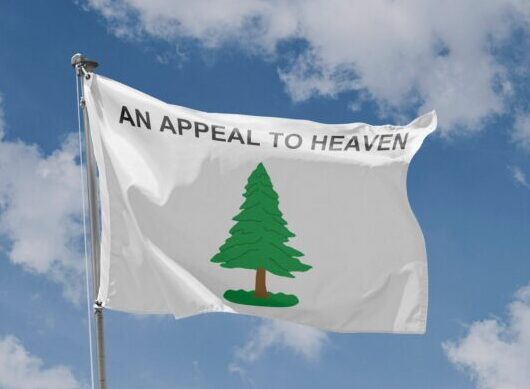
The “seven mountains” revelation was Wellnau’s own and lays out the means and end for the righteous ones to overturn these grave threats. Yet, for all the novelty attending the theory, two tired notions lie behind it. First, the ancient heresy that America is God’s chosen nation. Second, the dream that the millennium is at hand and will be soon delivered by a Big Revival, one last great outburst of the Holy Spirit that will convert the whole globe. This will get rid not only of all the minions of Satan but all the trying complications of history.
Similarities
The Manichaeanism here, the millenarian fantasies, and the unaccountable authority doubtless spin Kuyper in his grave every day. So why might Wallnau and other oracles of the Christian Right like Kuyper if they ever read him?
- Politically, whatever his calls for the common good, Kuyper’s voice was persistently one of militancy and crusade, summoning Christians to do their utmost at a crucial turn in world history. The rising force of philosophical naturalism—which denied the supernatural and therefore, Kuyper said, any viable concept of the ethical—threatened to drown the Christian witness beneath the blood of might-makes-right and a flood of Social Darwinism. There are more than echoes of this theme on today’s Christian Right, however differently—and inconsistently?—they might apply it.
His militant tone was also due in part to Kuyper’s role as a movement leader, especially a political party leader. He was always trying to get out the vote and so lived in constant tension: his commitment to principled pluralism uncompromising, his sense of urgency unrelenting.
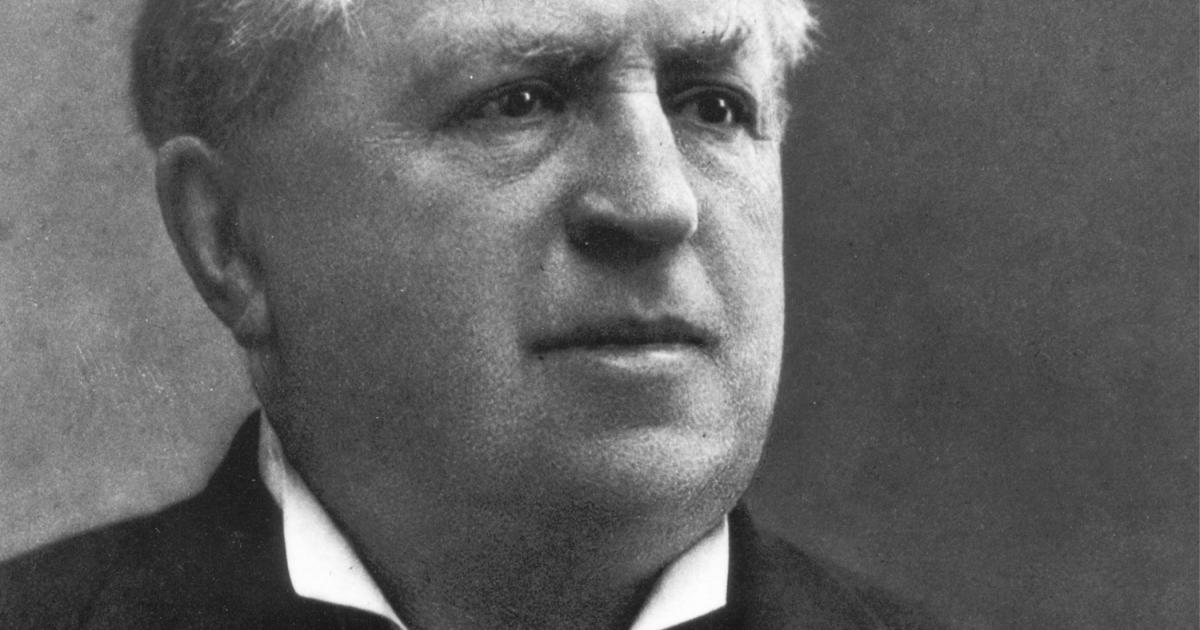
- With the climbers of the Seven Mountains, Kuyper could view his spheres strategically, scanning the horizon for the most likely frontiers for Christian action. At first, like the Christian Right, he saw the greatest threat in an expanding state, but later he wanted to shore up civil government amid the whirlwind of modernization. He kept his focus on the domains of education, journalism, and other sites of cultural formation, seeing with today’s Christian Right (and a good bit of the Left) politics as lying downstream from culture. But he consistently wanted a voice at the table—however loud and argumentative it might be—never to run other people out of the room.
- One more point of felt similarity—a sense of being a beleaguered minority, the remnant of a once dominant people now set upon by smug elites. MAGA’s oscillation between self-pity and vengefulness regularly recurred in Kuyper’s ranks.
But he also had an apt word of warning in this context. We Calvinists once had official privilege in the Netherlands, he told his followers, and that turned out badly. It cankered the church; it denied our Catholic and humanist fellow citizens their due rights; and it left us suffering due pay-back today. So we have to suck it up, stay faithful, and show that ours is indeed a better road toward national wellbeing.
Conclusion
In sum, the independent charismatics of the NAR and their “Evangelical” (that is, unreconstructed Fundamentalist) compatriots have come, at different times and stages, out of the pure spiritualism of their religious origins, with its dream that personal salvation solves all problems, into the realization that one has to have some kind of political and cultural engagement in the larger world. Some of the readers among them have turned to Kuyper as a safely orthodox and apparently anti-liberal resource.
But as Richard Mouw once observed, Fundamentalists in America can’t decide whether they are living in Babylon or Jerusalem and so oscillate between those, and only those, options, not realizing that with Paul, they—and we—are living in Rome. They are left swinging between quietism and conquest, and with the election of Ronald Reagan started moving from the first to the second. Kuyper rejected both options but with a nuance that Fundamentalists just can’t process and that we too might forget.

18 Responses
Jim, your essay brought me back to Calvin College, the fall of 1968, sitting in the required class, Christian Perspectives on Learning (CPOL). It was my introduction to the “spheres,” an introduction to the reality that the created order was complex and that there were powers in these spheres that were shaping me and needed to be engaged. It was Christian formation that would have made Kuyper proud and awakened in me a curiousity and energy that carried me through life. Your essay suggests that you were benefitting from the same class, different year. My hope and concern is that Calvin University is still capable of this.
This is extremely helpful, and very clarifying.
Thanks for this, Jim. I’d propose one nuance regarding the Seven Mountains “revelation” popularized by Lance Wallnau. He did not claim it as a revelation to himself; rather, he attributed it to two Evangelical leaders in the 1970″s (Loren Cunningham of Youth with a Mission and Bill Bright of Campus Crusade for Christ), with an assist from Francis Schaeffer. He substituted “seven mountains” for their “seven spheres” and ratcheted up the conquest language, thus producing what Matthew D. Taylor calls a powerful “prophetic meme” (The Violent Take it by Force, p. 150).
David Timmer,
You are right in saying that it was Loren Cunningham and Bill Bright with assistance from Schaeffer that came up with the spheres. Loren actually called it “classrooms” and it was Wallnau who made it into mountains. Here is a paper I wrote to our mission on this topic giving a bit of the history and differences. https://www.ywamcity.org/spheres-of-stewardship-1
Others also have noted Timmer’s connections: Molly Worthy in “Apostles of Reason” (2013), Katherine Stewart in “The Power Worshipers” (2019), and recently Matthew Boedy in “The Seven Mountains Mandate” (2025). I intend to do a deeper dive into these, so my comments are very preliminary. For example, Boedy discusses the influence of R.J. Rushdoony on Cunningham, Bright, and Schaeffer. R.J. Rushdoony is the inventor of Christian reconstructionism, which the above mentioned authors describe as foundational structure for the dominionist ideals present in various strands of Christian nationalism. He in turn was influenced by Cornelius Van Til (of Princeton and Westminster Seminaries and ordained in the CRC) and his presuppositional apologetics. Van Til studied and taught at Princeton during the height of J. Gresham Machen, but also drew from Kuyper, Dooyeweerd, and Vollenhoven.
It seems to me that this intellectual genealogy is also part of what is being asked in Bratt’s opening question. There is a line of influence from Kuyper to Wallnau according to Taylor and the others. It’s also clear that as one works through that genealogy, each generation reworks the theory so that by the time you get to Wallnau, there seems to be little in common with anything taught by Kuyper. In that sense, I agree with Bratt’s comparisons. But Rushdoony pops up in Christian nationalism as a significant influence over and over (see also Doug Wilson or David Barton). From what I know of Rushdoony, he distorts Kuyper’s Calvinism mightily, so I won’t argue that much of the ideas come through. Yet, ideas such as the idea that everyone has a worldview and some worldviews are Christian and others are not, or morphing sphere sovereignty into a mandate to control cultural mountains has loud echos of Kuyper ringing in the background, I would say.
Yes, there are strong echoes reverberating here but it’s most important to hear the original tune and lay out the transmutations and distortions that come along in the process of transmission from one figure to another. Kinda like the famous example of a statement whispered along a 20-member chain until the last person in line repeats what they heard and it’s nothing like the original statement.
This is so helpful, Jim. Especially the principled pluralism contrast. It brings me back to my seminary days when many of us students were really big into the “antithesis,” a big theme especially among Dooyeweerdians in those days. I can still see Henry Stob sitting in the coffee shop with us and stretching out his hands to visualize each side of this grand antithesis, and then dropping his hands to the table and grasping them together and saying, “But aren’t both of these things still rooted in one Creation?” Isn’t that the principled pluralism (and humility and appreciation for the natural mind and antidote to triumphalism) that is so lacking today? I love it! Thanks, Jim.
Thanks, James, for delineating the differences (and for the clarifications of David Timmer about the source of some of this). It seems to me that the Kuyperian talk of every square inch of the universe belonging to Jesus easily lends itself to a “takeover” mentality, as if Jesus has sent us to contend for his property rights. Do the Seven Mountain folk think an institutional church has to take over other spheres, or only that individual groups of Christians working in those spheres should try to take over that sphere for Jesus. For example, if I were a journalist who was a Christian who followed Kuyper or the Seven Mountain ideology, should it be my goal to form an alternate Christian news source? to function like salt in a news organization currently not led by a Christian vision? to attempt to turn a non-Christian news source into a Christian one (either “forcefully” through corporate takeover or using soft power in working my way to the top)? It seems that Christians should be salt and light in all the spheres of this world, without trying to take over.
These are terrific questions, David. I have no doubt that the Seven Mountains political theology differs from Kuyperianism in the important ways that Jim clearly and carefully articulates, but there nonetheless seems to be an inherent triumphalism in the latter as well. The commitment to principled “pluralism” has always struck me as somewhat thin — we’re happy to accept your contributions to science, economics, the arts, etc., but we have a corner on Truth when it comes to ontology and the foundational structures of the universe.
“Yes” to your final phrase…”without trying to take over.”
Thanks for this helpful analysis, Jim! I hope it becomes required reading for Calvin students.
Thanks for this very timely and much needed clarification. I can’t help wondering what the Dooyeweerdians of our college days would say about the Seven Mountains, and you’ve helped to answer that question.
The idolatries of political power and economic power have captured and enslaved huge pieces of the church in America. Is this similar to Kuyper’s learning experience in the politics of the Netherlands? I don’t know him well enough. But I do know that Jesus clearly rejected such powers. We suffer the fruit of ignoring his teachings in this regard.
Jim, thanks so much for this post. It is insightful and helpful. As a scientist, I have spent my career in academia and government laboratories working with a diverse constellation of colleagues, some of whom are Christians and some who are not. I hope that I have provided salt and light, as well as good science, to our collective work, but there is certainly no mountain in science for me or other Christians to conquer. Brilliant ideas and cutting edge research are not qualities of Christians alone. On a side note, the move by the current administration to appoint “political commissars” to vet science funding is the direct result of a vision of conquering science by choosing which ideas are worth pursuing and which are not. This will become an absolute disaster, as we have seen in previous incarnations of this idea.
Thank you for this excellent piece, Jim. Count me among those who eagerly awaited your commentary on these connections and differences since I’ve had to use the Kuyperian “square inch” with far more caveats in recent years. This essay was thus timely, fair, and insightful.
Thank you for your wonderful summary and analysis of this timely subject. This topic will never go away and we need always to probe for clearer understanding. From the common grace struggle of a hundred years ago to the Charlie Kirk group of today including that of Chuck Colson of a few years back, we need this kind of careful work of Dr. Bratt. I have been spending some time with Abraham Kuyper’s devotional book, “To Be Near Unto God”. I cannot read too many of these devotions in that book without sensing his great respect he has for God’s love of his creation. It is this appreciation of God’s love for his creation and creatures that lays the foundation for much of is later theology and world view. So much flows into his understanding of redemption from such intense and deep love.
Please do not think that the time for continued discussion and researc for this subjecy nhas past. It is very relevant and necessary today. Thank you for this fine article. (Certainly justifies the anual contribution).
In opening, I want to second Darren Walhof’s somewhat uncomfortable point about the fair amount of triumphalism now and always present within the version of Kuyperianism its Dutch American immigrants have advocated. In general, though, I’m very appreciative of Jim’s very helpful piece and will recommend it widely. A minority way to interpret the “every square inch” quote is that it should allow Kuyperians to let go, rather than hold on, to square inches since all this is in the hands of God’s son and not ours. That would imply a deeper humility and broader collaborative spirit, which might improve efforts to contrast the tradition of Kuyper with NAR and the like. It is way past time to do so, with so many past opportunities missed for contrast and clarification, not only with Wallnau but now Doug Wilson describing himself almost uncontested as a Calvinist. It seems to me we are all in Babylon, seeking the welfare of a strange city/nation. The Kuyperian advantage is to know that about ourselves and all others.
I really like the idea of every square inch having to do with letting go rather than holding on (or something worse).
I wrote the book on 7MM and while I didn’t get into the rhetorical link between that and spheres I traced as well as I could the ways spheres were transmitted into mountains