
The year is probably 2013. I am on the sidewalk outside a frozen yogurt shop having a specific kind of intense theological discussion native to liberal arts majors at Christian colleges, and my artsy, gender studies-minoring friend says to my great shock, “If I believed that the gospel didn’t support feminism, I wouldn’t be a feminist anymore.”

My first thought was: If I believed that the gospel didn’t support feminism, I wouldn’t be a Christian anymore.
I just didn’t see much point in worshipping a god who is small-minded about who matters.
It’s a noble position, but if I’m honest, it was also a defensive one. I didn’t want to worship a god who had decided that something about me made me less worthy, less valued, less welcome a student of that god’s own way.
I have thought about this interaction repeatedly over the intervening years, perhaps because it reveals something deeply true about the nature and persistence of my faith. What I find so compelling about the gospel is that it is more radical than I am. Jesus tells people to give the shirt off their back to the poor, to invite homeless people into their homes, to hang out with people everybody hates, and to disregard personal safety entirely in service of those who are oppressed.
This, to be clear, is not something I plan on doing.
But if we actually want to be true to his word—dare I say, “take the Bible literally”—we probably should.
The Jesus of the gospels models an absolute self-sacrifice for people whom his society has decided just don’t matter: women, foreigners, eunuchs, illiterate fishermen, people with disabilities, the unclean, the desperately poor. Following Jesus in this is a challenge greater than perhaps any person can bear, and one far beyond the reach of our nonprofits, congregations, and denominations. The people who do try to live this way are widely considered a huge pain in the ass. That’s Jean; she gave all her money to the poor so now she’s destitute in retirement and living in my aunt’s basement. She brings up wealth inequality every time I see her and she’s always asking for money to help out her weird broke friends. The whole family is at their wit’s end.
This is not remotely similar to the kind of behavior that gets you elected to non-profit boards or described as a respected business leader. It’s disruptive and inconvenient and uncomfortable to be constantly acknowledging the image of God in strangers or enemies or bizarrely dressed people loitering outside CVS. It is hard enough to remember that the colleague ignoring my emails is the beloved of a God who demands that I forgive him a full 490 times, if we are still being literal. That same God would frown upon recording an actual tally, since it’s not in keeping with the point of the directive.
Lately, I’ve been thinking about the radical gospel and that young Christian feminist because of conversations about articulating a theological and Biblical justification for the full inclusion of LGBTQ+ people in the life and ministry of the church.
I find this project difficult and sometimes self-defeating, not because I don’t think it’s a real and possible argument— there are many, many people who have done compelling academic work on these questions. I have benefited from their expertise and insight. But I tend to think that such efforts are missing the point.
There’s just not much evidence that people form their ideas about LGBTQ+ people, about sexuality, gender, and gender expression, and about family and leadership and righteousness, on the basis of theological study and Biblical exegesis. Yes, many of us eventually decide to do a little research. But we are not starting from zero when we do. Our ideas come first from our families and communities and through what we read and see in books, movies, and television. They come from the comments we hear in our early life about people who are different from us. They come from the approval or sanction our actions win us in childhood and from the clothes we are dressed in from the moment of our birth.
The real work of wrestling with this particular theological quagmire is not scholarship or Bible study—it’s looking at your own life, at your own heart, and asking questions like:
What assumptions am I making about what’s normal and acceptable and where do those come from?
What am I taking as “obvious” or “self-evident,” and could I be wrong?
What is happening in my mind and body when we talk about this subject?
What about LGBTQ+ inclusion feels threatening to my marriage or family? To my sense of self? Why is that? Is that threat real?
We have to do all that before we ask exegetical questions, like:
How would the Jesus of the gospels respond to the question my congregation is facing right now?
Here’s what I excavated in myself when I began asking those questions: I love rules a lot more than Jesus did. I care much more about adhering to social convention than Jesus did. I am much more invested in my good reputation, my personal safety, and the stability of my social world than Jesus was. And honestly? I’m lazier than Jesus. I like to use the shortcuts of my society to categorize the people I interact with and to determine everyone’s roles and responsibilities. I like a clear taxonomy of who is in and who is out, what’s okay and what’s not, and what to do next.
When I went back to the Bible, I saw Jesus asking over and over that we give those things up if we want to be his disciples.

You might not be a rules person, the way I am, but you’re carrying something.
Maybe your driving assumption is that the way society is arranged now, or the way it was arranged at the time of Jesus, is more or less the way it should be, and significant disruption of that order isn’t part of God’s kingdom vision.
Maybe you’re uncomfortable thinking and talking about sexuality because the only language you have for those topics is self-denial and sin.
Maybe you’ve wanted a particular kind of heterosexual marriage and it didn’t work out the way you hoped, and you can’t imagine giving up on that dream.
Maybe you realize if you changed your mind on this, you’d have to consider that you raised your children and counseled your friends in ways that harmed them. Maybe you’re not prepared to admit that folks who take an affirming stance can be faithful Christians—because that would mean admitting that you weren’t bound by your faith tohold a line that hurt people you love.
It is disorienting to reconsider what it might mean to live a good and faithful life—Lord knows how hard it is to look at the pain you have caused others and forgive yourself for it.
Jesus has a lot to say about that. And he has a lot to say in Luke about the value of those convenient social rules I love so much: Expect that people will insult you and reject you and excommunicate you because you belong to me.
You have to leave your family behind and make yourself a social pariah in order to be my disciple.
Those who hold traditional positions on marriage, gender, and sexuality sometimes say that they are experiencing persecution. They value the plain word of the Bible and refuse to bend their views to gain favor from a corrupt culture. Everywhere, they say, there are gay people and gay symbols and everything is hypersexualized: I cannot leave my house without seeing rainbow flags or posters advertising drag bingo. I am making myself a pariah by rejecting these cultural norms.
An assessment of “who in this scenario is experiencing persecution” depends a great deal on how you define the “dominant American culture” and its attendant power—Hollywood or Pete Hegseth, tech CEOs or young people online? Meanwhile, support for LGBTQ civil rights is decreasing in the United States, and the suffering of rejection and dysphoria and mental illness is still very prevalent among LGBTQ people. All of us are outsiders somewhere, so “I feel awkward or unwelcome” is not a particularly useful barometer for “I am being rejected because of my righteousness.”
Back to the Bible we go.
In Luke, Jesus tells us again and again and again what is worth being rejected for.
Welcome all children in my name, let them come to me and do not hinder them.
To be a neighbor is to show the kind of mercy that contaminates you in the eyes of your religious community.
When you attend a party, sit in the lowest place. When you give a party, invite people who have known suffering and rejection.
Lay down your nets, abandon your boat, and follow me.
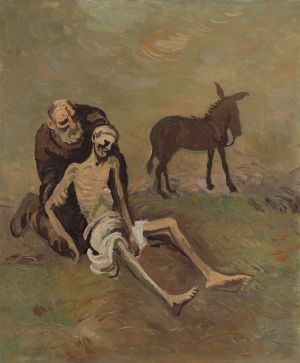
Once again, I’m not planning to do this, exactly. It’s not the kind of advice that will provide me with financial security in retirement.Give up my means of making a living? Stop saving for the future and just trust the Lord? Hang out with losers, weirdos, and dissidents? Defy all the accepted wisdom about living a respectable and productive life?
I like my job. I like my home and my life insurance policy. I like when cool people like me and think my opinions are smart. I do not like uncertainty, volatility, danger, or change. I am uncomfortable with the idea that the future of the church is entirely unknown to me, or the idea that the future church will look very different from the communities I have known and loved.
But Jesus says you will be known by your fruit—by your inconvenient compassion and welcome, by your forgiveness, your humility, your persistence in demanding justice. You will be most like me when you are most free from the desire to please others or to protect yourself, when you are fully given over to the love of God.
The gospel is way, way more radical than I am.
It will ask something costly of me every day that I walk this earth. I find that alarming.
Of course, Jesus also says again, and again, and again: Do not be afraid.
I remember back in 2013 or so, the era of the frozen yogurt shop and my particular Christian liberal arts college education, hearing an argument against women in ordained ministry: “We can’t have women pastors! It would invalidate the hierarchy that Christian marriage depends on. If we accept that both parties in the marriage are equal in the eyes of God, we’d have to accept that they don’t have to be of different genders. That’s a slippery slope.”
I found this argument deeply annoying—it struck me as whataboutism, a desire to conflate and dismiss a legitimate position on the ordination of women—and egalitarian marriage—as “too radical” by packaging it up with something further ‘beyond the pale.”
I have to admit this, too: this argument annoyed me because I didn’t want to be grouped with LGBTQ+ people, who had a weaker claim on dignity.
When I think about it now, what I wish I’d said was yes. You’re starting to get it.
I’m starting to get it.
God calls all of us into God’s kingdom work. We don’t get to limit the reach of that call.
Wisdom, virtue, righteousness, holiness, intimacy with God, gifts of leadership and preaching and prophecy, Christ-like solidarity with the oppressed—none of those things hinge on the sex or gender of the person in question. What we learn from the Bible, from the history of the Church, from our own lives of attempted faithfulness in and around it, is that those gifts are often found in unexpected places.
And we find them perhaps most often among those whom we expect to avoid or dismiss.
That seems like the point.
The gospel is more radical than we are.
It says that even we who have spent our lives in service of these awful, insidious, tyrannical idols—the right kind of job or home or family, a wholesome domestic life and a congregation of people who share it, the good opinion of people in authority, enough money and popularity to make us feel safe—even we who have failed again and again to see the image of God in the beloved of God are welcome in God’s house.
We are blessed and forgiven and invited to try again to live as if the God who created us in love created all those other people, too.
It’s never too late.

17 Responses
Thank you, Katie. Helpful as I prepare to preach Sunday, Romans 12:9-21.
Thank you, Katie, for this raw, honest read on just how radical Jesus is . . . and how much we usually miss the mark in imitating Jesus.
You have laid out so many valid scenarios that speak to this moment. Who is a rebel and who is a follower of what the Bible clearly says when theologians themselves disagree on what the Bible clearly says? Staying in a denomination that would have me leave is teaching me the humility to look for the “the image of God in the beloved of God” whom I disagree with but still hold dear as the family of God. You have reframed where I am: resigned to being uncertain as to whether it is comfortable or radical. Thank you.
Thank you, Katie, for this bracing and helpful encouragement to trust the radical gospel that follows the inclusive love of Christ.
Katie, there’s so much here to which I say “Amen!” The line that struck me as especially true and necessary to remember is this one: “There’s just not much evidence that people form their ideas about LGBTQ+ people, about sexuality, gender, and gender expression, and about family and leadership and righteousness, on the basis of theological study and Biblical exegesis.” So true.
Thank you for your essay’s insightful, wise perspective.
There is some muddled theological going on here. First, everyone is created in the image of God as a reflection of His glory. Also, everyone sins, and we do not always reflect God’s glory in our actions. Finally, God loves everyone the same and churches and people who claim to be Christians should be loving and welcome everyone into the Christian community.
Now the more difficult part… One of the successes of the gay rights movement is that they have made an act an identity, but that is not reality. The concept of the heterosexual identity and the homosexual identity were invented in the late 19th century, and the heterosexual and the homosexual are not identities within a Biblical framework. Biblically, there are heterosexual acts and homosexual acts, and God views some heterosexual acts such as pre-marital sex, adultery and incest as sinful and views all homosexual acts as sinful. Some people commit only heterosexual acts, some people commit only homosexual acts, and some people commit both heterosexual acts and homosexual acts, however, committing anyone of these acts does not create an identity such as the God-created identities of female or male for the person committing the acts, they are just acts.
Yes, Christ was radical in his acceptance of the prostitute, the corrupt tax collector and sinners of all sorts, but Christ was not radical to the point of approving their sinful actions and believing that their sinful actions defined their identities as persons.
I disagree with you. I know a number of people whose gay identity is not a nineteenth century construct but a very early, bewildering, and deeply compelling self-awareness which they had (often with pain and suffering and fear and self-loathing) to come to terms with. It was the absolute of of Jesus that has answered them.
Make that: absolute love of Jesus.
Amen to your honesty, your questions and most importantly your final summation.
The point you make about how we form our ideas on matters of LGBTQIA+, sexuality, and gender is something our household discussions come back to over and over. You give us better words. Thank you.
What a gift, a heartfelt and persuasive reflection sparked by a remembered comment over frozen yogurt! I recall similar conversations, in and after classes in which I sought to pry the closed minds of some students a little bit more open, and (I hope) occasionally succeeded. But it’s important, too, to allow the Holy Spirit to move hearts and minds on her timetable, not ours. The liberal arts college Katie attended (I guessed) was a place where different political and theological perspectives on contested issues in church and society were in continual and constructive dialogue. Listening to each other helped us discern what the Gospel asks of us. This was also true of many CRC churches (including the one of which you and I were members then). It is tragic loss for those remaining in the CRC that such dialogue has been labeled heretical.
Thank you so much, Katie, for starting us off in a new week with a serious challenge – to embrace more fully a radical gospel that we’re unable or unwilling to practice in our life of faith.
Lord, help us.
I am copying your entire article for further and necessary reflection. So well expressed on how challenging the words of Jesus are as we seek to be true in our following and fellowshipping with him.
Sorry, I’m late to the commenting section today. I really like your emphasis on Jesus being more radical than I am. That’s for sure! But that’s what has always drawn me to him. And your honesty about how fear and laziness make us unsure if we even want to follow Jesus in his radical call — that’s refreshing too. I can tell that on some matters you I and are discerning Jesus’ radicalness very differently, but we definitely agree that Jesus is more radical than either of us are currently thinking or living. So thank you.
This is really good, Katie!
If one does not read the Bible with some sense of discernment and challenge ( as Jesus did!), it is all too easy to affirm one’s preconceived perspectives as “biblical.” Remember when singing in English, guitars in church, divorce, marrying a Catholic, etc. were all rebellious missteps? A radical Jesus is scary, yet exciting and inviting. If the LGBT community or women’s rights community is guilty of “adopting an identity,” then so is the “orthodox” community. So said Jesus, at least.
two quick thoughts:
1. does the statement “If I believed that the gospel didn’t support feminism, I wouldn’t be a Christian anymore.” bother any of the other readers/commenters here? Maybe that was meant facetiously, but it doesn’t really say that in the rest of the essay.
2. re: the observation that “There’s just not much evidence that people form their ideas about LGBTQ+ . . . . on the basis of theological study and Biblical exegesis.” Don’t forget that this cuts both ways.
Tom raises two legitimate questions here. A brief reflection:
I do not speak for the author, but “feminism” is a charged word. If I were sincerely exploring world religions and came across Islam, I would abruptly reject any God who treated a woman as a possession, unworthy of respect or function beyond childbearing, uneducable, and incable of independent thought. Certain scriptural readings have been similarly associated with the Christian God. God is not a strict feminist but God is certainly not a masculinist either.
As far as LGBTQ attitudes, I find 3 types of responses:
1. Those who accept the traditional condemnatory view without a lot of deep scrutiny beyond 3 or 4 proof texts or a desire to reaffirm such a view.
2. Those who accept any new, unhinged identity and artistic experiment as worthy of acceptance.
3. Those who dive back into scripture and science in order to learn why their own child or grandchild or parishoner/ client has such an unrequested, unwanted, persistent, non- rebellious drive toward the same sex or a conflicted sexual/gender identity.
Yes, I agree it does cut both ways.