
If I profess with loudest voice and clearest exposition every portion of the truth of God except that little point which the world and the Devil are at that moment attacking, I am not confessing Christ, however boldly I may be professing Christ. Where the battle rages, there the loyalty of the soldier is proved, and to be steady on all the battlefield besides, is mere flight and disgrace if he flinches at that point.
~ a statement often attributed, probably mistakenly, to Martin Luther.
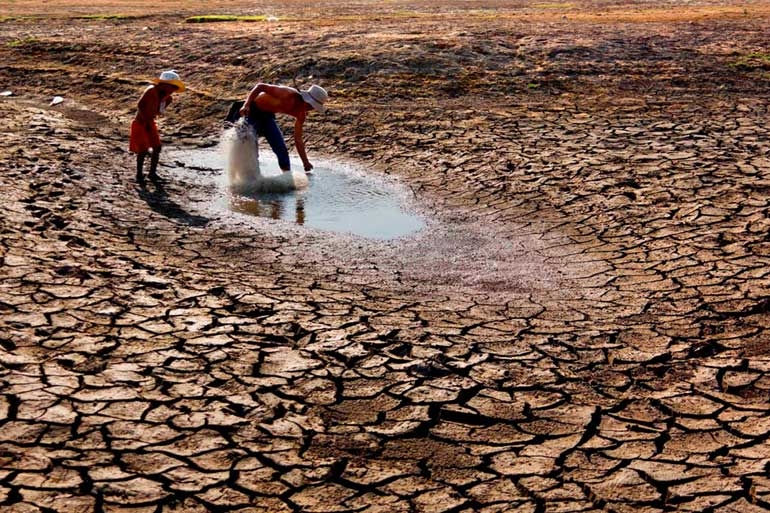
The climate crisis is the most serious threat to life on this planet since the last ice age. Rising global temperatures will cause—indeed already are causing —immense human suffering, especially among the poor, the vulnerable and future generations, but all of us will be affected. The climate crisis is the point which the world and the Devil are at this moment attacking.
How then shall the church confess Christ today?
We know that the continued use of fossil fuels and the release of carbon dioxide and other greenhouse gases is warming the planet and changing the climate. Scientists have warned that carbon dioxide levels must remain at 350 parts per million (ppm) to maintain a stable climate and avoid catastrophic warming.
We surpassed that level in the 1980s. Today, atmospheric carbon dioxide levels are over 420ppm. Earth’s temperature continues to rise along with the increased concentrations of greenhouse gases. The ten hottest years in recorded global history (dating back to 1850) have all occurred since 2015.
The Intergovernmental Panel on Climate Change (IPCC) has determined that we have until 2030 to dramatically reduce fossil fuel consumption if we are to avoid a climate catastrophe. “Any further delay in concerted global action will miss a brief and rapidly closing window to secure a livable future,” they reported. Every year that passes without a drastic reduction in global emissions makes catastrophe more certain.
Christians, who are called to love our neighbors as ourselves, have an obligation to do something about this.
A failure to address the climate crisis is a failure to love God and to love our neighbors as ourselves. It is the “least of these among us” —the poor, the marginalized, communities of color, our children and grandchildren, and many of our fellow creatures — who will suffer the gravest effects of climate chaos.
To rephrase I John 3:17: How does God’s love abide in anyone who sees what is happening to our climate and the suffering it will cause our siblings and kindred and yet fails to act? How can we claim to love God and love our neighbors if we are not doing something to address the climate crisis?
Many of the responses to the climate crisis have focused on individual lifestyle changes—reducing meat consumption, severely limiting air travel, installing solar panels, purchasing an electric vehicle. These actions, while helpful, are inadequate and a less than faithful response to the climate crisis. We need to change the system.
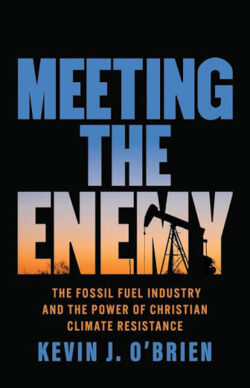
“The most important work we can do,” writes Kevin O’Brien, “is not to change our individual lifestyles but to resist the corporate and political structures at the root of the problem of climate change” (Meeting the Enemy: The Fossil Fuel Industry and the Power of Christian Climate Resistance).
This will not be easy. The fossil fuel industry is powerful. Major oil companies use their vast wealth and political leverage to preserve and advance their business model of fossil fuel extraction, even though they are well aware that it is wrecking the planet. Exxon knew as early as 1977 that its fossil fuel products could lead to global warming with “dramatic environmental effects before the year 2050” but then engaged in a lengthy disinformation campaign to downplay or discredit what its own scientists had confirmed. In short, Exxon lied. O’Brien argues that fossil fuel companies are “corrupted and fallen” institutions and we need to resist them.

We also need to acknowledge our own complicity in the climate crisis. We may not be as guilty as Exxon, but we are guilty with Exxon. We are all participants in the fossil fuel economy, not only by buying and burning gasoline, but in where we bank and how we invest. JP Morgan Chase, Citigroup, and Bank of America are some of the biggest financiers of fossil fuel projects. Many mutual funds and retirement accounts are heavily invested in major oil companies. The investments we hope will provide us with a comfortable retirement are funding the destruction of the planet and are consigning our children and grandchildren to an unlivable future.
But perhaps our participation in the fossil fuel economy also gives us some leverage. We can begin to change the system from within. The Presbyterian Church (U.S.A.) recently joined a growing list of church bodies who have decided to divest from fossil fuels. They’ve decided that investing in companies whose core business is the production of products that drive climate change contradicts the church’s calling to protect God’s creation. Or to put it even more bluntly, continued investment in the fossil fuel industry is incompatible with faithful Christian witness.
Confessing Christ today includes examining how our investments are contributing to climate harm and then shifting our resources toward supporting renewable and more just energy systems. The aim is not moral purity but more faithful witness, and by our witness to help transform the present economic system into one that is more sustainable, more just, and more attentive to the cries of the poor and the cries of this suffering planet.
Naomi Oreskes has pointed out that before the Civil War people in the North wore clothes made of cotton picked by slaves. That did not make them hypocrites when they joined the abolition movement. It simply meant that they were part of the slave economy, and they knew it. That is why they acted to change the system, not just their clothes.

6 Responses
John,
Thanks for this prophetic message and call to action to challenge and change the systems that pollute our atmosphere.
Right on John! Thanks for this.
Thank you!
Thanks for this advice, John. There’s a surprising lack of knowledge about how necessary and simple it is to divest from fossil fuels in our individual retirement portfolios. Most retirement plans offer at least one fund that does this intentionally, and the means to transfer to such a fund. This is a step everyone with a 401k, 403b or IRA should take. And if you don’t feel comfortable doing it yourself, tell your financial advisor to do it for you.
Thank you John. Unfortunately many people find this too daunting. Most of the participants in the Reformed in America retirement plans are invested in the Fidelity Freedom Funds, all of which have substantial holdings in big oil companies.
Efforts so far to guilt people or to punish large corporations have had little to no effect, (As long as people purchase a company product, withholding stock funds is a symbolic gesture.) A third approach is to use innovation, science and engineering to address such problems. Major issues have been solved this way through human history Most of us are aware that large parts of the Netherlands are below water level. This was not solved by telling people to flush less often, or by attacking mining and excavating companies.
Consider the efforts of E_ M_ (He whose name cannot be spoken on these pages.) Twenty years ago he demonstrated that an appealing, affordable, all-electric vehicle could be mass-produced. (Creating initially 50,000, now 135,000 worldwide well-paying jobs in the process.)
Major manufacturers struggled to catch up. Meanwhile, in 2026 the Tesla model Y has been the best selling electric vehicle worldwide, also outselling the Toyota Rav4 and Nissan Rogue gasoline models.
Through innovation and skill, this one individual has had a large beneficial effect on climate change.
I hope that successive generations will have individuals who are open. curious, innovative and courageous enough to address major challenges.