
This is not a joke. An imam, rabbi, and pastor…
We were chaplain colleagues, tasked with creating a remembrance service at Lennox Hill Hospital in Manhattan one year after the 9/11 attacks on the World Trade Center. This year marks the 25th anniversary of those attacks. We were given a budget. Somebody bought flowers. I bought two large candles, two feet tall and three inches in diameter—$75 dollars! The candles had slightly roughened exteriors, were a deep saturated orange color, pleasing to touch and pleasing to behold.
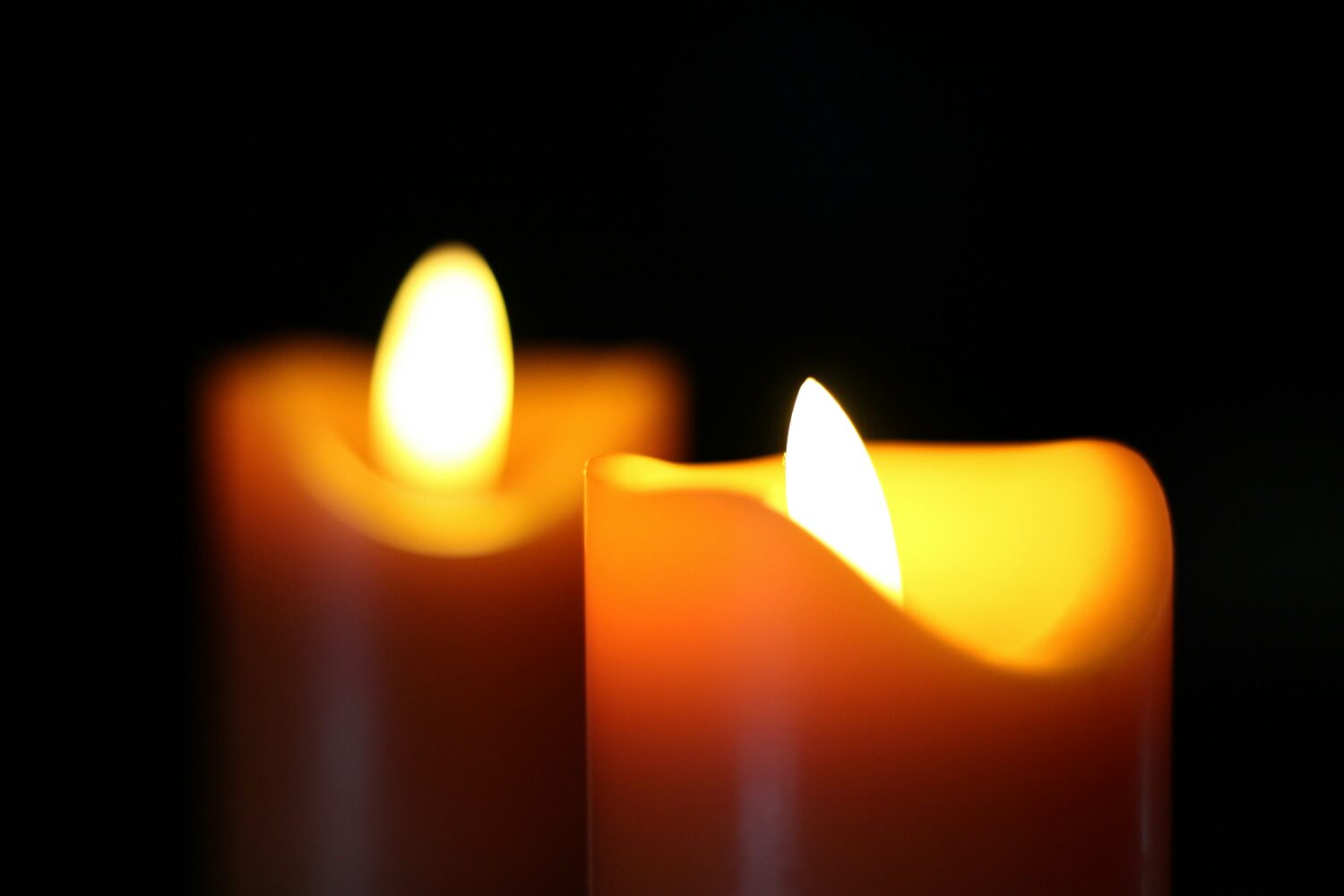
I remember almost nothing of the service except those candles and the musical recordings that were played: the famous Israeli folk song, Bashana Haba’a (literally, “Next Year)”and Samuel Barber’s Adagio for Strings; the latter, then and now, closely linked to remembrances of that day.
The service came together easily; we liked each other and were used to interfaith collaboration in chaplaincy work and in creating memorial services for patients and families. It was easy to find participants for the service from our religiously diverse staff—nurses, patient transporters, security guards, doctors, administrators.
Interfaith services can be tedious in my experience, or shallow, or lacking shape, or lacking some liturgical something—one decontextualized sacred snippet after another. I remember none of the texts that were read that day. Just the music and the candles.
The lyrics for Bahshana Haba’a were written in 1970 by Ehud Manor in memory of his brother, Yehuda Weiner, who was killed in military service in 1968. The original music was written by Nurit Hirsch. Lyrics and melody were plaintive, yearning, sorrowful. The first producer of the song in Israel wanted something more upbeat, so the duo created a jazzier version, which seems to predominate online.
At our service we used a recording of the sorrowful version, I don’t know exactly which one. Here are two versions, one by the Bob Jones University Choir, in an arrangement by John Leavitt, and one by the Maccabeats, a Jewish acapella group, formed in 2007 by students at Yeshiva University. In the Jewish community around the world the song has become a Rosh Hashanah (New Year’s) staple. And this year Rosh Hashanah begins at sundown on 9/11. Turks and Iranians sing it, too. Here’s a translation of the first verse.
Next year we will sit on the balcony and count migrating birds. Children on holiday will play catch Between the house and the fields. You will see, you will see how good it will be next year.
My orthodox rabbi colleague told me that this is not a religious song, not really, though he agreed that we should include it in the service. But I do connect this song with a biblical text and a sermon. Our friends’ daughter, Annie, 12 years old, was killed in a snowmobile accident in 1996. Rev. Duane Kelderman preached the funeral sermon; the text, I believe, was Zechariah 8:5b:
And the streets of the city will be full of boys and girls, playing in its streets.
Pastor Kelderman was somber, deliberate, still. We just keep looking at the pictures, he said, and he wove that image through his words: children playing and Annie among them. Ehud Manor imagined sitting on the balcony with his brother, watching the children play.
In the days after 9/11, former New York mayor Rudolph Giuliani was a highly praised unifying force, speaking against Islamophobia, gathering the people in their common grief. But this week, spouting hatred, he said that he did not think the present mayor, Zohran Mamdani, a Muslim, should attend any of the services that will happen this week.
In the Bible’s second story, Cain kills Abel. Brotherly love is a fragile thing, as fragile as the lives that were lost that day. And thousands of people will gather this week, the names will be read again, and people will pray and weep and sing. And sing! No wonder God loves us. I offer the following prayer/poem by Rabbi Zoe Klein Miles.*
Two Candles
On Shabbat we light two candles, one for
remembering Shabbat and one for observing Shabbat.
Today we light two candles,
This one for Building One, this one for Building Two,
This one for the Pentagon and this one for Pittsburgh,
This one for the hundreds of firefighters and this one for the hundreds of police,
This one for all the men and this one for all the women,
This one for all the girls and this one for all the boys,
And these candles for the husband and wife who leapt out of
the tower holding hands,
This one for our luck running out, this one for the New York skyline,
This one for the walking wounded, this one for the critically wounded,
This one for the survivors, this one for the dead.
This candle for Building One, this one for the dead,
This candle for Building One, this candle for Building Two.
As I was writing, this song too, this canon, was running through my head:
When Jesus wept the falling tear,
In mercy flowed beyond all bounds.
When Jesus groaned a trembling fear,
Seized all the guilty world around.
William Billings – 1746-1800
*From the Central Conference of American Rabbis, a compilation of prayers and readings to mark this anniversary, which can be used in services with attribution.
Candle photo by Cabbie Kqwi on Unsplash
14 Responses
Thank you for these beautiful words, Melody.
Thank you, Melody for touching my heart and soul with your words, Melody.
The comparisons. The opposites. The reality.
These are the words I needed today as I celebrate my sister’s birthday.
Thank you Melody.
Thank you for this moving, eloquent reminder of that day that changed us as well as the spirit of compassion that we should carry forward.
This past Sunday at worship we have four new visitors, three of them friends with one another. Getting to know them at Coffee Fellowship following the service, I discovered two of them were musicians, one specifically I misunderstood when he answered and thought he said “palliative music.” I misunderstood; he did not say that. But this led us into a conversation about music therapy and palliative care, two distinct fields. Somehow, your piece with the musical links makes this connection beautifully. Thank you, Melody.
Excellent way to remember, Melody. Thank you! What a task you had on that first anniversary. And now I will have Billings in my ear all day.
Thank you, Melody.
Thank you Melody. Indeed, the bonds and memories, and even hopes, created in human suffering are so powerful.
“Brotherly love is a fragile thing” will stay with me. Thank you, Melody.
Perfect! Thank You for sharing this Melody.
Children playing
birds migrating
people singing
…even as we remember them.
Thank you for this, Melody.
Thanks Mel for blessing me again with memories and words and shared tears and imagined hugs and love grounded in eternity.
Thanks for this remembrance, Melody. On September 11, 2002, I was also in NYC having outpatient knee surgery at Beth Israel – North Hospital. The city was quiet and eerie. In fact, it was a good day to have surgery because most people did not want to test fate on the first anniversary. The year before, I was sitting on a plane at Albany Airport for an IBM business trip as the twin towers were hit. I was fortunate that we never took off because I would have landed somewhere in the USA and been stuck there. Many of us remember where we were on 9/11/2001. Some of us also remember where we were on the first anniversary. The service that you did on the first Anniversary of that tragic day and that others continue to do each year are really important. Thank you for doing that and for sharing this article.
The remembrance of the Day 9/11 is very moving for me. My father worked in the World Trade Center and we toured it to see its size. He was on a floor in 90’s so we went far up and looked down. My father’s company was transferred to Wayne, New Jersey before the crash of a plane and spared my father’s life and the people he worked with. This added a dimension to its remembrance for me.