
Over a decade ago, Brené Brown’s therapist suggested to her that most people are doing the best they can with the tools that they have. Given Brené’s experience of people being… people, she immediately disagreed with her therapist. But then, in true Brené Brown fashion, she started a research project, asking others if they believed people are doing the best they can with the tools they have. Brené noticed that those who agreed with her therapist – that people are generally doing the best they can – were a bit hesitant and qualified in their affirmation. But then there were the others.
Those who believe that people are not doing the best they can were unequivocal and passionate in their responses. I never once heard, “I’m not sure, but I don’t think so.” It was always some version of an emphatic ‘No! Absolutely not! No way!’ Unlike their “yes” counterparts, about 80 percent of these respondents used themselves as an example: “I know I’m not doing my best, so why should I assume others are?” (Rising Strong, pp. 110-111)
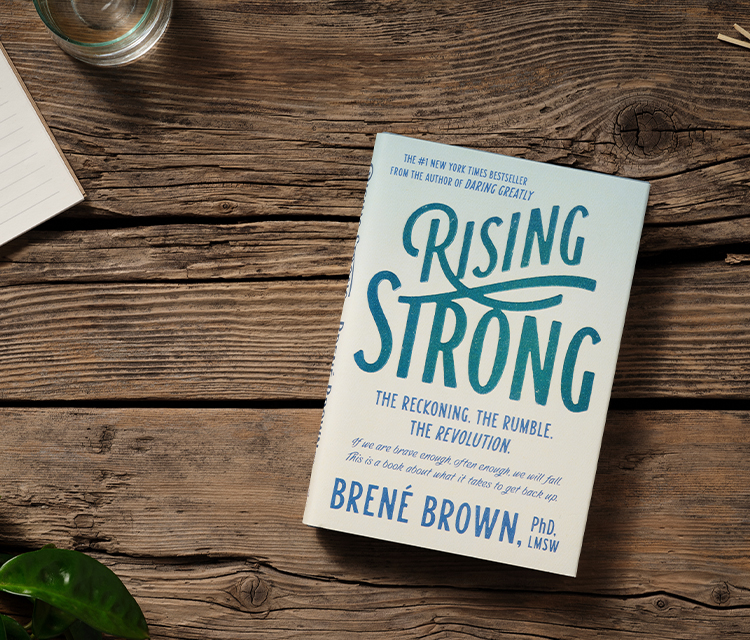
Brené categorized the “no way” group as the perfectionist types. The “I think people probably are doing the best they can” folks, on the other hand, were the wholehearted types: “people who are willing to be vulnerable and who believe in their self-worth.”
Brené’s husband, Steve, fell into the latter category. When she asked him whether he thought people are doing the best they can, he said, “I don’t know. I really don’t. All I know is that my life is better when I assume that people are doing their best. It keeps me out of judgment and lets me focus on what is, and not what should or could be” (p. 113).
There’s a part of me that loves this assumption that we are all doing the best we can with the tools or resources we have and believes it to be true. Hidden within that assumption (for me, at least), is the assessment that doing one’s best is what matters most, and is perhaps even… sufficient. “All you can do is all you can do,” my dad would say when I was in high school and stressed about homework. “And all you can do is enough.” Or, as Mister Rogers said: “Some days, doing ‘the best we can’ may still fall short of what we would like to be able to do, but life isn’t perfect on any front – and doing what we can with what we have is the most we should expect of ourselves or anyone else.”

Isn’t this what we long to hear? That we’re doing our best (and that’s all that is expected)? That we’re doing a good (enough) job? That we’re doing hard things (as well as we can)? I often remember the conversation I had with a hospital chaplain the morning after my first husband died. I was 23 years old and completely disoriented by this sudden loss. He said, “Heidi, I know you’re going to be okay. Do you know why? Because when I met you in the waiting room right after the accident on Friday, I asked if there was anything you needed, and you said you needed a toothbrush and toothpaste. You know how to ask for what you need. So, you’re going to be okay.” Essentially, he told me I was doing a good job and that evaluation was just what I needed to hear that morning.
How often haven’t I extended this kind of appraisal to the patients, families, and students I care for? You’re doing a good job in an impossibly hard time… You made the best decision you could with the information you had… You’re doing your best. How often haven’t I, at funerals, echoed the master’s words in the parable of the talents (Matthew 25) as if I were echoing what we believe Jesus’ words will be when he welcomes the dead into his arms: “Well done, good and faithful servant. (You have been trustworthy with a few things; I will put you in charge of many things.) Enter the joy of your master.” In other words, you did the best you could with the resources you had. And that was enough.
So, yes, a part of me loves and believes we’re all just doing the best we can. But there’s another part of me that feels deeply unsatisfied with this sentiment – and it’s not just the part of me that knows that I (like the wicked and lazy servant in Matthew 25) am not always doing my best.
The sentiment is dissatisfying to me insofar as it is – by itself – reductive. To observe a person who is having a rough go or making questionable choices or hurting other people and to say that she is doing the best she can with the tools she has… this reduces her story in at least these four ways:
- SHE: She is reduced to an individual.
- IS DOING: Her status is reduced to her effort, which leads to her productivity/output.
- THE BEST: The descriptive adjectives about her are reduced to the thin scale of Poor. Mediocre. Acceptable. Good. Better. Best.
- SHE CAN: Her abilities for decision making and action are reduced to the present moment.
- WITH THE RESOURCES SHE HAS: Her capacity is reduced to an economy of discernible havings or not havings.
In Brené Brown fashion, I’ve been asking several friends what their thoughts are on this sentiment and one of them said that it sounds like a conversation stopper. Like the end of a therapy appointment or a pep talk– “Well, you’re doing the best you can with the resources you have.” Or the gracious stop we put to a conversation wherein we’re being particularly judgy or complain-y about another person– “Hey, you know what? He’s just doing the best he can with what he has.”
Here is how I bring the two parts of myself together – the part that loves to be told or to tell others that we’re all just doing the best we can and the part that is dissatisfied with this mantra: I look at these words as a gateway – a gateway of what psychologist Carl Rogers calls unconditional positive regard. When I assume that I am doing my best and you are, too, that is not the end of the conversation or the work, but the beginning. When we enter the relational moment with unconditional positive regard for each other, we create a safe and brave space for both of us to explore everything else that’s happening on the other side of that gateway.
On the other side of the gateway of assuming the best, we are free to explore how we are living in an interconnected web of community (not just as individuals). We have space to simply be (not always to do). We can describe our activity (and our passivity!) with words like slow and spacious, tight and tender, strong and spent, afraid and aghast, dark and withdrawn, luminous and light, full and fuzzy. Our abilities are but one thread in a tapestry of capabilities, disabilities, and probabilities. And in this field on the other side of the gate, we may find that the economies of what we have and what we don’t have may just be beside the point entirely.
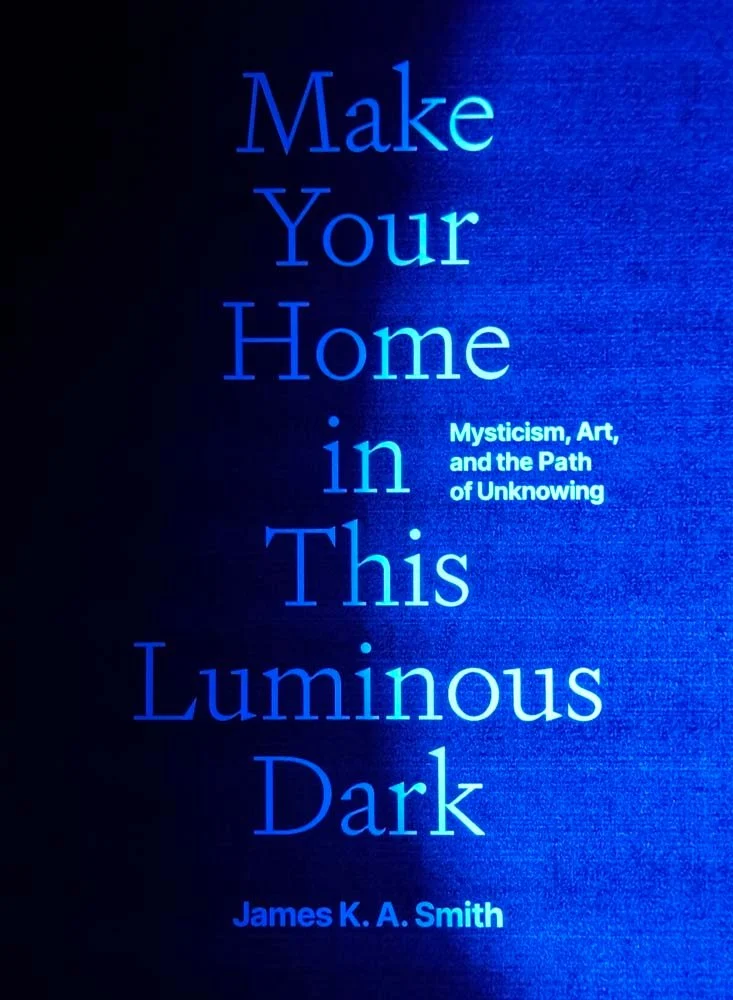
I’ve been mulling this blog over for some time, and in these latter weeks of my mull, I read James K.A. Smith’s newest book, Make Your Home in this Luminous Dark: Mysticism, Art, and the Path of Unknowing. My readers will not be surprised that I commend it to you thoroughly, but for the purpose of these paragraphs, I invite you to follow in just a few of his footsteps.
When you or someone you love is in a difficult place – a dark night of the soul or a shadowy valley of disorientation – go ahead and start with the assumption that you (or they) are doing the best y’all can, if you must and if that is helpful. But then find a way to make your home in that dark, where there may indeed be weeping and gnashing of teeth. Lean into the possibility – the probability even – that you or they have failed, but that the failure comes, as Smith writes, with a promise (p. 146). A promise that there is more to us and to our stories than meets the eye. That as human beings, we are “wondrous centers of consciousness” (p. 183).
“Sadly,” Smith writes, “in our everyday distraction governed by transactional economies, we settle for the surface of others. My commodified default is to imagine you are merely what you present. We fail to imagine the depth behind things, especially other people” (p. 184). The truth his book explores (and that brings the parts of myself together) is that we as humans in community are mysteries encountering mysteries, and that no matter what or how we are doing (good, better, best, horrible), no matter what we know or don’t know (or would do well to unknow), no matter the resources we have or don’t have, we use or don’t use, we are beloved. We are beloved.
And maybe, just maybe “we have to experience the utter failure of knowledge [or effort] in order to shake this modern prejudice [that we are what we know and achieve] and open our hands in the dark. Who knows? The risk, and possibility, is that someone reaches back” (p. 160).
This, my friends, is the gospel. The good news. And yes, I will even say, the best news.

26 Responses
Thank you for naming the tension of wanting to give others the an atta girl/boy, you are doing your best and the- but really? I so appreciate just the naming of this. I often find myself saying I can affirm your person while vehemently disagreeing with you… and yes, judging. Maybe not so affirming? It is an impossible space to occupy and still we must, musn’t we?
You are welcome, Kerin! Thanks for adding language to the emotional cocktail that accompanies these words – and the (my) resistance to them.
Thanks, Heidi. It’s good to wrestle alongside you. Thanks for making the space.,
co-wrestlers; co-writers. I love occupying this space with you, friend.
When we ask that question, we are starting from a place of judgment – our judgment. When we observe another individual going through a difficult time we are not called to judge but to come alongside them and provide curiosity, empathy and support. When we personally face an unexpected and challenging life situation the last thing we should be worrying about is how others will judge what we are doing or how we are handling it. There is always more to our story than what meets the eye. We long for community, for those to enter our space with unconditional positive regard. That’s when the conversation starts.
Thanks, Heidi, for this wisdom.
You’re welcome, Jo. And thank YOU. What you said (and how you said it) remind me of how my husband answered the question of this blog: “I’m not sure if people are doing the best they can. But I’m also not that concerned about it. And your ending point makes it clear why–the thing that matters is that we are loved.”
Heidi, I read your essay and know that you have an insight few people your age do. That is losing your husband at such a young age. I realize that gave you the power to comfort me in my distress at losing a husband after a long and wonderful marriage. I still feel some distress but can also smile but I do realize that unless you have gone through losing a strongly loved person you will not get it right. Few people do get it right for me but you did it correctly for me. Thank you.
It is an honour to sit with you on the mourning bench, Pam. This past week was the anniversary of another difficult Dordt loss. I was reading about it in my diary to my oldest, who is now the age I was when Doug Eckardt died of the injuries he sustained in a truck/bicycle accident. Holding gently the griefs of our extended community…
The last quote of Smith’s book in your blog made me think of a central theme in the faith of the people of Israel, one that has not carried over into the faith of people in the Reformed tradition: God dwells in darkness. At the beginning of creation, God was moving in the darkness. The Holy of Holies in the tabernacle/temple represented this moment. There again, above the ark, God was moving in the darkness (cf. 1 Kings 8:12ff). When the people of Israel gathered to worship at the tabernacle/temple, they were approaching the darkness and hoping that God was reaching back. They saw the essence of worship as beginning again, recreation.
Mmmm… I love this, Tom. I preached a sermon 13 years ago from 2 Chronicles 6 and 7: “Dark and Light and Heavy”… talking about just this theme. I don’t remember most of my sermons, but I remember that one because of the power of this theme.
I can share that after quite a bit of experience in human resources that people are not always doing the best they can. That doesn’t remove the need to treat them with kindness and empathy, but it also doesn’t excuse the need for thoughtful confrontation.
I hear you, Gregory. Those who love this sentiment will push back to say that they’re doing the best they can *with the tools they have* – – – and they just must need more tools. They might also say that assuming the best of others does not remove the need for accountability and confrontation. But I digress. It would be a YES- *AND*… But I bless you to dwell in the “no way” group. We need you, too.
I think there is a sense in which I have been doing the best I can up to this moment, one of the “resources” I have being the person I have been up to this point, who has not had the motivation, or the right attitude, or the insight, to do better. That doesn’t excuse poor choices I have made but acknowledges that I have been shaped by those choices to become who I am at the moment. But from this point, I can choose to see things differently, especially if someone helps me in that regard, to see greater possibilities in what I am becoming.
There’s also the question of what “the best I can” means. I could do a much better job keeping my house uncluttered, for instance, but it hasn’t been a high priority for me. I look at the mess and regret it, but not enough to give up other activities to work on it more.
I also am reminded of what a good friend said to me after my mother died. I had not had a close relationship with my mother, and most people who knew both of us seemed to think I had been better off once I no longer had my mother’s presence in my life except for occasional visits. (She was mentally ill, though other than depression I can’t say what her issues were because she did not trust doctors so it was difficult for them to diagnose her accurately.) My friend (who became a mother-figure to me in my twenties, before my mother died) told me that my mother must have been doing the best she could, because no one would choose to be that miserable if they could help it.
Pauline – so much richness here! With respect to your middle paragraph, I had a very similar conversation with my dear friend along these lines. It’s all about priorities. Because we do not have unlimited resources, we cannot do all the things. And we choose which things we want to spend our time and attention and love on. We *could* do better on those other things, if we *wanted* to.
And with respect to your last paragraph… I hear this deeply. In my conversations with students at Queen’s who have had difficult relationships with their parents, we find an extreme balance between heavy empathy (they were doing the best they could) and heavy realization of the impact (and it was not enough)…
I’m not sure how I’d answer that. Are we talking about making the most of our potential in terms of accomplishments? Coping well with difficulties in spite of disadvantages? Trying to meet the expectations of ourselves, others, or God? In a sense, not one of us is doing our best, and not one of us has the tools to do our best. We are all relationally-challenged people who are sinners and who are sinned against. Yet we are deeply loved by Jesus. His grace provides rest from self-judgment and other-judgment, and his grace provides strength to grow and be more like him. We need both. We are enough in Jesus and we can be more in Jesus.
Thank you, David. Yes yes yes. A good friend of mine said that this phrase might be best thought of as proverb: “It’s helpful only when it’s helpful. It’s not a law.” And like many proverbs, the opposite can also be a proverb… We have failed to do our best quite certainly and quite often… Which is why we need the grace of the hand that reaches back in the moments of our failures-with-a-promise.
I was always struck when parents (including myself) would say to their kids, “Just do your best.” Really? Is that all? Kinda setting the bar high, don’t you think?
I know that was not the intent, but the implicit message felt brutal. I wanted to say instead, “Just do pretty good.” Of course I never did, but the truth is, pretty good is good enough. Or at least that’s what I try to remind myself these days.
Yes, Jon. This pressure to do one’s best can be counter-productive. JUST DO PRETTY GOOD. Love it. There was a graphic T floating around the interwebs long ago that had WORLD’S BEST PASTOR on the front. The “BEST” was crossed out and replaced with “OKAYEST.” World’s Okayest Pastor. I liked that.
This is very thoughtful. Real. Candid. Thank you. I don’t know where I come down. I get angry when people in positions of office authority, or responsibility are not doing the best they could, or not taking the hard course, or making the hard decision. I used to get angry at people in church positions said, “You know I’m actually in support of welcoming LGBTs, but I can’t say that.out loud.” To me, that’s not doing your best.
Yes, indeed, Daniel. I felt this when I heard a little interview with Melania Trump on Fox News recently. When asked how she would compare how her husband is doing in the presidency – this term as compared to last – she said, “He’s doing the best he can.” Hmmmm….
I will stick with the Bible’s telling and definition of “good news” and “gospel”. This article’s summary of what the “gospel” is (see the second to last paragraph) doesn’t appear to be the same as what we read in the New Testament.
To me, the hand of God reaching out to us in the midst of the darkness is one way to understand the gospel. Emmanuel. God with us. But I bless you to see things differently.
Your reply clarifies the statements that you made in the last two paragraphs of your article, which I was able to receive in a more positive way. Thanks for responding.
We need to be careful when talking about the gospel message and good news. Our Reformed heritage would join with traditional Christians and even AI in explaining the “gospel” and “good news” as the following: The “good news” in the gospel is that Jesus Christ died for our sins, rose form the dead and now offers forgiveness, reconciliation with God, new life, and eternal hope to all who believe. (I actually googled this and this statement is from that search)
Your description of the gospel and good news in your article was that if a person could risk opening their hand in the dark, then there is a possibility that someone could reach back. In your article there was no mention of this “someone” as being God. Also, you stated that the Smith quote IS the gospel/good news, not your current explanation that this quote is one way to understand the gospel. This explains my concerns when I posted my reply.
I do understand that progressive Christians want to downplay or even ignore the traditional understanding of the “good news” of the gospel. (Progressive Christians often prefer vague, feel-good sentiments over clarity) I guess I care enough about the people lining up in support of progressive Christianity (which include people that are dear to me) to point out that there is a real difference in worldviews between progressive and traditional Christians which even comes down to the definition and meaning of the term “good news”.
I appreciate your thoughtful rendering of this wisdom, and the responses as well. We are all stories in process and cannot presume to understand one another’s motivations even if we have known each other for a long time. What it comes down to for me is this: we are all human and we are all beloved. I strive to see everyone this way, especially those with whom I disagree. Thank you for a wonderful essay.
Amen, Deb. You are welcome and thank you.
This is such a thoughtful post. I co-teach a class on leadership at Handlon prison and imagine how a class discussion of this post would go. I think they would share your ambivalence. More importantly, they would testify that when, in their “utter failure,” they reached out in the darkness, someone reached back.