
Dear Steve,
Acknowledging your “’strict rule’ (!) not to tell bloggers what to write on”, I appreciate your “wondering/suggesting” that I write a piece on Annie Dillard for my next RJ blog offering.
I hate to disappoint, but I’m not your guy.
Thing is, Annie Dillard intimidates me, though I’ve never met her, never to my knowledge been in the same county or state for that matter.
I encountered Dillard at Tinker Creek, like many did, as a reader. For me, it was while I was an undergrad at Calvin College. I had heard of her and had vague sense of her as a “nature writer” and that’s likely all it took. I was, at the time, consciously turning myself into a biologist. I was the guy I see in my own students, sophomorically pouring over the textbook explanations, memorizing the taxonomies, copying over my lecture notes in the library late into the evening. That bought me a license for the jargon, a nascent identity, and a future to imagine. All good stuff.
In Tinker Creek, undergrad me recognized Dillard’s biological sophistication, knowledge of everything from the chemical composition of chlorophyll and hemoglobin to the life histories of aquatic insects, to the structural physiology of trees. I loved Pilgrim at Tinker Creek for it, for the validation.
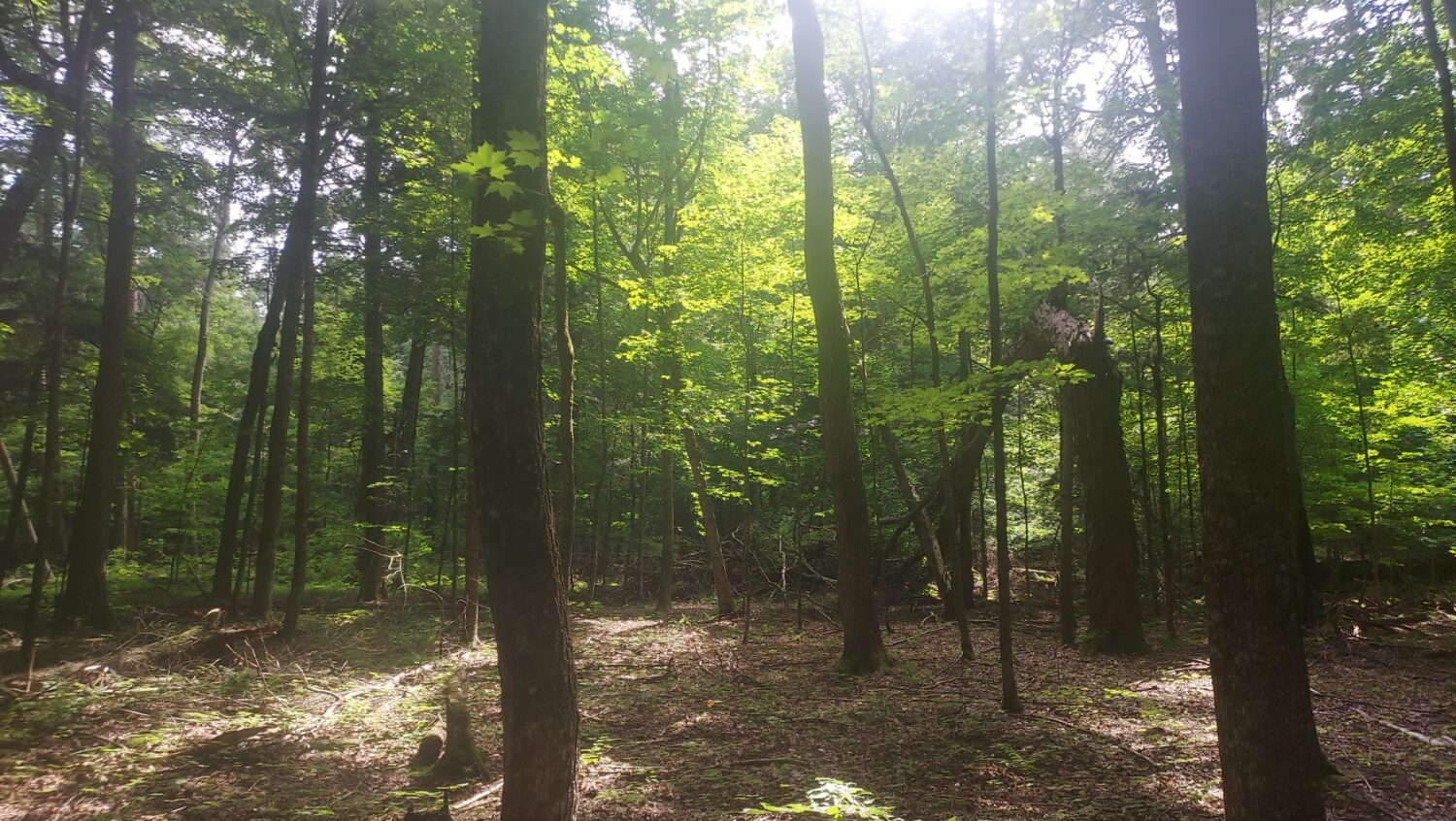
I suppose there was a bit of a kind of homesickness too. My childhood centered on a five-acre property that my parents owned in Jamestown, Michigan and a creek crossed its southwestern border. I literally spent hours, days, and years puttering and poking around that little creek in all seasons. Before I knew about phenology, I knew about the changes in water levels and light and plants and the thicket where the bulk of its volume gurgled up under organic mud perched over the mineral soil slowly peeling back. I knew the spare November and the patch of sunny snapdragons and where the weasel dens were. I was there when the elms began dying.
When Annie Dillard lingered over Tinker Creek, I knew. I knew the humid perfume of high summer. I knew the frost-pocket chill of the low areas at evening. I knew the long lazy conversation. And while I read Tinker Creek, I likely knew that connection to my own little creek was fading, taking an essential bit of me with it. Not long after, my parents sold the property. I read Tinker Creek at a lonely point, empty, I poured all my waking attention into my studies, my job at the lumber yard, my daily commute over I-196. I saw myself in Dillards’ solitary sojourning even as I was losing my own and failing to hang on.
I returned to Dillard only recently. Confession here: It’s clear that the average RJ reader is far better read than I am – especially in the wider world of American literature. My excuse is that I read and edit dry scientific prose all day and when I have free time, my reading muscle is sore (and there’s tramping, birding and sailing to do). It’s stupid excuse, maybe. But Annie Dillard is an icon and I’m not sure I could do her justice.
I returned to Dillard when my daughter Grace, who is the writer (https://eos.org/author/grace-van-deelen) in our family, twice pointed me to a Dillard piece with an emphatic “read this!” The first was an essay about a solar eclipse (https://reformedjournal.com/2024/04/18/eye-white-and-froth/), the second was for Teaching a Stone to Talk. Grace is a great reader (and my sharpest critic) and her opinion on something like this, I take seriously. Somewhere along the way, I read Holy the Firm – twice.
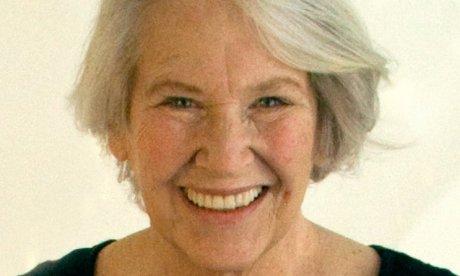
1945-2026
And I realized that Annie Dillard’s biological sophistication was only the entry point. Indeed, Dillard references sciences across the disciplinary spectrum. Biology, chemistry, particle physics, earth science, and then history, and then art and then classical literature, and religions and on and on. How does one person absorb and command such breadth of knowledge? I can’t imagine. But more so, I began to see in her biologically informed writing, an intimacy, a quality that sophomoric me didn’t, maybe couldn’t have understood about the wider world apart from a little farmland creek I grew up with. Dillard lives in her subjects when she writes. It’s only now, as I can see the end of my career as a biologist on the horizon, that I sense intimacy layering over training and experience when I walk my familiar places – and I have decades of investments in my little world. Annie Dillard wrote Pilgrim at Tinker Creek in her twenties!
And its one thing to know intimacy, its quite another to communicate it so artfully. There must be a hierarchy of skills in creative writing, once you know grammar and vocabulary. It likely begins with word play or the turn of a phrase. From there, you maybe deploy metaphor, clumsily at first until you can better close the seams on connected thoughts. At the rarified endpoint, rhetorical brushstrokes disappear and the writer’s mind translates perfectly or as nearly so as possible given the limits of language. I think this is where Annie Dillard sits.
And if it was only description. . . but her imagination. Oh my. I am simply dumbfounded at the power of her imagination, making connections and challenging intuitions and making her readers see. I don’t know how to describe it except for the recurring sense that it’s a wild thing that she somehow directs and if you invest in trying to hang on, hanging on is about all you can do as it carries you over the horizon.
Other remembrances I’ve read almost universally comment on Annie Dillard’s exquisite attention to the world around her, and I see myself here as well. Many of my blog pieces are some version of “I took a walk in the priairie/woods/wetland and here’s what I saw.” I write them because you give me the opportunity and it’s where my own mind wants to be. I wonder why that works. Whether there’s a universality at play.
Dillard’s exquisite attention also carries an exquisite self-awareness and she writes about it in Tinker Creek. It’s a Heisenberg uncertainty of literary sort, the idea that observation and description changes reality. I sense that too. And maybe that’s why another feature of her writing that I love is how she attaches dignity to her attention. Whether writing about soil microbes or people in her community, she dignifies their lives and connections. Its not sentimental or superficial, indeed she often looks directly into the face of the tragic or grotesque to find meaning. And this is also true for faith. Teaching a Stone to Talk has a lengthy description of her neighbors at mass and wrestles their relationship to an omniscient omnipotent God they confess.
Writing RJ blog pieces has been fun. I appreciate the kind comments and the discipline it imposes on me and I even begin thinking that I too might try and write a book one day. Returning to Dillard sort of popped that balloon – and not in a mournful or reproachful sense. More in an appreciative sense of “Wow! This is what real writing is. Maybe I should temper my expectations a bit.”
You likely saw my Facebook post where I said that Annie Dillard’s passing hurt a bit. It did. I admired her writing. I admired her technique in drawing from nature and attention and description because I’ve been trying for something close to it — however amateurish. I saw in her, an almost impossible blend of intellect, creativity, and craft and it’s a little sad to think that her voice is no longer with us.
So I am sorry, the RJ community is full of literary sophisticates, including at least two English professors who regularly show up here (one of whom is an old friend). This is not my turf and I am not eager to show my metaphorical backside in their virtual presence. Maybe one of them can be convinced to write a remembrance.
Apologies and thanks,
Tim

14 Responses
Timothy, you have your own wonderful way of describing nature! You open our eyes to the beauty of God’s creation. You, too, are gifted.
This is a priceless apologetic that is exactly the piece that I’m quite sure Jeff was ‘wondering’ whether you could write. Having read “Pilgrim at Tinker Creek” in the sixth year of our Reformed Book Club, your analysis is deeper and broader because of your own knowledge and love for the natural world, aiding by your ability to make the words sing. Start the book, you’re more than capable.
Nailed it.
When Annie and Lee Smith were at the Calvin U. Faith and Writing event, Lee called and asked my wife and me to come take them for a ride in the country. We did.
When I asked why, Lee said that Annie needed to: “I am worn down from too much time spent only in the intellect.”
Tim, Annie would be heartsick if she knew you weren’t going to write your book because of her intangible vision. We need your book. Your writing voice is real; you’re sitting beside us, you visit with us.
That’s what the visionary writer does. Annie, I know, would love to listen to your sense of detail in the voice of wonder and humility within your experience.
I presumptuously sign off as Annie,
“C’mon, Tim! Write it. Lots of readers think I’m nuts. You will be a gift to everyone.”
I agree wholeheartedly with Jack! Please write it!
And Annie, Lee, Jack, and Julie all in the same car — what a dream! I’d squeeze in the backseat!
Dana, you were in the back seat. Thank you for bringing my heart a lasting smile.
Jack
Jack, you are right! I echo the encouragement to Tim, “Write it, please!” Whatever we love is alive to us, and loving this extraordinary world and all its creatures, functions, and interactions such that one explores/studies them deeply gives us (as readers!) even more to love and experience when that fascinating interest is shared.
Thank you, dear Beth. You belong with those writers!!
Tim, you actually did write a piece about Annie Dillard. And if your book would even be close to your blogs, it would be marvelous.
Metaphorical backside notwithstanding, it seems to me that you are not far from that rarified endpoint!
You don’t need to write like Annie Dillard. We don’t need you to write like Annie Dillard. We just need you to write like Tim Van Deelen.
Amen!
Wow, I really hope that one day you DO write a post about your reflections on Annie Dillard! 😀 Thanks for this – it was thoughtful and lovely.
Yep, you know I’ve been bugging you to write a book for years. I’ll help in whatever way I can. Anyway, as others are saying, no one needs another Annie Dillard. But we do need Tim.
Thanks! When writing this post!
see