
Count me among the cynical who are not so sure the midterm election results are a repudiation and rejection of Donald Trump as much as a statement that most voters don’t think the price of a gallon of gas should start with a four. Don’t get me wrong, the people I voted for won. But it’s just that I don’t have a lot of confidence in the discernment of the Great American Public. They elected the orange man president twice, or, by his telling, three times.
I hope this spells the end of ICE raids, RFK Jr., Pete Hegseth, the Gulf of America, allying ourselves with Putin, the Iran War, antagonizing Canada, and that even Trump himself will resign before too long because he’s bored. I know several of us filled in our ballots hoping to bring about such things. But the difference makers that caused the blue wave? They were a red wave last time because of the price of groceries. They are a blue wave this time because of the price of gas.
Regardless of my cynicism, I do have three midterm observations to make.
First, many folks are talking about Elon Musk spending $400 million on the election and rejoicing that he wasted so much money. Few are doing the math. While $400 million is a staggering amount of money to you and me, it’s chump change to Musk. It represents .04% of his net worth. It is the equivalent of someone with one hundred dollars spending four cents.
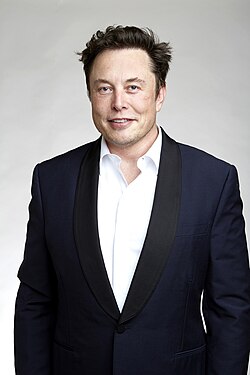
It did not hurt Musk to spend this money. Without serious campaign finance reform, he will keep doing it. Do we want anyone—left, right, or middle—to be able to do this? I don’t.
Second, many people are surprised Donald Trump accepted the results without a fight. They expected some sort of 2020 repeat scenario, dragging on in the courts for months.
This point of view doesn’t understand the way Trump’s narcissistic mind works. There is no reason for him to fight the results, because he didn’t lose. He couldn’t lose. Look at his official statement immediately after the election: “I wasn’t on the ballot and if I was, we would have won IN A LANDSLIDE.”
What about his statements before the election, asking voters to pretend he was on the ballot? What else could he say? He doesn’t have it in him to say a lot of glowing things endorsing other candidates (with the exception of people’s physical appearance, i.e. Jon Husted’s backside). Lacking the ability to talk about others in a meaningful way, he returned to his favorite subject: himself. The only way the election could work was if it was about him. When that didn’t work—well, narcissists don’t suffer defeats. Bad candidates lost. Pay attention to his comments: he said that he felt the love in his rallies leading up to the election. Sadly, that didn’t translate into votes because he wasn’t on the ballot.
The midterms did not chasten him. He cannot be chastened. Again, just listen to him: We’re doing so good as a country, nobody’s ever seen anything like it. We’re the hottest country in the world. The country has never been better. Look at the Reflecting Pool . . . and those beams in the ballroom. Nobody’s ever seen anything like it.
His comments about the midterms are at best contradictory and at worst delusional. Such is the mind of a narcissist.
Third, as has often been the case, religion was front and center in this election in ways that made me uncomfortable. Exhibit A was in Texas, where Presbyterian seminarian James Talarico and his opponent Ken Paxton both talked a lot about Jesus. If you were, say, a space alien, you would be forgiven for concluding they must have been talking about two different Jesuses because Talarico’s Jesus and Paxton’s Jesus don’t have much in common.
Why should it matter for the United States Senate that someone believes God is both masculine and feminine? I happen to believe that, since God is a spirit. But it never would dawn on me to demand to know if anyone I’ve ever voted for, for any political office, thought that. It would matter if someone was a candidate to become my pastor, but not my Senator. Call me hopelessly uncomprehending, but I just don’t understand the weird ways religion is part of American politics.
I had a front row seat for exhibit B, because it took place in the Senate race in Michigan between Abdul El-Sayed and Mike Rogers. Abdul El-Sayed wanted Medicare for all. Mike Rogers wanted everyone to know El-Sayed is Muslim.
The demonization of Islam in the Michigan Senate race was sickening. I received mail almost every day in October claiming horrible things about El-Sayed, and I endured countless television ads and text messages. To be fair to Mike Rogers, most of things did not come from his campaign, they came from Political Action Committees financed by Elon Musk and others. (See my first point.)
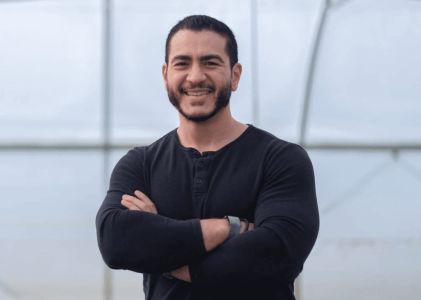
But Rogers is complicit. He could have campaigned on politics—El-Sayed is very progressive and further to the left than the majority of Michigan voters. The Democratic powers-that-be in the state, led by Governor Gretchen Whitmer, were not alongside him at rallies. He was joined instead by Bernie Sanders and Alexandria Ocasio-Cortez. There was a political fissure inside the Democratic party, ripe to be exploited. But the Republican strategy ignored that and focused instead on religion.
This came from the top. Both Donald Trump and J.D. Vance were in the state, calling El-Sayed a terrorist, jihadist lunatic, and national security risk. Trump referred to El-Sayed as “Mohammed,” claimed he would institute Sharia law until we didn’t have Christmas, and that El-Sayed would be required to go through a metal detector to enter the U.S. Senate. Vance called him a “weasel” who should “shut his mouth and show a little gratitude to the country that gave him everything,” and warned that he would lead left-wing rioters to burn down Detroit.
Yeah, but what do you guys think about Medicare for all?
I’m more of a Whitmer-centrist, but the ridiculous rhetoric left me rooting for the guy. El-Sayed is very smart and quick on his feet. If you haven’t seen his exchange with Tommy, who showed up at a rally to ask about the Muslim brotherhood, please watch it. El-Sayed defines freedom of religion in language I wish candidates in both parties would master. By the way, do I need to add that Tommy was not just a curious Michigan voter but a political operative from out of state paid to antagonize El-Sayad? That strategy backfired.
A week or so before the election, we had a presentation at my church from a group of folks who had visited the Al-Amana Centre in Oman a few months earlier. (I’m not sure they could go today, because Oman shares the Strait of Hormuz with Iran.) The Reformed Church in America has done mission work in Oman for over a century and the Al-Amana Centre is part of that work. The RCA has a special position in Oman because it’s missionaries were there building hospitals and schools long before oil was discovered in the Middle East.
The focus of the presentation was on the good work being done by RCA folks in Oman. (The RCA has a very similar story to tell in Bahrain, another Muslim country.) Even though I walked away knowing a lot more about this particular ministry than when the session started, mostly I found myself thinking afterwards about an off-hand comment one of the presenters made. She talked about some Muslim parents who had the opportunity to send their children on a trip to the United States. The parents were very hesitant to allow their children to go, fearing violence. Gee, I wonder how they could get that idea?
I wish every person making extreme claims about El-Sayed or any follower of Islam would have the opportunity to listen in a thoughtful way to those parents.
The midterms have come and gone. Are better days ahead? Trump’s initial posturing has been combative, and for all their gains, the Democrats are not in a position to govern. They control one of the three branches of the American government. Maybe the only gain is a restoration of some sort of checks and balances, which promises not much more than two years of gridlock. My cynical self is left praying the same prayer I often pray, “Even so, come Lord Jesus.”
6 Responses
By contrast, in Ezra Klein’s NY Times podcast interviewing Michelle Goldberg, a self-described “secular Jew,” she responded to Talarico’s strongly Christian acceptance speech as kind of thrilling, and Ezra Klein agreed. Beyond that, maybe what can save us from our natural Calvinist cynicism is all the unnoticed hard work on the ground by countless anonymous volunteers who made this victory possible, not to mention the thousands of poll workers who voluntarily protected the election.
Thank you Daniel Meeter. I was one of those anonymous people sending out other hardworking anonymous people to canvass for the Democrats. We stressed the differences in policy items not in slamming the other side. We stressed Kitchen table issues.
I appreciated this blog, Jeff, and particularly the “shout out” you gave to the presentation about Oman and Al Amana Centre at TRC. I hope that you will have the opportunity to visit Oman and witness the good, important, and necessary work the AAC continues to do.
I understand the desire to separate church and state. But I also really care that the world knows that a lot of Democrats are Christian, not for the Democratic party, but so the world knows that Christ cares about things like systemic racism and ending poverty and providing HIV medication for kids in East Africa. I am so very relieved and glad at the number of ordained folks that were elected last week, including a hospice chaplain, that I hope the we – all of us – can start to talk more about ways that Democratic values align with Christianity.
The results were astonishing; whether they represent a sea change or an isolated big wave is uncertain. Fascinating fact: the new Congress will have 13 members who are ordained members of the clergy. Four will be Republican. Nine will be Democrats. Depressing fact: 82% of white Evangelical Christians voted for Trump in 2024. In the midterms, according to one exit-poll tally, that percentage was (don’t hold your breath) 82%. Fun non-fact: Musk was quoted as saying, “Inflation is really out of hand — you can’t even buy a Senator these days for $250 million.” (OK, my source on that was Andy Borowitz, whose devotion to the truth is perhaps no stronger than the President’s.)
Regarding the exchange between el-Sayed and Tommy: Not only did el-Sayed clearly renounce any intent to use government to impose his religious beliefs on others, but he challenged Tommy to make the same pledge. It turns out that Tommy was not only a Republican plant but is closely connected to important Christian Nationalists like Sean Feucht. Tommy was honest enough to admit that he could not make that pledge. Every accusation is a confession!