
I occasionally have a nightmare wherein something terrible is happening to me and I try to scream but I can’t make any noise. Most people have probably had some version of this dream and know that terrifying helplessness.
The people of the Pacific Islands have been living this nightmare for years. They are living it here in Antalya, Turkey at COP31, and there is no sign that they will be able to wake from it ever. I ask you, for their sake, to struggle through all the jargon and numbers in the next few paragraphs. I will get to their stories by the end.
COP stands for Conference of the Parties. It is the UN Climate Summit that has now been happening for 31 years, hence COP31. The parties are the countries of the world who have signed on to the Paris agreement, and so have pledged to work to keep global warming below 1.5° C. The only countries that are not represented in the Paris Agreement are Yemen, Iran, Libya, and the United States.
The number of 1.5 is relatively arbitrary. Every fraction of a degree of warming means human lives and whole species lost, and the damage gets exponentially worse with every further fraction of a degree that it increases. So while a shift from .5 to .6 is bad, a shift from .6 to .7 is much worse. Of course, a shift from 1.5 to 1.6 is catastrophically worse still. Moreover, it takes time to make the necessary changes, so Paris was an attempt to set a realistic goal that countries could achieve by transitioning away from fossil fuels and toward clean energy.
Just before this COP, the UN released a report saying that the goal of 1.5 is no longer possible. It’s not because we lacked the technology or the know-how. We have failed at 1.5 because the countries, particularly the wealthy countries who are most responsible for this crisis, didn’t keep their promises.
The new plan is to pass right by 1.5 and then hopefully bring the global temperature back down after that. There really isn’t another option. However, much of the damage caused by the increased in temperature will not be able to be repaired. You can’t bring back dead people or dead species. You can’t refreeze the glaciers. We can’t bring the sea levels back down.
The UN’s Emissions Gap Report, also released this month, says that if all the promises that have currently been made as a part of the Paris agreement are met, we will be able to limit warming to 2.6°C. But thus far those promises have not been consistently kept. The promises need to become actual policy and practice. The Gap Report said, “If current policies continue, warming could reach 2.8°C within this century and increase thereafter.”
For a little perspective, here is a graph that has been living in my mind for a few years.
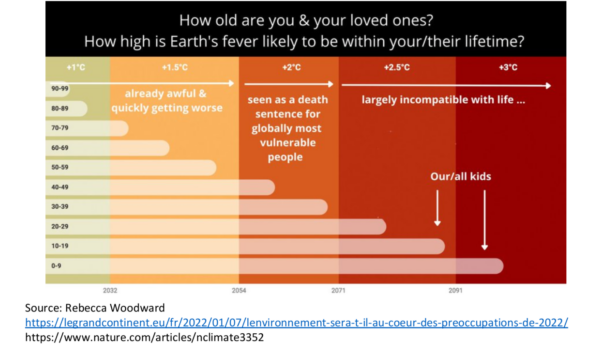
This is a hard reality. But I think we have all known that this reality exists. We have been hearing about it for thirty years and even in Grand Rapids, a “climate haven” we’re feeling the effects. The smoke from wildfires, the intense storms, the heavier rain coupled with seasons of drought. People in developing countries have been living with these realities for quite some time.
This week as I participate in COP, I have had the opportunity to hear from those most affected, those who have been coming to COP year after year to cry out for help and whose cries have been met by shrugs, false promises, and green washing. I cannot tell you the grief that has been stirred in me hearing their plight, and the anger and sheer incomprehension that the world could disregard them year after year. Of course, I mostly disregarded them until I met them face to face.
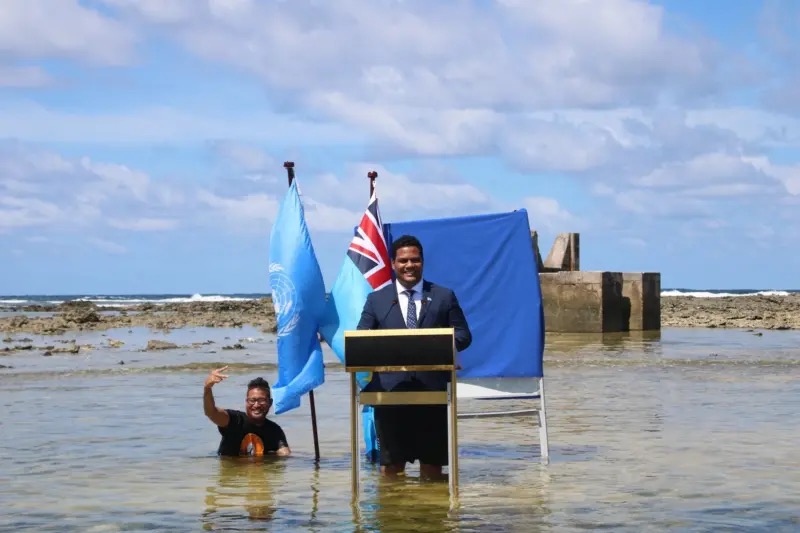
Yesterday, I attended a session called, “There’s No Place like Home: What Happens if your Home Can No Longer Sustain Safe and Dignified Life Under Growing Climate Impacts?” The Prime Minister of Tuvalu, The Honorable Feleti Penitala Teo, talked about how Tuvalu is working to keep their people in their homeland, but that they are also helping them relocate. The entire country of Tuvalu is likely to be underwater in decades rather than centuries, which is why Tuvalu’s Foreign Minister gave his COP26 speech knee deep in water.
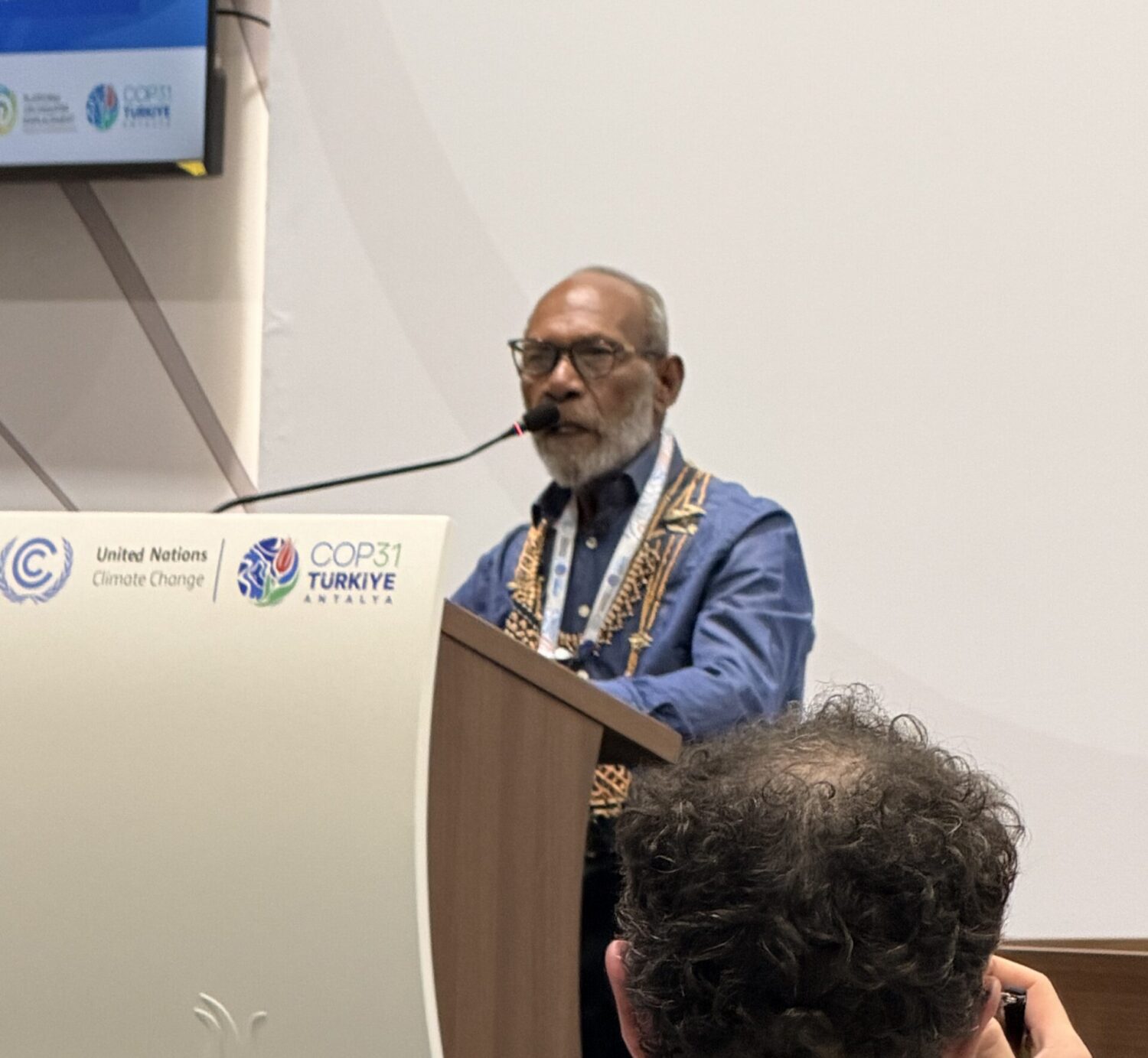
Francis Siaumari, from the Solomon Islands, told us how his island is already gone. He held up his passport and said, “The place written in my passport no longer exists.” If you are tempted to say, “Well, those people should just move,” maybe you are right, but where to? Mr. Siaumari moved to another island in his country and it now is facing different climate challenges. And of course, the safer countries haven’t been exactly welcoming to refugees in recent years. Besides, if these voices are not heeded, eventually there will be no safe places left.
Coming from Ugandan refugee settlement full of people from around the globe, Ayoo Irene Hellen spoke up saying, “I have seen people making decisions between safety and hunger: young girls, younger than ten, being forced into marriage so that they will be fed, and women having to sell their bodies to be able to eat. This is what climate change looks like in our context!”
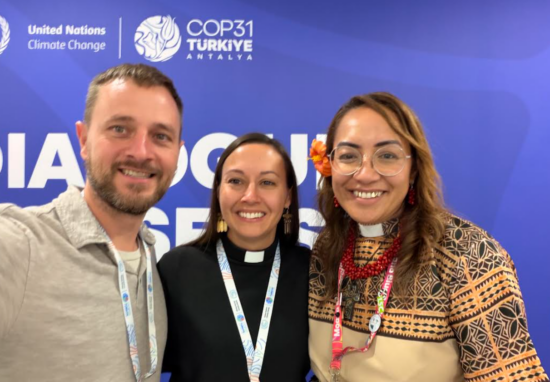
I had the honor yesterday of being part of an interview with the Reverend Charissa Suli, the head of the Uniting Church in Australia. She has Tongan heritage and came to COP31 to be a pastor to the delegates from the Pacific Islands. I asked her if she was angry and she said yes, but then quickly pointed to the delegates who are in the COP negotiations. They have been doing this work for 31 years now, crying out to be heard by those responsible for their plight, by those with the power to change it, but they, like my silent-screaming nightmare, have not been heard and so have found no rescue. She told us of a young man who came to COP for his first time this year but after three days told her that he wanted to go home. It is exhausting work to continue to speak into the void and so Rev. Suli offers care, support, and her prayers.
Rev. Suli carried a water bottle bearing the phrase “Tuakoi ‘lei,” which means “good neighbor.” It was a reference to the TuaKoi ‘lei Declaration from the Uniting Church:
God has called creation out of the chaos of ocean covered earth, yet the actions of fossil fueled greed, selfishness and apathy, manifested as extractive industries and economic globalization are driving us back to chaos as we experience the ocean rising to reclaim the earth, our common home.
We call the world to embody neighborly love, compassion and hope, which are needed more than ever to turn the tide for climate and ecological justice.
She asked us, “What does it mean when your neighbors are across the world?”
This morning, the group I am travelling with, the Christian Climate Observers Program or CCOP, held devotions together. One of the co-directors, Lowell Bliss, brought us to Jesus in the garden of Gethsemane as he faced his own collapse. In his anguish, Jesus invited his disciples to pray with him but, as we know, they fell asleep more than once. What I hadn’t noticed about the text is that they fell asleep because they were “exhausted from grief” (Luke 22:45). That is how I feel, exhausted from grief. The temptation is to close my eyes to all this pain, but I believe Jesus asks me to stay awake.
I invite you to pray with me and with Rev. Suli for the delegates from the Pacific Islands and from all the vulnerable places of the earth. Pray for strength, for comfort, for success in their negotiations. Pray too for the delegates and lobbyists who would ignore their pleas. Pray that their hearts would be turned, that their compassion would be roused, that whatever other agendas they may bring to COP would fall away as they are moved by love.
Beyond that, Rev. Suli didn’t linger on her grief or anger, but said that she always tries to crystalize her pain into action. I asked her what that looks like and she told us about a Pacific Islander singing group called This Is Our Home. “They channeled their anger into song.” Not just any song, of course, but music that draws the attention of outsiders and teaches them about what is being lost, but with imagination and even joy.
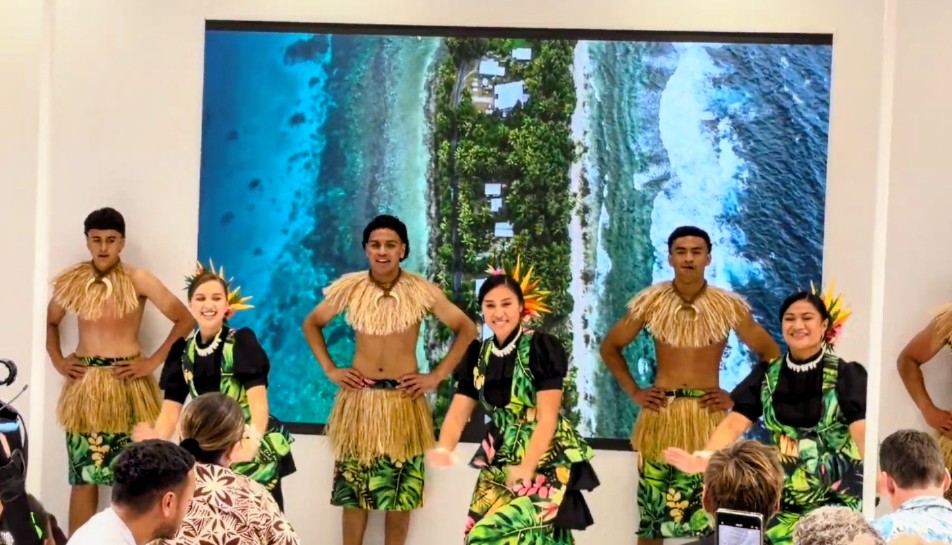
I didn’t get to see them sing, but I did see the Matavi Pacific Cultural Arts as they danced. It brought me to tears. While I don’t want to romanticize them, I do think the Pacific Islanders have plenty to teach us about resistance.

One Response
Thank you for your presence there, your witness, and your leadership in prayer.