Having recently moved to a new state, my husband and I woke up on a Sunday morning and I thought about how we hadn’t seen our daughter and son-in-law and their young family that weekend. I suggested calling them to go out for breakfast, the best of time of day for a restaurant meal with toddlers. It would mean missing church, which was an easy decision for both of us.
I felt the sorrow of how easy that decision was, and said so. My husband acknowledged how long it had been since we felt connected to a congregation. We had moved, but we weren’t the only ones moving. My ordination as a minister of Word and Sacrament in the Reformed Church in America happened at the same time that many congregations in the denomination decided to draw hard, un-crossable lines in the sand. Several churches left the denomination, and as a brand-new pastor who had joyfully committed to the RCA, the departures hurt and disappointed me.
I don’t want this particular piece to focus on the reasons churches left. Instead, I want to address how it feels for those of us caught in the middle of these moves. It hurts that so many are not willing to live alongside people with whom they do not agree on everything. Instead, we build high, impenetrable walls, which force some people out while others are safely in.
Seeking the right location for my ministry as a chaplain and hospice bereavement coordinator has left us on a church-seeking journey, looking for a gathering of people willing to listen and maybe even learn, rather than condemn. We are looking for a congregation focused on community.

However, before we even search for lofty goals like community, we want a church that simply makes us feel welcome. We attended two churches where we entered the building, participated in the entire worship service, and left without anyone speaking to us beyond saying hello. We went in excited to visit both churches, eager to talk to people, and willing to linger. At one church, an announcement was made that there would be strawberry shortcake following worship, but no one directed us to the place where it was being served. At the other church, the members were all wearing nametags. I imagined that our lack of nametags might have alerted folks that we were visiting, but no one felt compelled to discover what our names were.
Walking into a new church is an unsettling experience, with every face a stranger and everything unknown. And we’ve got a head start—my husband and I have been Christians our entire lives and have been in church leadership. If it’s hard for us to walk into a church where we don’t know anybody and don’t know the church’s culture, imagine what it feels like for those who have lived outside the church.
My husband and I should be low-hanging fruit. We’re pretty easy to get to know—we smile and make eye contact. We say our names first and even tell you we moved to your area a few months ago. We’ll ask softball questions about your church that will be easy for you to answer. So, if you can’t even welcome us, how are you going to welcome a seeker, someone new to church and seeking a relationship with Christ? Someone coming because something feels missing in their life, but they are not sure what to call it. Someone who hasn’t come to church for a long time, or ever. Visitors take really courageous first steps by walking through the doors of your church. Remember this too—while my husband and I take an occasional Sunday off from visiting churches, we are going to keep at it. You’re going to get one chance with a seeker.
Be aware that if a visitor has made it to your doors on a Sunday morning, there’s a really good chance they have already researched your church pretty thoroughly. For example, I pored over Facebook pages and church websites, looking at the pictures that were chosen to capture congregational life, reviewing staff biographies, and reading over statements of belief. When a visitor appears, your church has passed the research stage, and how you have defined yourself was appealing, even inviting.
What happens next is up to you. At one of the churches where no one spoke to us, the service opened with a song that included the refrain, “All are welcome. All are welcome. All are welcome in this place.” Every church, every church member, would agree with this: all are welcome. But what does that mean? How do you show it? Do you truly believe that a smile and quick hello is enough of a welcome when someone builds up their courage to enter a strange building on a Sunday morning?
A smile is where welcoming begins, but not where it ends. I spoke to a woman recently who said she had attended a church for three years. During that time, she invited people over to her home, joined several groups the church offered, and yet never made any friends. We had a similar experience—we belonged to a church for seven years and during that time saw the inside of just one couple’s home for a meal. During those seven years, we often felt like we were on the outside looking in. Most Sundays, we would walk out of church passing groups gathered to talk. Some were family groups, others longtime friends. Nobody called or gestured to us as we kept walking to the parking lot.
The Greek word ekklesia means “gathered to be called out.” It contrasts with another Greek word, kuriakon, which is etymologically where we get the word “church.” Kuriakon, which originally meant “the Lord’s house,” came to represent a physical space, while ekklesia signified a group of people. There is activity implied in ekklesia—those gathered to worship God were to go back out, living for Christ, living like Christ, sharing Christ’s love, and inviting others in. But if we can’t even welcome the stranger who enters the walls of our kuriakon, how are we going to be the ekklesia, those gathered to be called out?
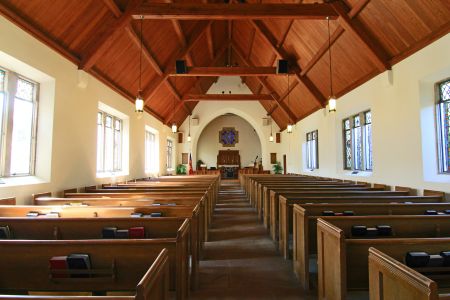
A starting place for churches that truly want to welcome visitors is to encourage church members to visit a church where they don’t know anyone. Experience the strangeness of a new place, where you encounter faces you don’t know. Feel the anxiety of finding the sanctuary, finding a church bulletin, and finding a place to sit. Feel the anxiety when it’s time to greet one another and wonder if anyone will make you feel welcome.
Second, host a workshop where you practice welcoming visitors. Role play a variety of scenarios like how to welcome someone who is alone, a young family, an older couple, a parent and a child or two, some college students, a senior citizen, someone with a disability. Brainstorm the questions people may have and practice conversations. Explore the places where you get stuck in a conversation with someone you don’t know. Practice away the awkwardness of talking to someone new and gain some comfort so that you can intentionally welcome your visitors.
Third, and most importantly, make welcoming strangers a priority at your church. Too often we hope that programs will provide the welcoming without doing the work of simply standing with a new person and making room for them in your life. Instead of hiding behind a table, running a game, or handing out candy, spend meaningful time with someone you don’t know and learn more about her or him. People need to be seen and heard in order to become known and loved.
Ekklesia, being gathered to go out, is another way to say discipleship, a concept that often gets buried under the rubble of programming.
In my work as a hospice chaplain, I do a lot of driving. As I drive through cities and towns and villages, I notice there are often churches on every street corner. In fact, some corners feature two or three churches. The vast majority of those churches are at least half-empty on Sunday morning. Some are significantly more than half-empty. Folks inside the church claim churches are empty for a number of reasons: people are making other activities a priority over Sunday worship, they are no longer interested in a relationship with Christ, they have lost their faith.
But what about my husband and me, who increasingly find it easy to miss Sunday worship? We value how worship shapes our week. We have a personal relationship with Jesus, and continue to seek ways to grow in our faith. We don’t miss Sunday worship because of a lack of interest in what’s going on there. But we’ve found it easier and easier to miss because no one seems to care or notice when we do attend. We miss because of the high fences churches have built. We miss because our hearts are broken by churches leaving denominations to separate themselves from their own family.
What if churches are empty because visitors are ignored and are allowed to walk back out without one word of welcome? What if churches are empty because those remaining inside are unwilling to do the hard work of developing relationships with people they don’t know?