
My fishing-guide kinsman is fond of repeating his grandmother’s wisdom in his Facebook posts, “Es ist genug”—translation: “it is enough.” Its more counter-cultural than anything you might encounter in the baseline North American church.

I’ve been pondering Rodney Haveman’s RJ Blog post of last Sunday, (September 28) wherein he posits two opposing paradigms for applied science, the wizard and the prophet. He then briefly describes how the differing paradigms address the climate crisis. The wizard paradigm would say that technological innovation is the path forward. The prophet would say that cutting back (presumably on carbon emissions) is the way.
My read of the state of play is that this is an artificial dichotomy (perhaps deliberately so, to make a point – I didn’t read the book Rodney cited). The ongoing Intergovernmental Panel on Climate Change’s (IPCC, www.ipcc.ch/) body of reports is authoritative here. The IPCC’s process, essentially layers and layers of peer review by international experts is the most robust attempt to identify scientific consensus and state the uncertainties ever attempted. Nothing, not even human medicine, as important as it is, comes close. My read of the IPCC is that collectively, science and scientists would point to the extreme urgency of the crisis and obviously and enthusiastically embrace both innovation and cutting back (illustrated in figure SPM.7 in the 2023 Summary for Policy Makers, www.ipcc.ch/report/ar6/syr/downloads/report/IPCC_AR6_SYR_SPM.pdf).
The fact of climate change, its human-sourced drivers, and its effects are “unequivocal,” a word that the summary report uses over and over again. Climate Scientists and science communicators often say some version of “Its real, its bad, and its us.” That captures it.
But the IPCC consensus about how to address the climate crisis, at least according to one scientist, has a wizard (innovator) bias at the expense of strategically “cutting back.” In a new paper, Jean-Baptiste Fressoz (2025) argues that:
This emphasis on technological solutions can be attributed to structural features of the scientific field—its institutional organization, reward systems, and underlying values [2]. The first and most potent reason for climate technophilia, is that universities, research institutes, and R&D departments, almost by design, prioritize novelty, “innovation.” They operate—or aspire to operate—at the technological frontier. As a result, technological innovations receive disproportionate attention in the scientific literature compared to their economic relevance or proven effectiveness in reducing emissions [3].
The paper is a deep dive on the structural issues about how professional research seems to favor technological solutions over behavioral (spiritual??) changes that may emerge as imperatives. And when I interrogate my own biases as a university scientist of nearly three decades, I see familiarities and agreements. A key example in Fressoz’ (2025) argument was the excitement about and investment in carbon capture and storage through direct air capture, an emerging technology to pull CO2 from the air itself and then to store it or use it in ways that prevent it from contributing to heat retention in the atmosphere. It’s an important technology that governments appeal to in their pledges/plans to meet future goals of net-zero emissions.
Direct air capture, however, appears over-sold. As the Financial Times reported (2025), a top developer of the technology is signaling that “its costs are falling much slower than anticipated, casting doubts on the nascent technique’s role in tackling climate change.” In short, the technology itself is very energy intensive, much more expensive than anticipated, and doesn’t look scalable to the magnitude of the need:
- Climeworks — which is cutting 100, or 20 per cent, of its staff — and its peers have been hit by rising costs while US President Donald Trump’s hostility to climate initiatives has put government funding at risk. The policy uncertainty has also raised questions about the viability of carbon offset markets crucial to funding and scaling up projects.
- Analysis by Bloomberg NEF has shown that costs for the industry as a whole are even higher, with the average cost of capture currently $900 per tonne and likely to reach $487 per tonne at the end of the decade.
- The International Energy Agency estimates that as much as 1.2bn tonnes of annual carbon dioxide extraction could be needed by 2050, compared with just about 100,000 tonnes of maximum output available today, which is split across 40 facilities worldwide.
That 100,000 ton capacity is 0.00008% of the projected need.
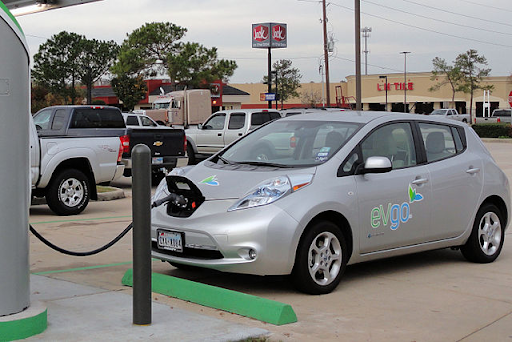
I am not against innovation. Indeed, key technological innovations are reducing my carbon footprint and where I had agency to make those choices (like the EV car we bought) that’s why we made the choice. However, a key realization from the broad history of “managing” earth’s systems (my discipline’s preferred language) to support human flourishing has been that both wizard approaches and cutting-back approaches risk unintended consequences. Notably, the climate crisis itself is an unintended consequence of making available the rich energy contained in fossil fuels.
Technophilia also creates a moral hazard. Appealing to an emerging technology as a clean-up mechanism available in the future is used as an argument to continue producing and using fossil fuels at a plainly unsustainable rates right now. It also supports lots of greenwashing propaganda from fossil fuel corporations who clearly understand our technophilia and use it to sell us their products.
Indeed, near as I can tell, unless economic activity is decoupled from greenhouse gas emissions, the improbable idea that industrial economies can grow indefinitely is predicated on exactly this fallacy – that some whiz-bang technology will emerge (and be profitable enough to persist!) to mitigate the violence being done to life on earth – not the least of it, our children right now.
Seems to me though, that the risks of unintended consequences and moral hazard are higher with the wizard paradigm than with the cutting-back paradigm for the simple reason that new technologies are, by definition unfamiliar and unexperienced in a way that, say, restoring carbon-sequestering ecosystems or reducing beef consumption are not.
So what then? Innovate with all gusto! But do the hard work of understanding the risks by funding the science that studies such things. And get serious about cutting back and design economic systems that reward it, particularly if you are among the class of privileged humans with outsize climate footprints.
Returning to Rodney’s piece, he argues (I think) that we should emulate God’s use of “the left-handed power of love and sacrifice over the right-handed power of coercion” and that “Jesus calls us to the side of the dying ones, to the ones we usually think of last. He would find Jesus in creation, which is rupturing our systems.”
I confess, I don’ t understand what he means here and its almost suggested by context as a third alternative to the innovation/cutting-back dichotomy.
What is clear though, is that seeking justice should be the driving concern. Justice is a key concern of the IPCC mitigation strategies too.
Puts a new spin on the old Lutheran hymn.
Es ist genug.
Citations
Fessoz, J.-B. 2025. In tech we trust : A history of technophiia in the Intergovernmental Panel on Climate Change’s (IPCCP climate mitigation expertise. Energy Research and Social Science 127. doi.org/10.1016/j.erss.2025.104280
Millard, R. and K. Shevory. 2025. Direct carbon capture falters as developers’ costs fail to budge. Financial Times. https://www.ft.com/content/fa4ce69b-e925-4324-a027-cdf86e66163f?sharetype=blocked
Photo Credits
Header Photo by Brandon Erlinger-Ford on Unsplash
Car Photo Credit: Nissan_LEAF_got_thirsty.jpg: evgonetwork (eVgo Network). Original image was trimmed and retouched (lighting and color tones) by User:Mariordo. Wikimedia Creative Commons. License: https://creativecommons.org/licenses/by/2.0/

8 Responses
A strong post, Tim–thank you. I agree that innovation vs. conservation is a false dichotomy in the climate crisis. They can and do work hand-in-hand toward decarbonizing. Collective action (through policy and social pressure) still seems the big lever that we need, and that our current politics can’t muster. Collective action vs “personal environmentalism” still seems to me the dichotomy that matters — environmentalism as a personal virtue is clearly a tool of the fossil fuel establishment.
And Rodney, I appreciated your post too. I haven’t read Mann’s book, but his 2012 Orion essay “State of the Species” is magnificent and was formative for me. https://orionmagazine.org/article/state-of-the-species/
Thanks Jon. I agree with RE the need for more collective action.
Thank you Tim,
One of the consequences of trying to share a construct to begin/continue a conversation about a crucial “issue” from another angle is you’re left with little space to engage the construct through the lens of Capon. That was my shortfall.
However, that allowed you to put a whole lot of scientific meat on the bones of my article, so, first, thank you, and God is good.
Second, when I look through the lens of Capon to the many environmental issues we face, I think he’d start with, “Where is Jesus?” And I think he’d say with creation (dying one). With the creation starting point, we should stop our constant anthropocentric obsessions.
Third, what I think that means is something like what you suggested. We need to be both wizards and prophets. We need to innovate and cut back, because that’s what creation needs. So, the cutting begins by asking, “What does creation need most? What would it mean to stand on the side of the dying one?” Maybe that’s green renewable energy (the cheapest way to create energy now, but it still requires cobalt mining, so there are consequences), maybe geo-engineering the Sahara desert, maybe wave energy from the ocean will do the trick, maybe all of it and then some more. What’s interesting with these forms of energy (cutting back) is there’s less money involved for the businesses that will create them or continue to make the better. This is how standing with creation makes a difference. Money isn’t the first priority, creation (Jesus) is. This connects to the article about the unjust steward (which actually might be an interesting connection to our conundrum with climate change).
As for innovation, I think standing with creation is exactly what you said. Innovate with justice for creation in mind. Innovate to the best of our ability with care for creation in mind. It would be devastating to “block out the sun” to simulate the eruption of a volcano and find we can no longer see the sun for a decade or it has some other horrific effect on creation that we haven’t thought long and hard about. My concern or struggle with innovation is it will always be economically driven, and maybe that’s a realistic understanding of a system built on greed, but as a church, we need to call for this innovation to be creation centered. Save creation, and we will have a chance. Don’t save creation, most of us all die, and creation will heal.
That’s it, sort of. It’s too long already. We must innovate and cut back, and do so with left handed power. For me this means do not try to coerce creation to live in an imaginary human centered world. Rather, sacrifice and love (in our innovation and cutting back) with a creation centered vision. The economy doesn’t come first. Our drive to bend everything to our will doesn’t come first. I know, that’s just stupid, impossible, ridiculous. It would never work. Can I introduce to a man who died on a cross and then was resurrected to save the world (creation that includes us)? … stupid, impossible, ridiculous … The church should call the world to the side of creation with love and sacrifice as wizards (innovation) and prophets (cut back).
Can we do that? I don’t know. Do we need to? Capon would say yes, I think, just like we need Christ in the least, the little, the last, the lost, and the dying ones, we need the church there too, because that is who we are.
Rodney, I agree with much of what you said in your previous column and here, but I am a bit unhappy with your comment on solar geoengineering. The consequences of synthetically reducing solar radiation input are uncertain, but are less uncertain than allowing greenhouse gases concentrations to increase largely unchecked. Philosophically, this is an argument of the lesser evil, not of the do no harm. The argument of moral hazard applies if, and only if, there is some significant movement towards reducing greenhouse gas concentrations.
Tom,
I should be more clear. I’m 10000% in favor of solar in every way we can incorporate it. We have solar panels on the church I serve and the parsonage. I’m only buying or building a home that I can incorporate solar and heat pumps or geothermal as the utility basis. (only southern facing roofs allowed with no shading).
I’m currently working as a community organizer helping churches install solar. In my classis that’s about 12 of us, in my organizing work I’m hoping to help about 20 more, and then build from there.
So, I’m being defensive, but I need to say YES, SOLAR!
I just think we need to be clear that there is mining involved, and if I’m consistent with seeing Christ in creation, then we need to be really mindful about how we do that.
Thanks Rodney, your comment was helpful for my understanding and I appreciate your vision (second to the last paragraph).
Tim, I am a great admirer of your columns, including this one, and your gift of communication. Thanks for once again highlighting the issue of climate change. As a 50-year veteran of the climate science community, I would like to add, if I can, a little nuance to the columns by you and Rodney. Science is a very broadly used term these days which somewhat negates the prophet/wizard distinction. Physical and biological scientists are largely “prophets” (trying to understand problems) while applied scientists and engineers are largely “wizards” (trying to solve problems), although most of us reside somewhere in the middle of these distinctions, rather than at the poles. Social scientists are even more difficult to categorize, given the issues they study. Climate scientists began serious study of climate change in the late 1960’s and 1970’s, focusing on the “what if” questions of increasing greenhouse gas concentrations. This led to the warnings in the 1st IPCC report in 1990 of the need to reduce greenhouse gas emissions, immediately and significantly. It also led, unfortunately, to an campaign of organized anti-science propaganda by the fossil fuel industry (Oreskes and Conway, Merchants of Doubt) that continues to this current day and administration. The early 2000’s saw the real beginning of “wizard” discussions such as Pacala and Socolow, Stabilization Wedges (2004), who advocated for a broad spectrum approach to mitigation and adaptation. But, by 2006, Paul Crutzen, Nobel laureate, advocating for geoengineering studies, wrote In Climatic Change “Finally, I repeat: the very best would be if emissions of the greenhouse gases could be reduced so much that the stratospheric sulfur release experiment would not need to take place. Currently, this looks like a pious wish.” Scientists were beginning to despair of society’s ability to wean itself off fossil fuels, or even to try to do that.
The issue of funding pushing innovation over basic science raised in your column is real, but more recent (this century). Government funding for science research has experience a significant decline in real dollars since the 1990s, as has state funding for higher education. Industry funding for basic research, common in the last century, all but disappeared by the 1990s. The result has pushed faculty towards a heavier reliance on “innovation” for outside funding and, more dangerously in my opinion, towards revenue-generating solutions.
In short, I see the current situation as a result of failure by the political and business sectors to take climate change seriously and address the real issue of reducing emissions. Scientists and engineers shifted to looking at technological solutions because anything else was a “pious wish”.
Wow Tom. You nuance is really interesting and the history is informative. When ever I write about climate, I write knowing that you might be reading and I am additionally careful to get it right. I appreciate seeing you in the comments.
Sad to say, its a pitched battle against disinformation.