
Faith & Formation
This year, I’ve started adjunct-teaching a class at Palm Beach Atlantic University, here in West Palm Beach, called Christian Faith & Formation. PBA is a Christian liberal arts university that serves students from a wide variety of backgrounds, and this course serves as an orientation to “lower-c-catholic” Christian theology, spiritual practices, and vocational considerations.
On the Monday afternoon that began the semester, after the standard syllabus explanation, I offered my class what I called my “first day rant.” I’ve adapted it below here, for all of us who are students and for all of us who teach or serve students in one way or another…
Holy Ground
“Welcome to Christian Faith & Formation! I’m glad you’re here, and I’m excited for our next few months together. Now that we’ve gotten all the preliminary syllabus explanations and boilerplate warnings about plagiarism and AI use out of the way, I want to embark on our time together by offering you a couple of my shameless hopes for this class.
First, I hope this class is holy ground. I know this is a required course, and so here you are, like it or not. And I know that this is a 3pm class, and that academics call late-afternoon classes ‘the graveyard shift’ for a reason. Furthermore, this is inescapably a university class: there are academic requirements; you’ll have papers, reflections, assignments to complete; and I’ll grade you on your work.
But: I also hope this class isn’t only an academic exercise. John Calvin, one of the most prominent voices in my own branch of the Christian family tree, began his signature piece of theology by observing, ‘Nearly all the wisdom we possess, that is to say, true and sound wisdom, consists of two parts: the knowledge of God and of ourselves.’ In other words, if you want to experience a wise, flourishing, fully human life, and if you want to fully understand the holy mystery of your own life, you need to come to know God.
That’s what we’ll undertake together. We’re going to plumb some of the central Christian mysteries. We’ll wonder about what makes for a life of faith, hope, and love. We’ll think about and experiment with some of the formative practices that constitute a Christian life: worship, baptism, Holy Communion, prayer, dwelling in Scripture. We’ll consider some of the inescapable questions you’re beginning to encounter: calling and vocation, work and rest, singleness and marriage, wealth and poverty.
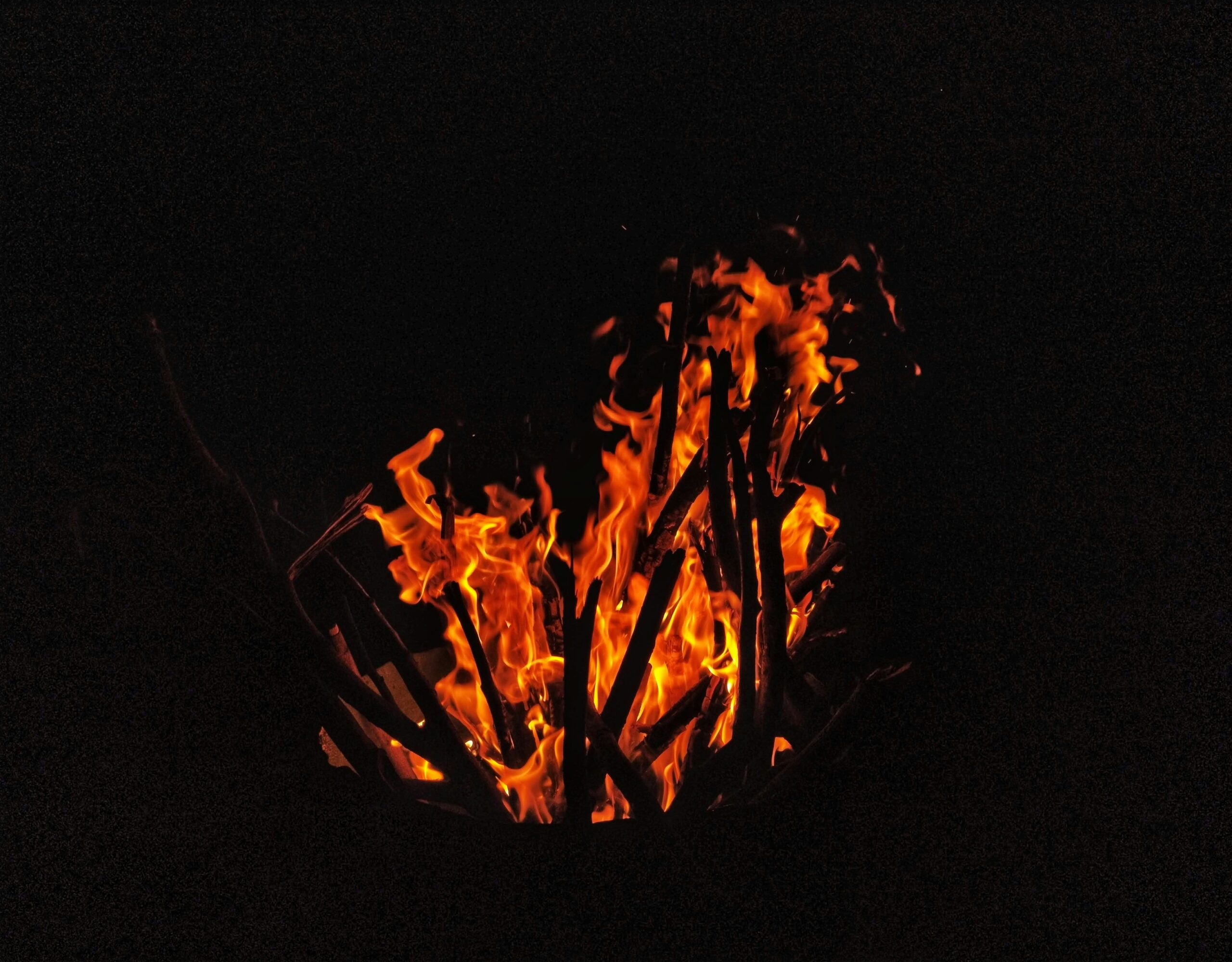
The Welsh poet R.S. Thomas, in ‘The Bright Field,’ alludes to the story of Moses, intrigued by the the blazing Glory in the wilderness:
‘Life is not hurrying
on to a receding future, nor hankering after
an imagined past. It is the turning
aside like Moses to the miracle
of the lit bush, to a brightness
that seemed as transitory as your youth
once, but is the eternity that awaits you.’
I hope that you do some ‘turning aside to the miracle’ here in Borbe 208 over the next few months.
Un-Pragmatic
My other aim for this class is for it to be as un-pragmatic as possible. Now, I do hope our lectures, readings, and discussions are useful. Helpful. Practical. But I am pushing against the utilitarian attitude that currently dominates our culture’s approach to education.
Don’t get me wrong: I do hope that your time here helps you find a career path and land a job. But in the older liberal arts tradition, the aim of university education (and all education) isn’t just to confer credentials, satisfy job requirements, or network you with internship opportunities that will gain you a foothold in your field. The point isn’t just to just impart skills, but to aid in helping you to become a certain kind of person.
The philosopher James K.A. Smith, in his Desiring the Kingdom, insists on this: ‘…education is not primarily a heady project concerned with providing information; rather, education is most fundamentally a matter formation, a tasking of shaping and creating a certain kind of people.’
So: let the formation begin. Over the next few months, we’re going to ask big questions and think think weighty thoughts. We’re going to read theology and poetry and novels, watch films, listen to music together. I’m going to introduce you to some friends in faith you may not be familiar with, like Augustine of Hippo and Basil of Caesarea, Julian of Norwich and Thomas Cranmer and Marilynne Robinson.
None of these folks are going to help you build a resume. But I unapologetically hope that these voices and their writings, and our hours together this fall do help you become the kind of person who sinks deep roots in faith, cultivates tireless hope, and grows into a life of love for God and neighbor.
Welcome to class.
Don’t forget that your first assignment is due next Monday.
Amen.”
Burning bush photo by arjun kumar on Unsplash

7 Responses
How refreshing:” But in the older liberal arts tradition, the aim of university education (and all education) isn’t just to confer credentials, satisfy job requirements, or network you with internship opportunities that will gain you a foothold in your field. The point isn’t just to just impart skills, but to aid in helping you to become a certain kind of person.”
I wish I could be in your class. At 78 no job is looming but I still want to continue becoming who God created me to be.
Jared,
Your “Day One Rant” felt more like a preamble than a rant. Your course description sounds like an invitation to a journey or pilgrimage with a community of students.
Came to say essentially the same thing!
Ditto.
Jared,
What a great introduction to your course! Thanks for sharing it.
Over my 35 years at Calvin I gave my own, similar version of it. It was satisfying when it worked. But there was often a young man in the back row, with his baseball cap turned backwards, looking down at his phone and not engaging me. By the end of the semester, I knew the class was a success if I could connect with him. Good luck.
Ron
Bless you Jared Ayers, miles and infirmity prevent me from taking your course, but I sure wish I could. Even when you were my student I knew my intellectual and spiritual superior was taking notes to learn from me. However I couldn’t wait for class discussion to begin so I could learn from you! Whenever you write or preach I immediately do what Augustine did with his teacher, Ambrose of Milan; “I guzzle your words with outstretched ears!” The Lord be with you brother and your beautiful family!
This is simply divine. It takes me back in time many years to my professor’s intro to World Religions class, which also greatly shaped the person I am today. The journey is often much more enlightening and fulfilling than the destination.