
Two weeks ago, I was out in California preaching about Hagar.
If you’re having a hard time placing her, don’t feel bad. Hagar is one of thousands of slaves referenced explicitly or implicitly throughout the Bible who go almost exclusively unnamed. They are far too small to warrant even a passing mention by narrators; too unimportant to have their names on the lips of much more central characters like prophets and priests and kings. They are little more than economic cogs in the social and cultural machine of the Ancient Near East. They are slaves—forgettable, faceless, nameless. Hagar is utterly forgettable.
Except, she isn’t.
While she is a card-carrying member of these invisible ranks, there is one crucial difference: Hagar is named and Hagar speaks.
There are 13 chapters in Genesis that tell the story of Abraham. By my count, those 13 chapters contain barely over a dozen named characters with speaking parts. It is no small thing to be both named and to have lines in the story of Father Abraham. And Hagar the slave–the woman, the foreigner–is one of them.
When we first meet Hagar in Genesis 16, we find her in a position familiar to those in her circumstances: powerlessness and subject to the whims of those in power over her. Sarah, Abraham’s wife, is barren and desperate for an heir, so she instructs Abraham to, “Go, sleep with my slave; perhaps I can build a family through her” (Genesis 16:2).
Even though this was a culturally accepted practice at this time, let’s not be under any delusions here. We’re clearly talking about rape. What else can it be called when someone in complete power over you decides for you that you will forcibly become pregnant?
When Hagar conceives, she begins to resent Sarah for the suffering she has put her through—and who could blame her? Yet Sarah’s response is not contrition, but anger. And Sarah responds to Hagar’s legitimate grievance with domination.
The NIV translation here says that Sarah “mistreated” Hagar. But the Hebrew word here (ʿannehā) is closer to “oppressed” or “afflicted.” Sarah did not merely chew Hagar out or give her the cold shoulder. Sarah afflicted Hagar—as if she had not already suffered affliction enough. (The Message is more accurate, offering Sarah “was abusive to Hagar.” The NRSV uses “dealt harshly.”)
Hagar’s suffering at Sarah’s hands becomes so unbearable that she flees into the wilderness fully expecting, we can assume, to die. And then something incredible happens.
God shows up. And God calls Hagar by name.
Sarah and Abraham talk about Hagar three times in the first half of the story, but each time refer to her as “slave-girl” and each time using the language of possession: she is “Sarah’s slave-girl.” God is the first one in the story who sees and names Hagar, as if to say, “Though others refuse to see you, Hagar, I see you. Though others refuse to acknowledge your humanity, though others oppress and abuse you, though for all the world you are invisible, I see you. And I will make a way for you.”
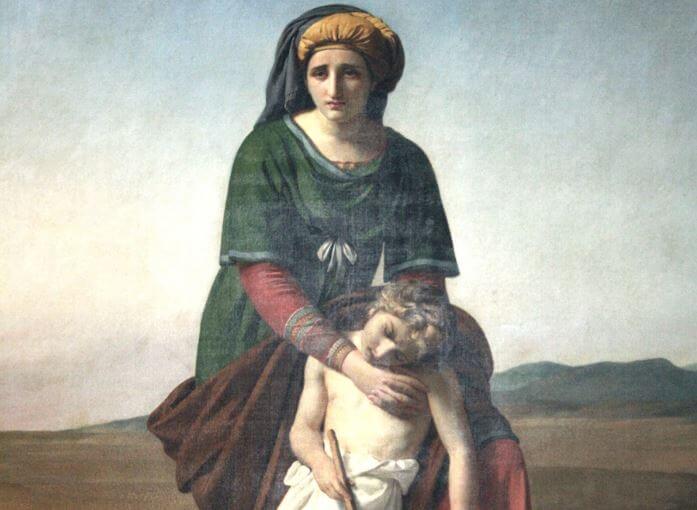
This act of divine seeing and naming happens to Hagar not once, but twice! Five chapters later, after Hagar has returned to Abraham and Sarah and given birth to Ishmael, she again finds herself in the wilderness. This time, she has been sent there by Abraham at Sarah’s command and is no longer alone, but has a child in tow. All her life with them they have treated her like trash, and now they are ready to finally throw her away.
And for a second time, God shows up and God calls Hagar by name. For the second time, the God of Abraham and of Sarah comes to Hagar—the slave, the woman, the foreigner, the disposable one. For the second time, God tells her, “I see you Hagar, and you are not disposable to me.”
Of course, none of this should surprise us. The God of salvation history is obsessed with liberation for the poor and freedom for the oppressed. Whether in the story of the Exodus, in the mouths of the prophets, in Jesus himself, or in countless other places, God shows us exactly who he is: he is the God of the disposable.
We live in a society that, like Abraham and Sarah, loves to throw people away. A society that refuses to use people’s names and instead obscures their humanity with labels like illegal, fetus, incarcerated, poor, disabled.
Political leaders who brand their opponents “domestic terrorists”.
Government agents who, obscuring their own identities with gaiters and sunglasses, violently erase members from their communities in the dead of night. Who zip tie children and leave them to shiver in the freezing cold. Whose justifications for their breathtaking cruelty sound like “criminals,” “gang members,” and “worst of the worst.”

This culture of disposability is all around us and tempts us to join in—to box people away into convenient categories of “us” and “them”; of “insider” and “outsider”; of “me” and “the other”.
Yet we see plainly in the story of Hagar that we serve a God who refuses to play the same games that we do with the humanity of others.
No, we serve a God who comes close to those that our society pushes to the margins. Who actively works for the liberation of all people. And who calls us to do the same.
We serve a God of the disposable, and we are called to be a people of and with the disposable. Or, in the words of Father Gregory Boyle, we are called to “situate ourselves right next to the disposable so that the day will come when we stop throwing people away.”
Header photo by OCG Saving The Ocean on Unsplash
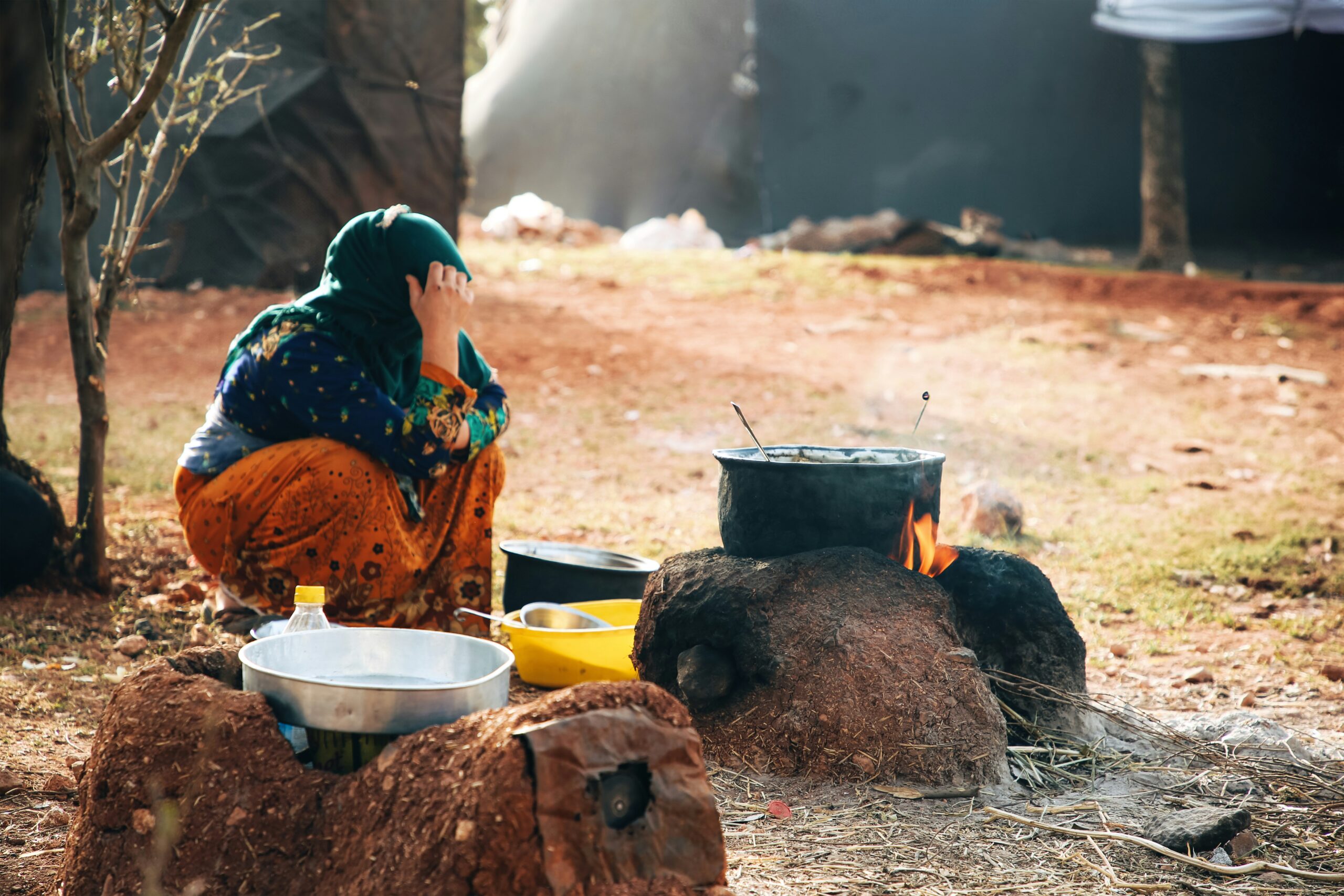
Refugee woman photo by Salah Darwish on Unsplash

11 Responses
The power of a name is important, and the most definitive naming here is not that Hagar has a name, but that she is the first character in the narrative to speak a name for God, El Roi- the God who sees me.
Kyle,
Thank you. I’ve heard sermons on Hagar before, but I never before saw so clearly her slave-like powerlessness.
Ditto for me, Carol.
Yes, Jill, thanks for mentioning this. The authority to name another is reserved for important personages. It is electrifying that the story of God’s people, as ordered in our Scripture, places a desolated and oppressed woman as the first person to claim authority to bestow God with an epithet. What a privilege and honor she grasps and receives, to name the One who continually sees and is seen by discarded humans.
Thanks for this essay, Kyle. The story of Hagar is so, so full of content for consideration. The “worst of the worst” is an increasingly used phrase, thanks for mentioning it. Who absorbs the curse and receives the violence of that phrase, and who gets to assign that curse and aim the violence? I noticed that the notorious podcaster C Kirk and his interviewee, a federal leader, gave that descriptor, “worst of the worst,” not only to various residents of Chicago, but also to Chicago’s mayor. This was the conversation conducted for listeners during Kirk’s final podcast interview. . . meant to influence to regard other humans as the “worst of the worst,” as disposable.
I noticed this morning when rereading the Hagar story and another couple of wilderness stories, that the Spirit drove Jesus into the wilderness shortly after his Beloved and Pleasing Son ceremony, just like Abraham (with God’s go-ahead) followed Sarah’s request to drive Ishmael and his mother into the wilderness right after the “favored-son-Isaac-is-weaned!” party. Is Jesus’s ministry not only to stand near discarded humans who get labelled as the worst of the worst, but to live as one of those discarded ones himself?
I wonder also if Sarah had Hagar work for her family as the wet nurse, so disposed of her right after the party because the family no longer relied on the specific forms of labor they extracted from her reproductive and nurturing body. Or maybe there was a more hopeful sense that Isaac was old enough to survive and thrive in his role to promote the promising future of this family, and the backup plan, Ishmael, was no longer needed.
I also am wondering if religious family groups are usually energized toward the drama of creating a scapegoat (ostracized, disposed, driven away with full blame put on their shoulders, but gets to live) and the other goat (showered with favor, held close, reined in for family inheritance and legacy goals, but doomed to become a sacrifice as the family office’s best effort at paying their vows and appeasing the gods). If that is the case, it could be that the cosmic role of the dice assigned Jesus to experience the benefits and the curses of both kinds of goat, in order to abolish the tradition of generating offspring in order to sort them out as either favored or rejected.
I appreciate both your and Kyle’s thoughts about this story. Yes, the scapegoat theme is strong and gets repeated a lot. Jesus’s crucifixion says to me, among other things, let’s deal with this perverse compulsion-lay it to rest- once and for all. But it got bent back into the scapegoat mechanism anyway, because we can’t seem to accept grace. We’d rather see someone punished and rejected. Thank God that love will have the last word.
Along the lines of your last paragraph, Barth once wrote about how Jesus was anointed for rejection (like Saul), and anointed for favor (like David).
“You won’t have a name when you ride the big airplane — all they will call you will be ‘deportee’.” So wrote Woody Guthrie, mourning the 28 farm workers and four others who perished in a “Plane Wreck at Los Gatos” (the song title) in 1948. Today it’s the agents of state-sanctioned terror who cover their faces and conceal their names as they send innocent families away to detention centers in the wilderness. To quote another classic protest song: how many times can a man turn his head and pretend that he just doesn’t hear? When will we ever learn? (Gendered terms are apt here, alas.)
The Hagar story is intriguing. No question it is in the Bible for good reason, perhaps even to correct a prevailing narrative of ancient (and current) history . It makes me think of three questions:
1. How does biblical inspiration really work? Is the author intent on establishing a doctrine or simply telling a larger story? To put it another way, does the Holy Spirit refrain from using the editorial pen when gender bias, sexual exploitation, racism, polygamy, or slavery are part of the story?
2. Does the prevailing narrative of the day, namely that there is a God-preferred race of people , a God-preferred gender (male), and a God-preferred status of slave/free indicate God’s design or intention for all times and places?
3. Can the Bible be properly applied without Jesus’ clarifying lens? Hagar and Ishmael are the victims here and Abraham/ Sarah the representatives of institutional and corporate sin. The church has not always been on the right side of “seeing” victims as God sees them.
And how did the story-teller ever know what he said and she said?
I like your take on this story — God sees the oppressed ones that most of society ignores. And like so much of Scripture, we are still left with other complexities in this story. It’s unclear what it means that Hagar looked with contempt on Sarai (Genesis 18:4): was it because she had been raped against her will and/or because she now has a higher status in the household (much like how the child-bearing Peninnah had a higher status than the childless Hannah and used it to mistreat Hannah in 1 Samuel 1)? We’re also left to ponder why the Lord told Hagar to return to Sarai and submit to her (18:8), and why God later tells Abraham to let Sarah decide Hagar’s fate (21:12). Why does the Lord allow this bullying? And then we see the blessing of God poured out even when Abraham commits sin by attempting to have a child through Hagar, for her offspring will also multiply (18:10; 21:10). Could we think of Ishmael as a spiritual (if not physical) ancestor of the Palestinians, and how does that speak to what’s going on in Gaza. Intriguing connections abound.
Sorry — I inadvertently pasted two songs together in my comment, one by Bob Dylan and one by Pete Seeger, two prophecy voices in the 60s