
Bonus! Fifth in a four-part series.
One of the main frustrations shared among those of us who study Calvin and later Calvinism is the persistence of the TULIP acronym to describe the essence of what it means to be Calvinist/Reformed. The acronym is most closely associated with the Synod of Dort, of course, but even there it’s out of order, at best, and misleading, at worst.
If just for today, then, I’d like to use TULIP not as a means to represent Calvin or Calvinism but as a way to raise points of theological wondering and even disagreement with Calvin.
The danger the TULIP acronym evidences is that of crafting a theological tradition, person, or synod into our own likeness. TULIP becomes our own characterization of the Reformed tradition or even of Calvin himself. Too often historical theology is trotted out as a trump card to conveniently prove one’s point or squash opposition.
If manipulating the voices of the past is one danger, the opposite danger is to blindly follow the tradition wherever it leads. Perhaps Protestants are less prone to such a danger given our suspicions of “tradition” than, say, Catholic Christians. But, after spending four weeks considering Calvin’s theology and, for the most part, suggesting ways in which his theology can serve us today, it’s worth reminding ourselves Calvin and his theology were far from perfect.
To that end, I offer up this TULIP, containing five points where I wonder about whether Calvin provides the most helpful ways forward for us.
T: Testy
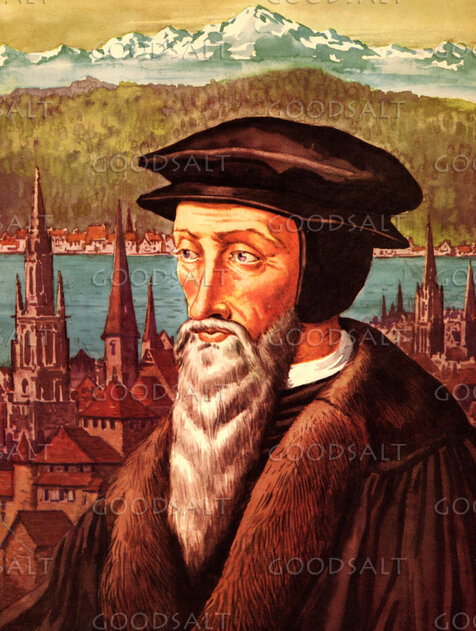
I once sat in a conference session where a leading scholar on the Genevan consistory records described how testy and stubborn Calvin was as a consistory member. A dedicated Reformed pastor who clearly respected (possibly adored?) Calvin reacted with stark opposition. It is an uncomfortable thing to have to face the reality that the man whose theology can be so thoughtful, remarkably biblical, and deeply pastoral could also be someone with such an abrasive personality.
One doesn’t have to read far in Calvin’s letters or, even more, the consistory records to see Calvin was quick-tempered, slow to apologize or admit his own wrongs, and arrogant. I have dedicated so much of my life seeking to reap the fruit from the seeds Calvin sowed. Still, I hope I and all of us who identify in some way as Calvinist/Reformed can craft a different disposition.
U: Unquestioned Assumptions
Perhaps this is the most unfair to Calvin of all my five points. As a historian, I am loathe to expect historical actors to act or think in ways unthinkable within their particular contexts. At a minimum, then, the “U” here is to remind us that Calvin was a person of his times, as we all are. Those times, however, could shape his theology in ways that are, arguably, unhelpful. For example, Calvin was unable to get beyond the early modern assumption that the civil government should promote the truth and piety of the Christian faith (see the third post in this series).
Similarly, while some scholars have argued Calvin was more open to women serving in church offices than we might assume, he largely fails to question the assumption that biblical texts about women’s roles translate immediately to contemporary contexts. In short, constructive Reformed theology has to deal with the realities of Calvin as situated in a particular time, place, and tradition. This then also means he may carry many unquestioned assumptions that Reformed Christians could, or even should, not share.
L: Logomachy
I confess I did not know “logomachy” was a word until ChatGPT suggested it as a synonym for “polemics” that started with the letter “L”. The word means a “battle of words” or an “argument over words or contentious debate.” Anyone who has ever read through the Institutes cannot miss the logomachy present in Calvin’s writing. Calvin’s ire is typically aimed at Catholics and Anabaptists, of course. Others, such as the Lutheran Osiander, can also find themselves exposed to Calvin’s wrath. To be fair, I find many of Calvin’s objections to Catholic or Anabaptist theology valid. But, I have at least two concerns: (1) Calvin’s tone and wording is needlessly combative and harsh and (2) Calvin is not doing his best to fully understand or articulate the argument of his opposition. Reformed Christians can, I hope, do better — even if we often don’t.

I: Images
Calvin’s response to Catholic use of icons and images is harsh. Much of his response is tied to the second commandment (rf. Institutes, II.8.17-21), though he also connects the prohibition to God’s nature and our knowledge of him (rf. Institutes, I.11). Given Calvin’s context, I’m sympathetic to his argument, but I wonder if his prohibitions and those subsequently found in Reformed traditions go beyond God’s Scriptural intentions. I have not covered the faces of Jesus in my kids’ storybook Bibles with stickers, even though Calvin would certainly disapprove.
P: Permissive Will
The most theologically dense of today’s TULIP (rf. Richard Muller’s work on Calvin and divine will), Calvin rejects any notion that within God’s will there is a distinction to be made between his “active” and “permissive” will. Calvin addresses the topic in Institutes I.18, and he clearly sees the dangers of denying God’s permissive will, namely that it makes God the author of sin. Calvin argues why that need not be the case. More pastorally, the notion of God’s permissive will also impacts how one sees God’s providence when bad, evil things happen. Howard Schaap explored that very topic in an earlier RJ article, and I do find much beauty in Calvin’s writing on providence. But, the idea that God permissively, not actively, wills evil hardships might provide more helpful ways forward for Reformed theologians, pastors, and Christians.
Calvin has shaped much of my thinking, teaching, research, church life, and personal faith. But, he was not without his flaws and missteps. Continuing to follow in his (and so many others from history) footsteps can help us fall in step with the Spirit as we become like Christ, but we may also need to step aside from time-to-time from Calvin or “Calvinism.”
May the Spirit, as promised, give us the wisdom as we seek that discernment.

3 Responses
Thanks for this piece, Kyle. Being honest about the limitations of our forebears fits well with the tenets of Calvinism. We know that anything and everything humans touch, including theology, will somehow miss the mark and is subject to hubris. Admitting that we will never be absolutely right about everything we believe is a good application of the Reformed faith, and it embraces a humility sorely needed in our world today.
Thanks for this Kyle, I remember being reprimanded for suggesting Augustine, as a product of his times, may not always agree with Scripture, now you suggest
Kyle, I grew up Roman Catholic and even though I left that practice to join the Reformed group of worshipers, I agree with you about Images. I grew up in a house with several statues of Mary but did not worship her. I went often to a Catholic church and a Catholic elementary school that had many large images of Mary, Joseph and other saints but I still did not worship them. I did see them as an artistic depiction of humans that had positive interactions with Jesus and looked on them in that manner. I was an ardent Catholic and a serious student in school so I don’t think I missed that “worship” part.