
Stewarding our most precious resource might be the vital first step to resistance.
I get weirded out when prominent pundits start sounding like some of my favorite spiritual writers. That seems to be happening around the theme of attention in our distracted-digital-fragmented age.
“Attentiveness is the root of all prayer,” says the poet Mary Oliver. “Listen to your life. See it for the fathomless mystery that it is,” says Frederick Buechner. “We are here on the planet only once, and might as well get a feel for the place,” says Annie Dillard, in a dispatch from the Ecuadorian jungle — her roundabout way of saying pay attention to this world.
From journalists and cultural commentators comes a slew of books on a similar theme: The Attention Merchants: The Epic Scramble to Get Inside Our Heads by Tim Wu. Stolen Focus: Why You Can’t Pay Attention — and How to Think Deeply Again by Johann Hari. How to Do Nothing: Resisting the Attention Economy by Jenny Odell. The Anxious Generation: How the Great Rewiring of Childhood Is Causing an Epidemic of Mental Illness, by Jonathan Haidt. And, most recently, The Sirens’ Call: How Attention Became the World’s Most Endangered Resource, from journalist and MSNBC host Chris Hayes.

I’ve been reading and re-reading The Sirens’ Call over the last few weeks. It’s the most compelling account I’ve found of how we arrived at our current attentional regime and why it feels so unsettling.
Hayes’s contention is that our most valuable personal resource — our attention — is also the currency that the digital economy most wants to extract from us. “Unlike land, coal, or capital, which exist outside of us, the chief resource of this age is embedded in our psyches,” he writes. “Extracting it requires cracking into our minds.”
If industrial fracking sends pressurized liquid underground to loosen and harvest fossil fuels, “attentional fracking” does the same thing to our minds. Every algorithm trying to keep you on an app just a little longer, every hidden tracker following you from website to website, every personalized ad is part of the tech industry’s constant attempt to frack your attention and find points of vulnerability. No wonder it feels so invasive.
Hayes draws distinctions between voluntary attention, involuntary attention, and a crucial third category, social attention. Since holding voluntary attention is difficult, most attention merchants instead seek to grab our attention over and over through novelty, humor, noise, shock, titillation, whatever works. That’s been true since the dawn of mass media, from penny presses to radio serials to pulp fiction to the AI slop currently clogging your Facebook feed. (“The feed,” the dominant metaphor for social media, indicates just how much those platforms are modeled after slot machines, says Hayes.)
It’s the third category, social attention, that we’re most attuned to respond to, and that attention merchants exploit most effectively. We need and crave attention, from our first moments as infants crying for milk, to the loneliness that surgeon general Vivek Murthy declared a national epidemic in 2023. Yet social attention is not inherently reciprocal – we can pay attention to someone who does not even know we exist. We are both stuffed and starved for social attention, says Hayes. “Stuffed” because we can all be celebrities for a day with the right viral content, “starved” because this form of attention is such a thin substitute for actual companionship.
“Attention is so minimal and mere, so much less than what a human soul needs and craves – love and recognition,” writes Hayes.
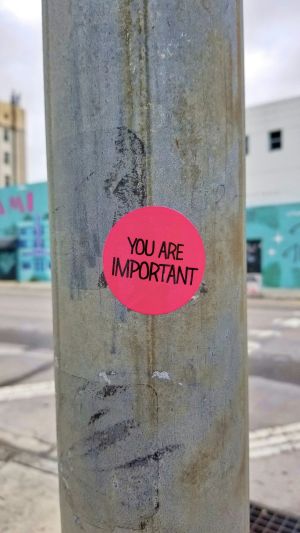
That word “recognition” does heavy lifting, and Hayes might have explored it further. When Frederick Buechner invites us to listen to our lives, and the lives around us, he’s nudging us to notice their sacred God-breathed nature.
As a lapsed Catholic, Hayes would use different language, but I don’t think he’d disagree. There is a depth and nuance to his thinking that you may not associate with “cable news host.” He brings self-awareness in describing his professional path: the son of a public-school teacher and a Jesuit-trained community organizer in the Bronx, a theater kid in college, and a journalist for progressive magazines before turning to MSNBC.
“I had a very happy childhood, mundane levels of anxiety and neuroses,” he writes. “But I have, as a core constitutive feature of my personality, the desire for an audience. I want people to pay attention to me, and more than that I want them to like me.”
That’s the “devilish trick” of social attention — we may know intellectually that it is not the same as love and recognition, but we can’t quite shake its allure.
As a journalist, Hayes feels beholden to a dual mandate: To inform his audience about issues of public importance, and to be entertaining, because without an audience, ideals don’t do any good. Of course, not everyone shares that sense of duty. When attention is no longer a means to persuasion (think of the Lincoln-Douglas debates), it becomes a form of power itself. Someone with no shame, no sense of accountability to others or to truth, can exploit that reality. I don’t have to tell you who that describes.
Here’s Hayes: “Trump cares deeply about being admired, sure, but he’s such a broken persona, his psychological needs so bottomless, that he’ll take attention in whatever form he can get. He’ll take condemnation, rebuke, disgust, as long as you’re thinking about him. Being willing to court negative attention at the cost of persuasion is really Donald Trump’s one simple trick for hacking attention-age public discourse.”
It’s not just Trump. Hayes likens our current attentional regime to a failed state in which “attentional warlordism” reigns. There are no referees, no independent court or congress or institutions with the power and willingness to adjudicate truth.
That explains why the Trump administration is still using the “flood the zone” strategy that Steve Bannon articulated in 2019, committing so much appalling, dishonest, illegal, cruel, and often just plain stupid action that no news outlet, no resistance organization, and no mortal citizen feels like they can keep up with it all.
The overwhelm is the point, as Ezra Klein has noted. The chaos is the point. It’s meant to make us despair and tune out. Reclaiming the ability to focus is not enough to resist authoritarianism, but it strikes me as a vital prerequisite step.
As far as how to do that, there’s no shortage of personal advice out there: Turn off push notifications, keep your phone out of the bedroom, grayscale your screen to dim the allure of those shiny icons, replace it with a dumbphone, and more. It all speaks to the dilemma that what we want to pay attention to and what we actually pay attention to are very different things.
In The Sirens’ Call, Hayes takes inspiration from other collective responses to industrialization. Organic farms rose in response to industrial food production. Vinyl record-buying rose in response to the flattened sound and flattened experience of digital music streaming. Even in the digital sphere, group chats and direct messaging have surged in popularity – private, non-algorithmic alternatives to the constant manipulations of “the feed.”
Hayes also describes re-subscribing to the print edition of the New York Times for his family and finding it “a vastly superior product” to the digital version. All the big and small decisions that editors make about story placement, the size of headlines, whether to include photography and multiple articles about the same story … it all guides the reader based on an independent editorial process rather than maximizing for web traffic and virality.
It may also be that reading the news once a day is better for our minds and psyches than constant doomscrolling.

Hayes also explores the potential for constructive legislation — even as that seems like a pipe dream right now – and considers what we might learn from social movements of the past.
“We need a movement that resists the predations of attention capitalism, just as the back-to-the-land movement, and the Luddites and trade unions all resisted the forms of commodification and alienation they faced,” he writes.
Books like The Sirens’ Call almost always suffer from a last-chapter problem: A layered exploration of a social-political problem followed by a rushed, unsatisfying chapter of solutions. To his credit, Hayes stays clear of self-help prescriptions and argues that our response must be collective, even if we don’t know the form it will take.
For me, a brief earlier section offered clarity. Hayes notes that one definition of culture is simply what we pay attention to together. He draws on Émile Durkheim to suggest that religious rituals are essentially ways of organizing our collective attention. This brought to mind Debra Rienstra’s endlessly life-giving metaphor of refugia spaces in which life survives during harsh times. Refugia communities are, in one sense, ways to shape, train, and guide our attention into action that creates and protects.
As for the character and flavor of our response, I keep thinking of a scene from Brian Doyle’s novel Mink River, as his character Nora walks with her uncle on a windswept beach in Oregon. She has asked him about dealing with the black dog of depression.
“A certain ferocious attention to things,” he says. “It clarifies your mind. It could be anything … There’s a story in everything and the more stories I hear the less sad I am.”
Ferocity seems important. Also, prickliness. Muscularity. Durability. Playfulness.
Something about our current attentional regime, on social media and elsewhere, will die. It’s too rotten. Too many of us are too fed up with it. Whatever comes next, I want to seek the qualities of attention that matter. And I want to do so in connection with others. Any big-ideas book, even one as perceptive as The Sirens’ Call, can only offer so much. The analysis helps. The forward-looking glimpses help. The rest is up to us.

7 Responses
Wow. This is like the mother-load of great insights. I’ve often commented on Trump’s need to dominate daily headlines….by hook or by crook….but have never articulated it this well. Thanks for a call to recalibrate our attentiveness. It was great.
Same. Wow! Really helpful analysis and insight. Your review sent to me download the book and give it my attention – the sign of a great review. Thank you, Jon.
Scary. I left Facebook two years ago and you helped to confirm that was the right decision. Now for the smart phone?
Thanks Jonathan. Penetrating and timely. Attention is our most precious resource. It’s the medium of love. If we squander it, there’s less available for the human beings who cross our path.
Hey Jon:
I’m forwarding this review to your classmate/my son Nate for his input as Director of Social Media Analytics in the Communications Dept at U of Florida-Gainesville. He may have read you already—perhaps he’ll respond here–and I’m sure he is familiar with the authors you quote. I’m sure you’d have a good dialogue on the subject!
Yes!!!!! And thank you, Jonathan.
Great job of bringing together some key thoughts about attentiveness. It got me thinking about God’s attentiveness to us and our attentiveness to God. On the latter, I always liked the KJV version of Isaiah 26:3, “Thou wilt keep him in perfect peace, whose mind is stayed on thee: because he trusteth in thee,” which is also found in the lyrics of the hymn “Like a River Glorious.” The NIV and NRSV don’t quite have the same feel, but are probably more accurate in talking about a steadfast mind. I think abiding in Jesus would most certainly include the idea of being attentive to Jesus, and attentiveness to God would certainly yield the fruit of the Spirit: love, joy, peace…. But even more important may be the consideration of God’s attentiveness to us. His eye is on the sparrow and the hairs of our head are all numbered. Perhaps the reason that so many people paid attention to Jesus was that he paid attention to them in terms of personal compassion. In a paraphrase of 1 John 4:19, we could say, “We pay attention to the Lord because the Lord first paid attention to us.”