
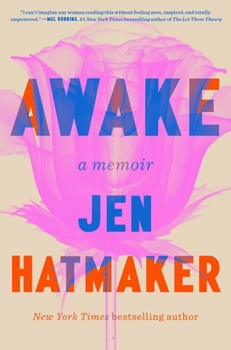
A few months ago I listened to Jen Hatmaker’s memoir, Awake. I hadn’t thought about Hatmaker in years but was pleasantly surprised when she popped up as a guest on an episode of my favorite podcast, Culture Study, and quickly put a hold on the audiobook of her memoir.
Hatmaker is a real throwback for me, back to my evangelical days and the tail end of my high school and college job working at the local Christian bookstore. I was a little young to be a Jen Hatmaker fan at the time, but I certainly remember watching the growing popularity of her books and events. In my memory of her rise, she felt like the next big thing after Beth Moore.
(And spoiler alert: like Moore, Hatmaker also faced harsh backlash from white evangelicals in the 2010s. In her case, evangelicals canceled her when she went public with her support for the LGBTQ+ community. More on that later.)
But Hatmaker’s memoir doesn’t focus so explicitly on her evolving faith or her reception with white evangelicals. Instead, it traces the end of her marriage (due to infidelity on her husband’s part) and her journey to rebuild her life and find herself as a woman in her 40s and now 50s.
The book seeks to offer some answers to the questions of what you do when your whole life and identity implode? What you do when the narratives you’ve told yourself about your life fall apart? It’s a refreshingly honest take on the experiences of a woman getting to know herself and reinventing herself in middle age.

And while the memoir isn’t primarily focused on her faith, I think we can glean something here about the evangelical experience, particularly if we pair her memoir with Beth Moore’s. I also read (and wrote about!) Beth Moore’s memoir last year, and it’s interesting to track their parallels.
Both women rose to fame in the evangelical world for their teaching and preaching. Despite their clear gifts in these areas, the constraints of white evangelicalism limited them to teaching women. They had a lot of influence among evangelical women but that was the real extent of their reach.
Looking back, we can see that they were always on somewhat shaky ground. Even though they could really only speak to and teach women, they had their fair share of critics. The simple reason for this this being that any women with the gift of teaching and preaching, their grasp of the Bible and ability to speak authoritatively, were a threat to the white evangelical patriarchy.
In the end, both women were ultimately ostracized by evangelicals when they took principled stands that ran counter to white evangelical politics. As soon as they stepped out of line — Moore with her criticism of Trump and Hatmaker with her full affirmation of the LGBTQ+ community — the backlash was swift and severe. Hatmaker even notes in her interview on the Culture Study podcast that she felt she was made an example of by the evangelical establishment. Don’t step out of line or this might happen to you too! Never mind the fact that awful evangelical men get away with all sorts of terrible things. These two women were viewed as dangerous enemies of the faith and paid the price.
Their memoirs are a testament to the strength and resilience of both women. While I was never a huge fan of either one in their most evangelical days, I respect the principled stands they each took in the face of such intense opposition from other white evangelicals. Neither one backed down even after such harsh backlash. I always respect people who are willing to question their own stances, change their beliefs, and be open with others about what they’re learning and how their beliefs and identities are evolving.

5 Responses
” willing to question their own stances, change thiir beliefs,and be open with others about what they are learning about how their beliefs and identities are evolving.”
Yes!
Reading this reflection after yesterday’s reflection illustrates the church’s complicity with vanity and the 7 deadlies. Another version of vainglory is ever-increasing blindness, doubling down defiantly on your own narrative rather than listening, repenting/rebooting. All partisan or nationalist ideologies and identities aside, the compassionless, vengeful, power-based tone is so Christ-less!
I’m intrigued by the idea of reimagining identity, especially in a wedding context. What inspired Jen’s perspective on this?
As a white male, I am just so tired of the white evangelical patriarchy and the way they shut down anyone who doesn’t agree with their narrow and, I would say, mostly un-Christlike, view of the world and those who live in it.
Thank you . Your posts are always interesting and informative .
The concept of reimagining identity sounds intriguing. How has Jen’s approach influenced her audience’s views?