
Catherine O’Hara, the respected Canadian actress known for playing quirky characters, died on January 30th at the age of 71.
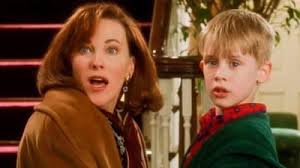
Home Alone, 1990
Along with roles in SCTV, Beetlejuice, and probably most-famously Home Alone, she played Moira Rose in Schitt’s Creek, the Canadian comedy that aired from 2015-2020. In 2020, O’Hara won the Emmy for Outstanding Lead Actress in a Comedy Series as Schitt’s Creek swept the Emmy awards for comedies that year, winning all seven awards.
Beyond its humorous portrayal of an extravagantly wealthy family adjusting to life in a small town after their financial demise, Schitt’s Creek is notable for a complete absence of homophobia. David, the adult son in the family, is openly pansexual. He uses a metaphor to explain, referring to different types of wines and noting that while some prefer red, others white, he enjoys a variety, explaining he “likes the wine and not the label.”
As the series develops, David establishes a relationship with Patrick. Family and friends are supportive. In a particularly touching moment in Season 4, Moira Rose (O’Hara), David’s mother, nods approvingly as Patrick serenades David at a public event.
The absence of homophobia is perhaps best described as indifference rather than declarations of acceptance. David is completely at ease with his sexuality and atypical masculinity. There are no family members worried about how others will react, no community members making disparaging off-hand comments, and no loud speeches lauding the welcoming nature of the community. Rather, there is a complete lack of attention to any uniqueness in David and Patrick’s relationship while other characters pursue or maintain heterosexual relationships.

Contrast this with Heated Rivalry, another Canadian TV show that has recently exploded in popularity. In that series, two elite male hockey players have a steamy romance that evolves into a deep and caring relationship, all while hiding their affection for each other from friends and family. Coming out to others occurs only after painful conversations or unexpected discoveries. The show is built on the reality that gay or bisexual men must remain closeted in certain professions, including elite hockey.
The team behind Schitt’s Creek intentionally created an inclusive world. Daniel Levy, co-creator of the show and the actor who played David, discussed his decision to create a world without homophobia, explaining that “If you take the hate out. . . you’re only left with joy, which can only have an enlightening effect on whoever’s watching it.”
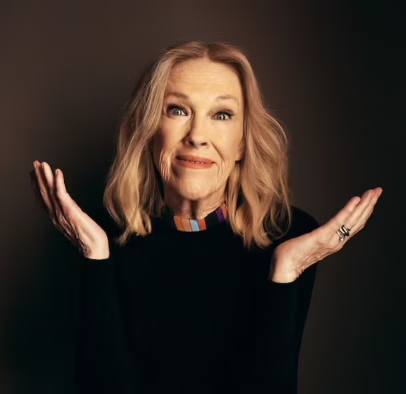
Catherine O’Hara told Variety Magazine: “Nobody ever said to me, ‘There will be no homophobia.’ There just wasn’t. It’s just a world I believe Daniel wants to live in. And I’d like to live there too!”
As a gay man, I wonder sometimes what it would be like to live in a world without homophobia.
For those of us who grew up in church contexts that were not affirming, the homophobic messages we received have a long-term impact. The fear starts within us as we know we are different and that we will be an “issue” for many. It affects our families as they worry how others will respond. In places where we know some are not accepting, we feel on edge or unsafe. Although acts of violence against the LGBTQ community are rare today where I live in Canada, they have increased in recent years. On a quotidian basis, rude comments persist in certain places.
Although significant progress has been made on LGBTQ rights in the last few decades, queer people still face discrimination or stigma. Many are afraid to come out in some surroundings. Politicians use trans rights and healthcare as a wedge issue. Mental health concerns abound and suicide rates remain higher for queer individuals. Undoubtedly, continued progress on these fronts would benefit everyone.
When I imagine a world without homophobia, it is some smaller differences that would feel deeply meaningful. I imagine what church contexts might look like. Today, in non-affirming space, I refrain from holding my husband’s hand. I take a deep breath to pause and consider how to answer questions about my family life. At the same time, these examples show how fortunate I am compared to LGBTQ individuals in other times or places. And they pale in comparison to the stress and fear I felt at church when I was younger. Still, they reveal how I continue to be on guard and constrained in certain places.
A world without homophobia would also benefit cisgender and heterosexual folks. Taboos and awkwardness around discussing issues of gender identity and sexuality would disappear. The anxiety about saying the wrong thing would fade. In faith communities, the guilt and fear so many have when talking about queer friends or family members would be removed. Debates and dilemmas about how people of faith should respond to the LGBTQ community would not exist.
In a world devoid of homophobia, the characters of Schitt’s Creek were unapologetically themselves. We can only imagine what it would be to live in such a world, but I, like Catherine O’Hara, would like to live there too.

One Response
Ian,
I want to live in that world too, and it’s writers like you that are helping us get there. Thank you for this thoughtful, brave reflection.